
Educators urged to harness AI without eroding student critical thinking
One Academy, operated by One on One Educational Services, recently staged its Future Ready Educators Summit 2.0 to equip teachers with practical ways to use artificial intelligence while managing the risks it brings to learning.
President and Chief Executive Officer Ricardo Allen said AI is now woven through everyday school work. Teachers use it to plan lessons, draft notes, and mark assignments; students feed homework into AI tools for quick answers; parents lean on the technology to help children prepare for exams; and administrators apply it to interpret data. Allen warned, however, that speed and convenience must not replace the thinking skills education is meant to build.
A Cambridge University fellow, Allen argued educators should remain "architects of thinking" rather than simply delivering facts AI can supply in minutes. Sound assessment, he said, rests on whether a learner can explain and defend their reasoning—not merely on right or wrong scores. One approach he highlighted assigns pupils to argue against AI on a fixed position, such as whether World War II was economically necessary, and return with evidence that forces genuine analysis.
Allen linked over-reliance on AI to cognitive atrophy—the weakening of mental pathways strengthened through effortful activities such as reading. He said changing how students are tested would change how they learn. Dialogic assessment, where learners must explain their chain of logic as a postgraduate might defend a thesis, is central to that shift. AI can conduct those conversations at scale and give teachers dashboards showing who reasons well and who needs support.
One on One is pursuing that research with Cambridge University, piloting it with the Government of The Bahamas, and planning to introduce it to Jamaican teachers. Allen pointed to the National Virtual School, a Ministry of Education partnership now active in 101 schools. Central instructors based in Kingston stream subjects such as game design to classrooms with on-site facilitators. Skills-gap tests after each session help teachers personalise support according to each pupil's strengths and weaknesses.
Allen identified diminished long-term memory as a major concern when pupils cram for conventional exams and later cannot apply what they studied. Jamaica, he said, needs graduates who retain knowledge and can create—not students who memorise answers briefly and fall behind in industry.
Syndicated from Jamaica Information Service (Video) · originally published .
Legal context · powered by Jurifi
Get the legal angle on this story. Pick a prompt and Jurifi's AI will explain it using Jamaican law.
AI replies are based on Jamaican law via Jurifi. Not legal advice.
Other coverage

Squash coaches to implement new strategies
Our Today
Francis Wade | The Fifth Rung: Why companies that win at innovation already know where they’re going
Jamaica Gleaner
High-School Graduates Urged to Explore Options at HEART/NSTA Trust
Ministry of Education and Youth
The Pinnacle’s CEO says shared history strengthens Jamaica-China bond
Jamaica Gleaner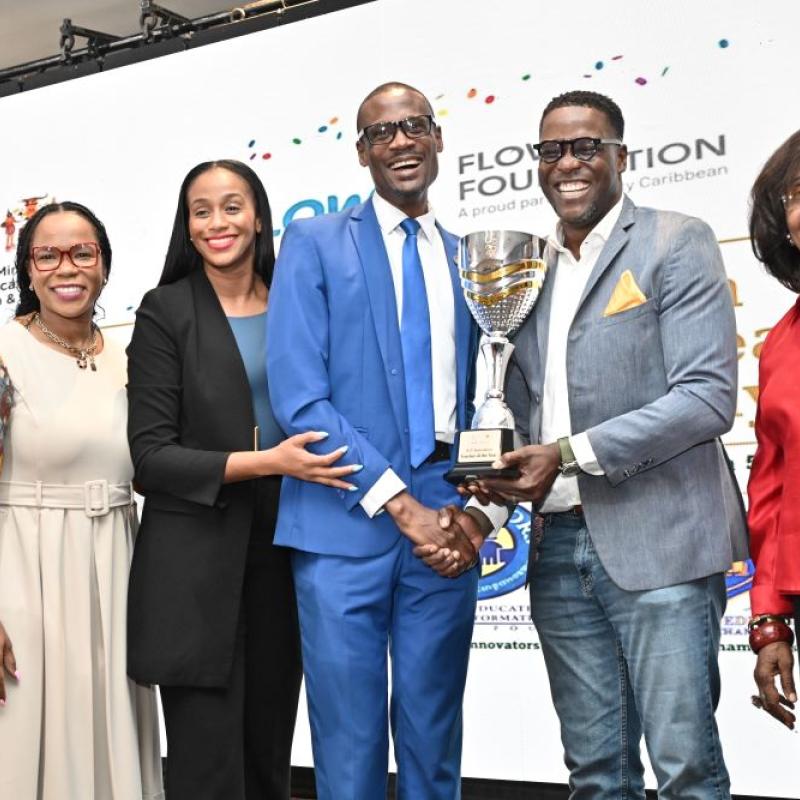
Building tomorrow’s innovators - ICT Teacher of the Year Duval Ebanks dreams big for students
Jamaica Gleaner