
‘A Jamaican Path: from Hills to Ocean’ project benefits wetland and coastal ecosystems, says NEPA
KINGSTON, Jamaica— Like the steady flow of a river that nourishes everything in its path before meeting the sea, another transformative environmental initiative has reached its final bend — leaving behind stronger ecosystems, empowered communities and renewed hope for Jamaica’s natural environment.
In a statement on Friday, the National Environment and Planning Agency (NEPA) highlighted the completion of the six-year “A Jamaican Path from Hills to Ocean” project which it says marks a major milestone in wetland and coastal management interventions, critical to safeguarding Jamaica’s natural assets and strengthening the island’s resilience to climate change.
The project, which ran from 2020 to 2026, was funded jointly by the European Union Global Climate Change Alliance Plus (EUR 4.9 million) and the Government of Jamaica (EUR 1.1 million).
The multi-year initiative was implemented by the Planning Institute of Jamaica as executing agency, in collaboration with key government partners including NEPA, the Rural Agricultural Development Authority (RADA), and the Public Gardens Division in the Ministry of Agriculture, Fisheries and Mining.
A number of outputs were achieved under the project inclusive of assessments which produced important findings which can be used to inform critical next steps and decision-making.
The outputs included the Rapid Ecological Assessments (REAs) which were done across three watersheds namely Rio Bueno, Wagwater, and Rio Nuevo between 2023 and 2024. The research provided critical baseline data on flora, fauna and habitat conditions and the assessments are designed to guide restoration planning, biodiversity conservation, and community-based management actions, while strengthening Jamaica’s ecosystem monitoring framework.
Another major project milestone was an assessment of seagrass beds to provide the first comprehensive evaluation of seagrass health and extent within Hellshire Bay and Half Moon Bay in the St Catherine and the Ocho Rios Marine Park Protected Area (ORMPPA) in St Ann.]
The study combined high-resolution drone and satellite imagery with detailed field validation, water quality analysis, and geospatial modelling to produce accurate maps and baseline data to guide future monitoring of seagrass distribution and nearshore marine ecosystems.
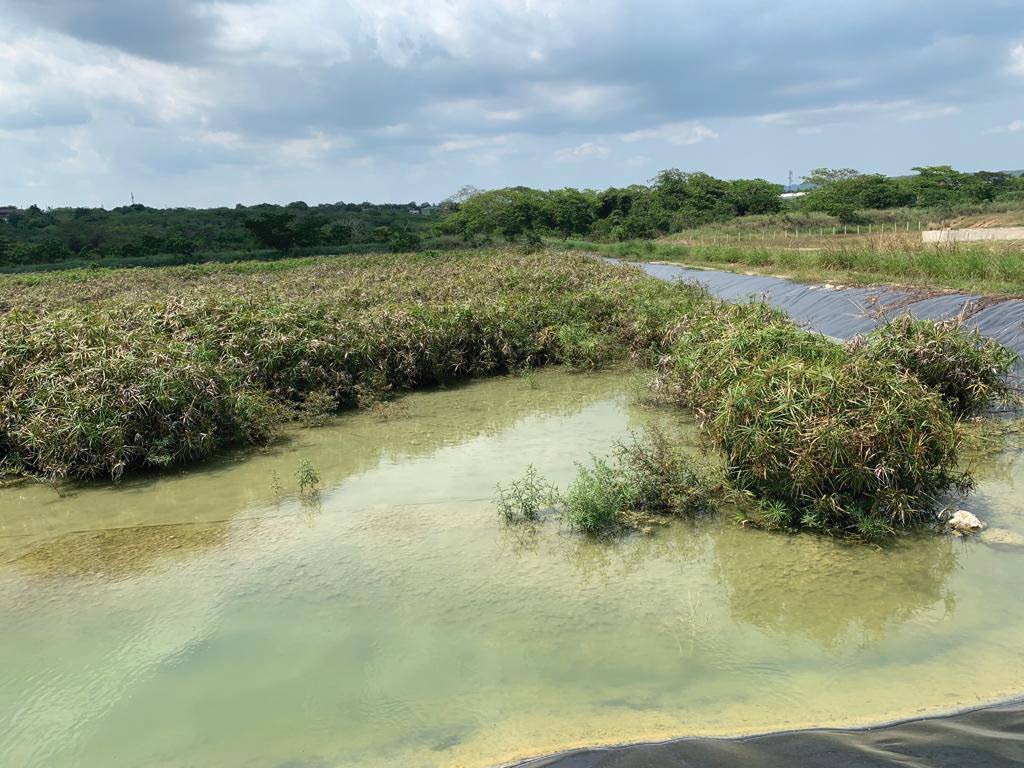
The completion of a Hydrological Assessment of the Protected Area in 2024 was an important element of the project. It provided a comprehensive understanding of the MRPA’s soil as well as the hydrological and ecological characteristics of the area. According to the study, while the MRPA supports diverse wetland ecosystems including peat bogs, marshes, and scrub savannah, its low permeability limits groundwater storage and increases the area’s susceptibility to flooding and drought.
Hydrochemical analyses indicate that water quality within the MRPA is generally consistent with freshwater standards; however, localised impacts from agricultural runoff and improper land use have elevated nutrient and mineral levels and highlight the need for improved sustainable farming and water management practices.
The assessment also documented rich biodiversity and several endemic birds and herpetofauna species. However, pressures from harvesting, small-scale farming, and hunting threaten the ecological integrity of the Reserve. Additionally, socioeconomic findings showed that surrounding communities rely heavily on farming and trucked water, further emphasising the need for climate-resilient livelihoods and improved water access.
To address the issues, an Integrated Sustainable Landscape Management Farmer Field School was conducted in 2025 in Mason River with support from RADA’s extension service. Similar field schools were done in the Three Hills and Sommerhill communities of St Ann and Clonmel in St Mary.
The initiative goes hand in hand with the preparation of a farmer field school manual for pig and ruminants. The manual covers farm plan and layout, nutrition, reproduction, health management, record keeping and analysis, climate-smart techniques, disaster risk management, farm biosecurity, and waste management.
A facilitators’ workshop was also conducted with RADA livestock officers to equip them to render the necessary assistance to the farmers.
The acquisition of the Jamaica Watershed Classification Tool (JWCT) was another project success. This decision-support system is designed to evaluate watershed health, model environmental conditions, and guide conservation planning. The tool allows users to visualise watershed boundaries and environmental data through an interactive mapping platform, making it a valuable resource for stakeholders working on watershed and natural resource management across Jamaica.
The project saw NEPA being supplied with a suite of environmental monitoring and field research equipment, including laptops, dive gear, buoyancy devices, data loggers, GPS units, optic USB base station, a Galileo with transmitter, fibreglass tape and underwater weights. The equipment will enhance NEPA’s ability to conduct marine and terrestrial ecosystem monitoring, data collection and analysis ensuring that management decisions are guided by real-time, evidence-based insights.
The lush Castleton Botanical Gardens was also a project beneficiary of much-needed rehabilitative work, including the installation of garden furniture, solar equipment, refurbished restrooms and gabion baskets, and repairs to gazebos. Work was also started on a ramp, the walkway, fencing and perimeter wall.
Another project success was the recent handing over of 500 metres of fencing on May 14, 2026, to secure the Mason River Protected Area (MRPA), a Ramar site spanning Clarendon and St Ann. The installation of the fencing serves as a practical safeguard to ensure that wetland restoration and biodiversity protection efforts remain effective over the long haul.
The construction of the fencing is intended to:
“This, the last activity under the project, was indeed the proverbial icing on the cake, the final brush stroke aimed at complementing previously introduced environmental safeguards under the multi-pronged Hills to Ocean Project, ” said NEPA.
As the next hurricane season approaches, the Hills to Ocean Project is helping Jamaica to put its house in order in the event of visits from unwelcomed guests, bent on destruction. In the face of natural disasters and climate change, the project is a life-jacket, helping to ensure that Jamaica’s path to recovery, from the hills to the ocean, is not a lengthy journey”.
Syndicated from Jamaica Observer · originally published .
Legal context · powered by Jurifi
Get the legal angle on this story. Pick a prompt and Jurifi's AI will explain it using Jamaican law.
AI replies are based on Jamaican law via Jurifi. Not legal advice.