Greetings again my distinguished Colleagues,
I trust that you have been having a great week at home and at work. May is now behind us and our focus shifts to June, the final month of the second quarter.
Traditionally, May has been the month with the highest number of murders, averaging well over 130. Last year, for the first time in more than 31 years, 53 murders were recorded in May. This year, May ended with 39 murders, joining March as the second-lowest monthly murder figure recorded in over three decades.
Colleagues, these achievements are not accidental. They are the product of sacrifice, commitment, sound strategy, and the daily courage displayed by you our members. They have been achieved while operating in an environment of intense public scrutiny and criticism. Some of that criticism is fair and deserved, and we must always be willing to confront our shortcomings honestly. Other criticisms, however, are based on assumptions, incomplete information, or narratives that do not stand up to objective examination.
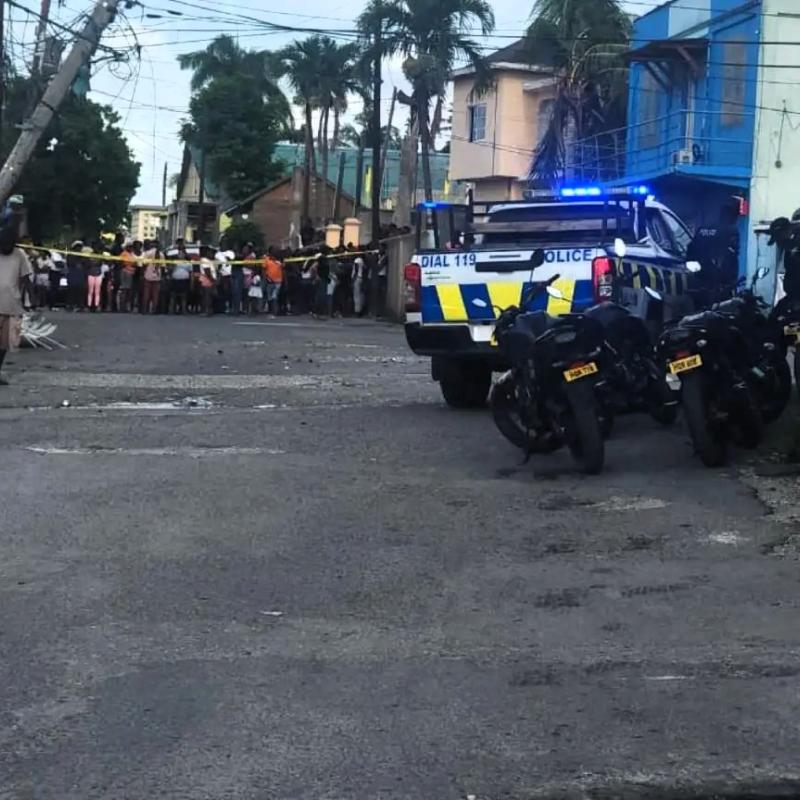
Today I will once again revisit the topic of Body Worn Cameras (BWCs). I am sorry if I make the detractors who wish to have their narrative dominate the information space, tired. However, I am compelled to respond as there remains a persistent narrative that the Jamaica Constabulary Force is resistant to the use of BWCs. Respectfully, the evidence does not support such a conclusion. The JCF has invested approximately $2 billion in the infrastructure necessary to support BWCs. To date, we have procured approximately 1,750 cameras and deploy roughly 1,500 daily. We have established detailed policies governing their use, and the deployment and utilization of BWCs form part of our regular operational reviews, chaired by a Deputy Commissioner of Police.
I will endeavour to keep this week’s discourse short because I want the full script to be read by those who like to comment on headlines and lay themselves vulnerable to being manipulated. Reasonable persons may disagree with our pace of implementation, our deployment priorities, or the number of cameras currently available. Those are legitimate discussions. What is more difficult to understand, however, is the continued suggestion that the organization is resisting a technology in which it has invested so heavily and continues to expand.
Colleagues, one of the reasons this discussion is important is because BWCs are often presented as the principal explanation for why relatively few fatal police shootings result in criminal charges being laid against officers. As Commissioner of Police, I believe the Jamaican people deserve a broader examination of this issue.
When a police officer is involved in a fatal shooting, the independent investigators generally begin with several significant advantages. The officer is required to provide a statement, most times without the benefit of time allowed to recover from the trauma. The firearm used is made available for forensic examination. Investigators have immediate access to information regarding the circumstances surrounding the incident. The scene is available for processing and witnesses are often identified quickly, some who were never even present. This that they have from the onset, is most of what is required to complete an investigation.
By contrast, when JCF investigators are called upon to investigate a murder committed by criminals, they rarely begin with any of those advantages. The suspect seldom provides a statement. The weapon used is often never recovered. There is usually no official account of what transpired. Witnesses are frequently fearful, reluctant, or entirely absent. In many cases, investigators are forced to reconstruct events from fragments of evidence gathered over weeks or months.
Yet despite these challenges, the JCF achieved a murder clear-up rate (cases solved) of approximately 91% in 2025. This reality raises an important question for public consideration. Over the last five years, approximately 2%, or 20 cases of fatal police shooting investigations have resulted in criminal charges being laid against officers. Of this number, 9 were off duty in their private capacity. It means that approximately 1% of the cases investigated where police officers were on duty, resulted in charges. It is to be noted as well that there has not been a single conviction resulting from a fatal shooting case over the 5 year period. At the same time, the public is frequently told that many of these incidents are questionable and that the absence of body-worn camera footage significantly impedes the ability to arrive at definitive conclusions.
If most fatal police shootings are indeed questionable, as is often implied in public discourse, why do so few investigations result in criminal charges? This is not a rhetorical question. It is a legitimate question. If investigators are routinely presented with a shooting that appears unlawful, while simultaneously possessing a statement from the officer involved, access to the firearm used, the incident scene, witness accounts, and reports surrounding the event, should the outcomes not more frequently reflect that concern? Conversely, if the overwhelming majority of investigations do not produce evidence sufficient to support criminal charges, should this not also inform how these incidents are characterized publicly? The reason given for not being able to lay more charges is the absence of BWC footage. My question is, would anyone accept that from me as a reason for not being able to properly investigate murders? Colleagues, I strongly doubt that we had video footage for any of the 91% of murders solved last year.
Let me be clear, lest the headlines suggest that I am pushing back at BWC. I fully support the expansion of BWCs across the Force. BWCs enhance transparency, strengthen accountability, protect officers from false allegations, protect citizens from misconduct, and improve public confidence. The JCF remains committed to expanding their use and ultimately achieving full operational integration.
However, accountability cannot depend exclusively on camera footage. Accountability existed before BWCs and must continue to exist even when no footage is available. If accountability becomes impossible in the absence of video evidence, then countless criminal investigations across Jamaica would similarly be impossible.
The Jamaican people deserve both transparency and balance. They deserve confidence that allegations against police officers are thoroughly investigated. They also deserve confidence that conclusions are based on evidence rather than assumptions, and that public commentary accurately reflects investigative outcomes.
As Commissioner, I will continue to support any effort that strengthens accountability, professionalism, and public trust. I will also continue to ask difficult questions whenever the facts suggest that they should be asked. It must be noted that the JCF cannot investigate police fatal shootings, and so I depend on the independent body to be effective. If these incidents are indeed questionable, I rely on them to help to remove these individuals from within our midst. That is the service that they deliver, on which I depend. In other words, I am their client.
Colleagues, while I make these points, let us remember that a single incident where someone has unjustifiably lost their life by the hands of the police is one too many. And so, let us continue to carry out our duties with professionalism and respect for the rule of law. We must, however, not shrink back from our responsibility to boldly face down criminals in ensuring safety and security in our communities.
Let me wish for you and your families a peaceful and blessed weekend. Until next week, walk good.