
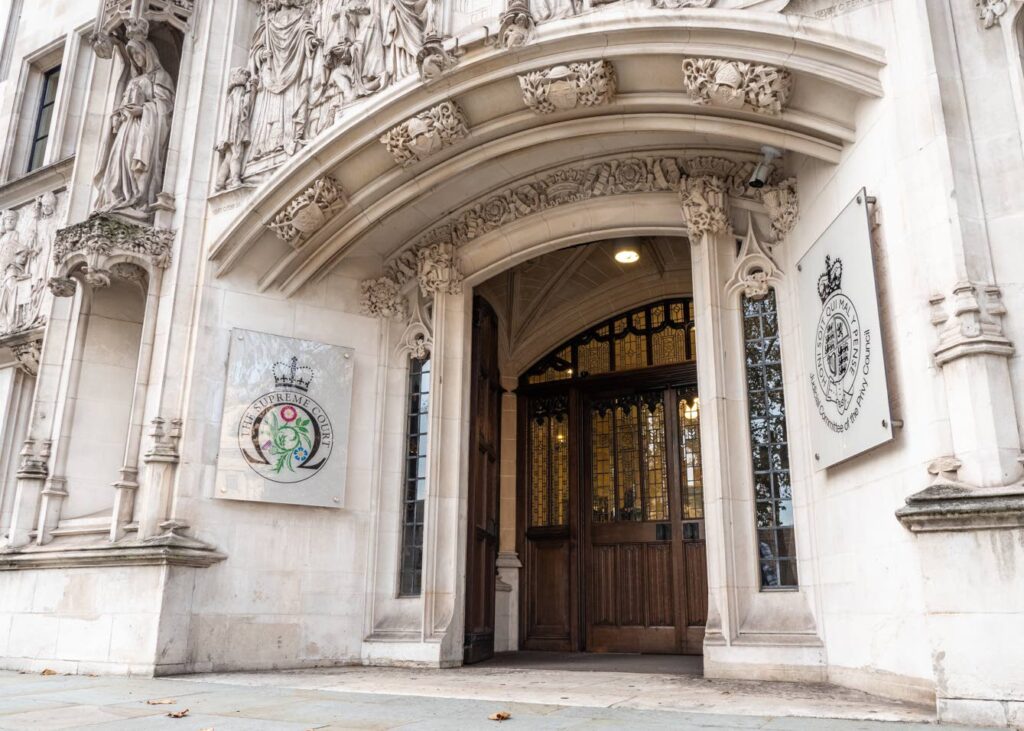
Buggery battle goes to Privy Council
THE Judicial Committee of the Privy Council (JCPC) on Wednesday heard the final appeal in a long-running legal battle to decriminalise same-sex intimacy, including buggery, in Trinidad & Tobago with a judgment expected before the end of this year.
The case, which could have implications for Jamaica and other countries in the region — Jason Jones vs Attorney General of Trinidad and Tobago — is a constitutional challenge against the buggery laws in Trinidad’s Sexual Offences Act, 1986, which criminalise acts of buggery and other forms of same-sex intimacy with potentially lengthy prison sentences.
The laws being challenged in this case are sections 13 and 16 of Trinidad and Tobago’s Sexual Offences Act 1986, which criminalise buggery (anal sex) between men, or by a man with a woman, and acts of serious indecency between men.
It is a case that could have global ramifications by setting decriminalisation in motion across as many as 11 Caribbean nations and influence 34 Commonwealth countries that still criminalise same-sex intimacy.
An initial victory for Jason Jones in 2018 was reversed by the “savings clause” provision that shields laws pre-dating Trinidad and Tobago’s pre-Independence constitution from challenge.
The JCPC will rule definitively on whether the savings clause can legitimately be used to shield colonial-era laws from constitutional human rights protections.
A similar savings clause is in Section 26(8) of the Constitution of Jamaica and protects pre-Independence laws from being invalidated by the modern Charter of Fundamental Rights. It dictates that any law in force before Jamaica’s 1962 Independence cannot be struck down for violating constitutional rights.
It will now be up to the JCPC to consider the continued application of laws that originated during that period. The Privy Council’s ruling in this case will be final, with no further right of appeal.
A campaign has grown across the United Kingdom (UK) with backers including Amber Rose Gill, an influencer and television personality of Trinidadian heritage.
Going into the hearing Jones, on Wednesday, was reported as saying, “Homosexuality is the last human identity to be criminalised anywhere in the world. Today, a court in London will decide whether that changes for LGBTQ+ individuals not just in the Caribbean, but across the world. This truly is the last chance for freedom for the millions of people who only want to love who they love.”
The hearing draws to a close a legal battle that has spanned a decade, beginning in 2017, and following a High Court ruling in Trinidad and Tobago in 2018 in Jones’ favour, which found that the country’s buggery laws were unconstitutional.
The Trinidad High Court judgment went on to be cited in legal challenges to anti-LGBTQ+ laws elsewhere in the Commonwealth, including in India, Antigua and Barbuda, as well as St Lucia.
The matter was heard on Wednesday by a panel made up of president of the UK Supreme Court Lord Reed of Allermuir; Lord Sales, deputy president of the court; Lord Lloyd-Jones; Lord Briggs of Westbourne; and Lady Rose.
“We appreciate this is a case of great concern to many people on both sides of the debate in Trinidad and Tobago. Anyone who has watched this hearing will realise that the case raises some really quite complex legal questions.
“It is going to take us time to consider those and the arguments that we have heard, and we will let you have our decision when we can,” said Lord Reed at the end of the hearing.
Syndicated from Jamaica Observer · originally published .
Legal context · powered by Jurifi
Get the legal angle on this story. Pick a prompt and Jurifi's AI will explain it using Jamaican law.
AI replies are based on Jamaican law via Jurifi. Not legal advice.
Other coverage
Why isn’t the Prime Minister and Minister of Foreign Affairs backing up Audrey Marks?
Our Today
As Caricom leaders meet, row over CEO’s appointment simmers
Caribbean Life
THE GLEANER MINUTE: CARICOM Sec Gen reappointment dispute | INDECOM probes 17yo’s death | World Cup
Jamaica Gleaner (Video)Watch
Sunday Sips with HG Helps | Will the Government learn from Cross Roads protest?, Stephen Francis was the best; peaceful Jamaica! where is that?, lessons from Cabo Verde
Our Today
Supreme Court’s Liberal Justices Say Trump’s Haiti TPS Decision Was Racially Motivated – But It Stands 6-3
Jamaica Inquirer