
Dennis Minott | Jamaica-bound MOUs from Venezuela, France and Switzerland
Every generation has its defining policy test. Ours may well be whether Jamaica chooses to build its future upon engineering reality or upon political optimism.
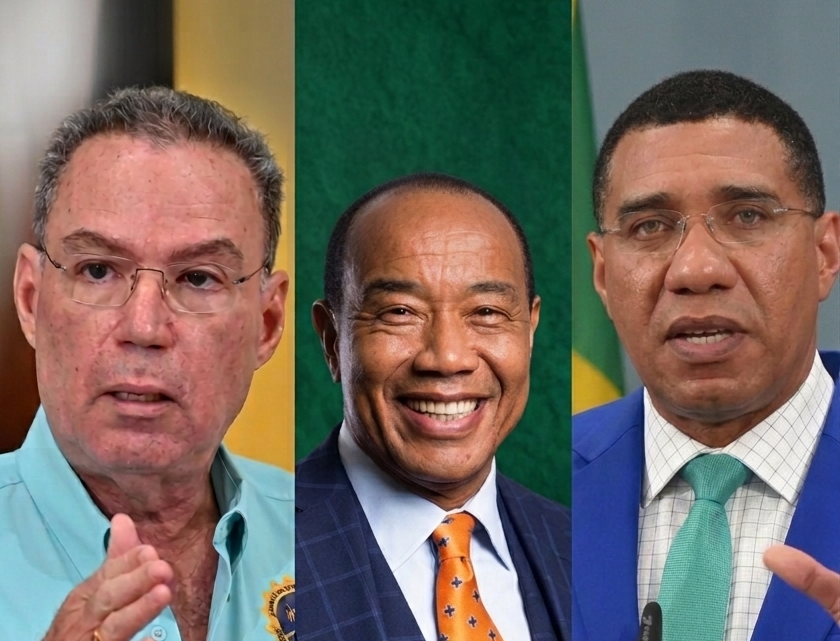
The recently announced Memorandum of Understanding involving Mr Michael Lee-Chin, Prime Minister Dr Andrew Holness, and Energy Minister Daryl Vaz has once again placed Small Modular Reactors before the Jamaican public as though nuclear power were the inevitable, glamorous next chapter of national development. It is not. That MOU rightly frames itself as no substitute for feasibility, geology, design or financing.
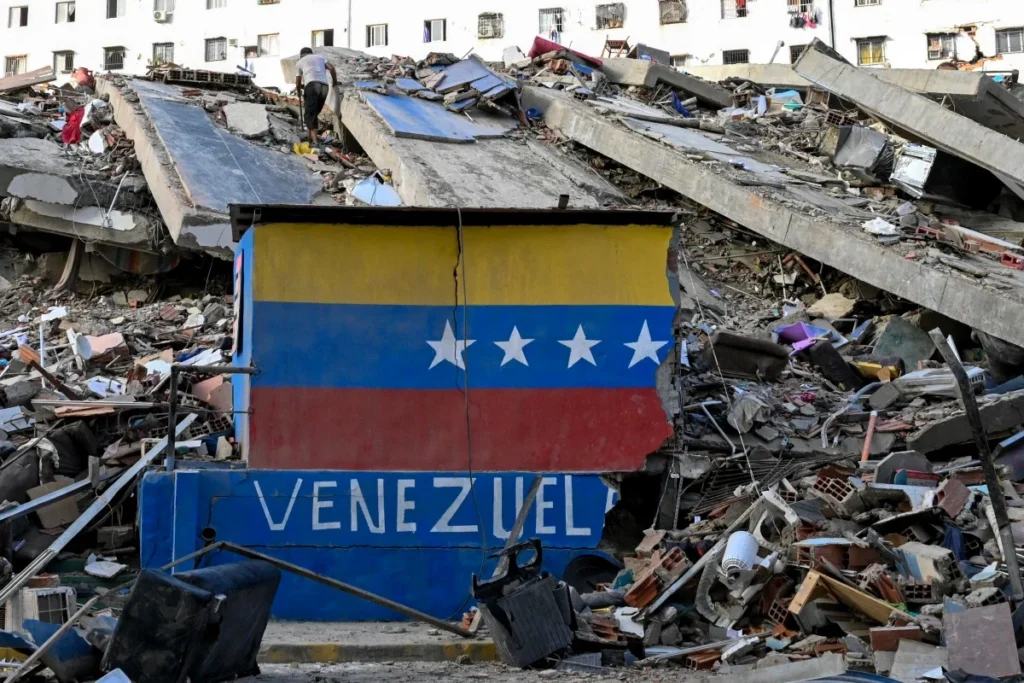
An MOU is not a feasibility study, an engineering design, a geological investigation, a financial close, or a licence from nature to suspend the laws of physics. Scarcely had the latest enthusiasm emerged than nature issued three powerful reminders: Venezuela spoke through geology; France through thermodynamics; and Switzerland through cooling-water reality.
Three recent warnings Jamaica should not ignore
The significance of the Venezuelan warning lies not merely in magnitude, but in reminder. Jamaica and Venezuela are neighbours of the same restless Caribbean Plate. Venezuela sits where that plate interacts with the South American Plate; Jamaica sits where it encounters the North American Plate through a complex network of strike-slip faults, including the Enriquillo-Plantain Garden Fault System. No Cabinet decision repositions fault lines. No investment announcement negotiates with geology.
Engineers speak of “design-basis events” — the maximum hazard severity a facility is engineered to withstand. Yet reality has an unsettling habit of exceeding assumptions. Earthquakes rarely arrive as neat textbook events. They arrive with aftershocks, landslides, damaged roads, interrupted communications, power loss, bridge failure, water disruption and panic. Complex systems fail not because one component breaks, but because several independent failures occur together.
Nuclear safety systems are engineering marvels. But mechanical systems, diesel generators, cooling lines, containment structures, control rooms, switchyards, transformers and access roads are not metaphysical objects floating above geography. They occupy soil, rock, coastal corridors and watersheds. They depend on a functioning grid, trained personnel, reliable water and rapid emergency response. In a major earthquake, all of those assumptions may degrade at once.
Supporters of SMRs correctly observe that modern reactors include passive safety systems. Nuclear engineering has learned much from Three Mile Island, Chornobyl, and Fukushima. Yet improved engineering does not abolish residual risk. It merely attempts to manage it. Radioactive material requires absolute, long-duration containment regardless of reactor size. The adjective “small” refers mainly to output, not to consequence.
The question before Jamaica is not whether an SMR can be made to work somewhere. The question is whether a small, hurricane-prone, earthquake-exposed island of fewer than three million people should accept the spatial, financial, regulatory and emergency-planning consequences of a nuclear tail-risk failure.
In a continental country, a nuclear accident may be regional. In Jamaica, it could be national. There is no meaningful “away” to which the island can evacuate. A severe contamination event would threaten agricultural lands, freshwater systems, coastal tourism zones, fisheries, real estate, public confidence and the very habitability of key corridors. A 30-kilometre exclusion zone in Jamaica is not a planning abstraction; it is a parish-level crisis.
Nor does an SMR operate in splendid isolation. It is a dependent node in a web of national infrastructure. It needs an exceptionally stable grid, secure cooling arrangements, functioning roads, telecommunications, emergency services, security protocols and disciplined regulation. Upon an emergency shutdown, or SCRAM, a reactor stops producing power but still requires reliable electricity to remove residual heat. It moves from being a generator to being a demanding safety-critical load.
For Jamaica’s small grid, where peak demand hovers below 700 MW, the sudden loss of even a 100 MW nuclear block would be a severe systemic shock. The island-wide blackout earlier in June 2026 reminded us that electrical networks respond not to speeches, but to disciplined engineering, preventive maintenance, automated protection, vegetation management, pole hardening, black-start capability and trained operators.
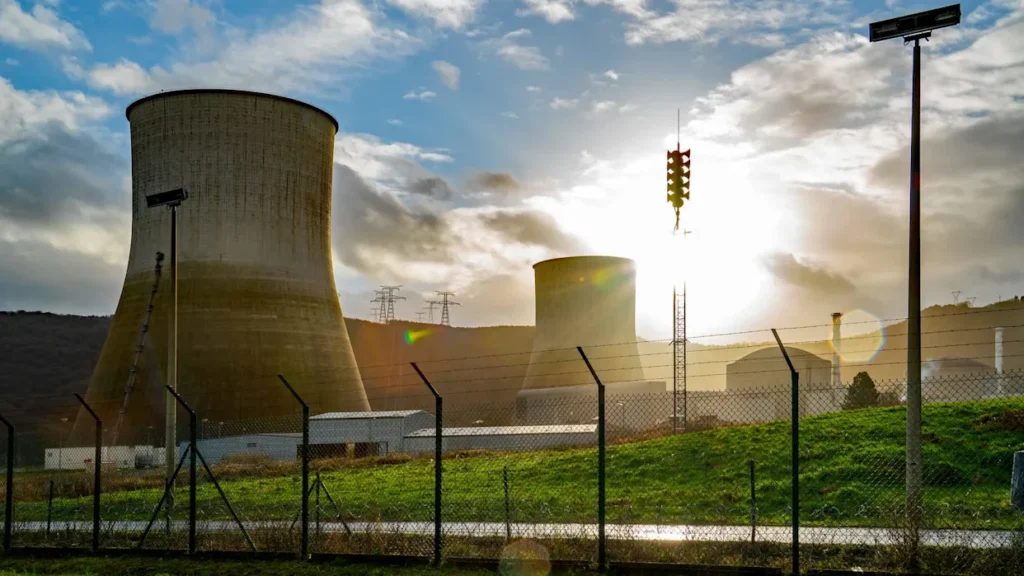
Then comes France. During the present European heatwave, several EDF reactors faced reductions or shutdowns because elevated river temperatures risked breaching environmental limits designed to protect aquatic ecosystems. At Golfech, one reactor was shut down; output reductions also affected Nogent-sur-Seine and Bugey. This was not an anti-nuclear slogan. It was thermodynamics reporting for duty.
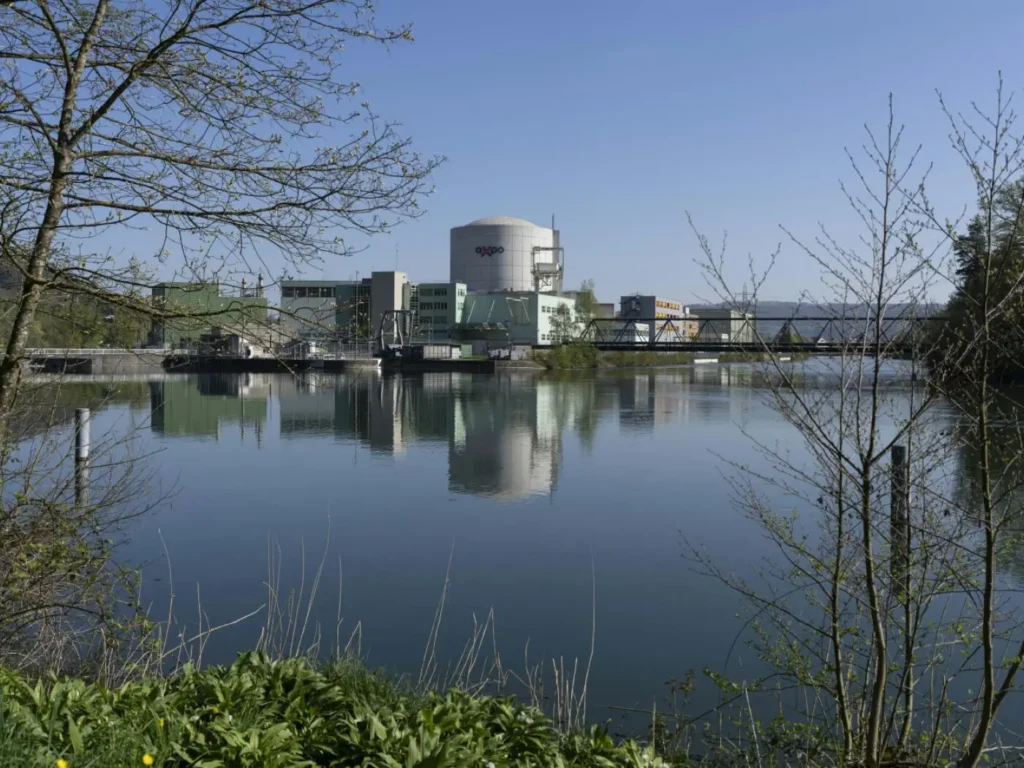
Switzerland adds the same lesson in an even tidier form. The Beznau Nuclear Power Plant is old, experienced, regulated and located in one of the world’s most technically competent countries. Yet it too remains dependent on the temperature of the Aare River for cooling. The wider European heatwave has pushed rivers and infrastructure into stress, with nuclear output reductions reported as overheated rivers constrained operations.
This is the point Jamaica must grasp: nuclear reactors are not magic boxes. They are sophisticated thermal power stations. They obey the Rankine cycle. Their upper theoretical efficiency is bounded by Carnot’s insight. They require reliable heat rejection to an environment cooler than the working fluid. When ambient temperatures rise, and cooling water becomes too warm, performance declines, environmental limits tighten, and output may fall precisely when electricity demand rises.
Climate change, therefore, does not merely create storms and sea-level rise. It also narrows the operating margins of thermal generation. A hotter Jamaica would not make nuclear cooling easier. It would make disciplined engineering, water access, environmental compliance and emergency planning more demanding.
This is why the wiser alternative is distributed resilience. Jamaica possesses abundant sunshine, wind corridors, farmed-biomass opportunities, small hydro potential, battery storage, smart inverters and demand-response possibilities. A diversified renewable system spread across thousands of sites is not merely cleaner; it is structurally more resilient. If one solar farm, wind site, microgrid or biomass unit fails, the whole country does not become hostage to one specialised machine.
Distributed energy also democratises opportunity. It creates work for electricians, technicians, roofers, farmers, engineers, data specialists and contractors across all fourteen parishes. It strengthens hospitals, schools, water pumps, police stations and community shelters. It allows microgrids to survive when the main grid struggles. It builds national competence from the ground up.
Nuclear development, by contrast, concentrates risk, expertise, financing and emergency dependence within one extraordinarily specialised enclave. It imports fuel-cycle obligations, waste responsibilities, security burdens, decommissioning costs and regulatory demands that will outlive several governments.
The latest MOU should therefore be welcomed only if it provokes serious national scrutiny, not premature celebration. Jamaicans deserve evidence rather than enthusiasm; engineering rather than aspiration; hard numbers rather than glamorous renderings.
Venezuela reminds us that plate tectonics cannot be moved. France reminds us that thermal plants cannot escape overheated rivers. Switzerland reminds us that even advanced societies must bow before cooling-water limits. Taken together, these three Jamaica-bound warnings point to one conclusion: nature negotiates with no one.
Governments may sign agreements with financiers, foreign agencies and technology promoters. But no government has ever signed an MOU with the Caribbean Plate, the Rankine cycle, the Carnot limit, or the Second Law of Thermodynamics.
Syndicated from Our Today · originally published .
Legal context · powered by Jurifi
Get the legal angle on this story. Pick a prompt and Jurifi's AI will explain it using Jamaican law.
AI replies are based on Jamaican law via Jurifi. Not legal advice.
Other coverage

No criminals among TCNs – Marks
Jamaica Star
Senator Audrey Marks Clears the Air on TCN
CVM TV
Beyond rhetoric: Lessons from the CHASE Fund, ODPEM, and the Dominican Republic
Jamaica Gleaner
Michael Abrahams | The case of the non-deportee deportees
Jamaica Gleaner
Editorial | Warnings from Venezuela
Jamaica Gleaner