
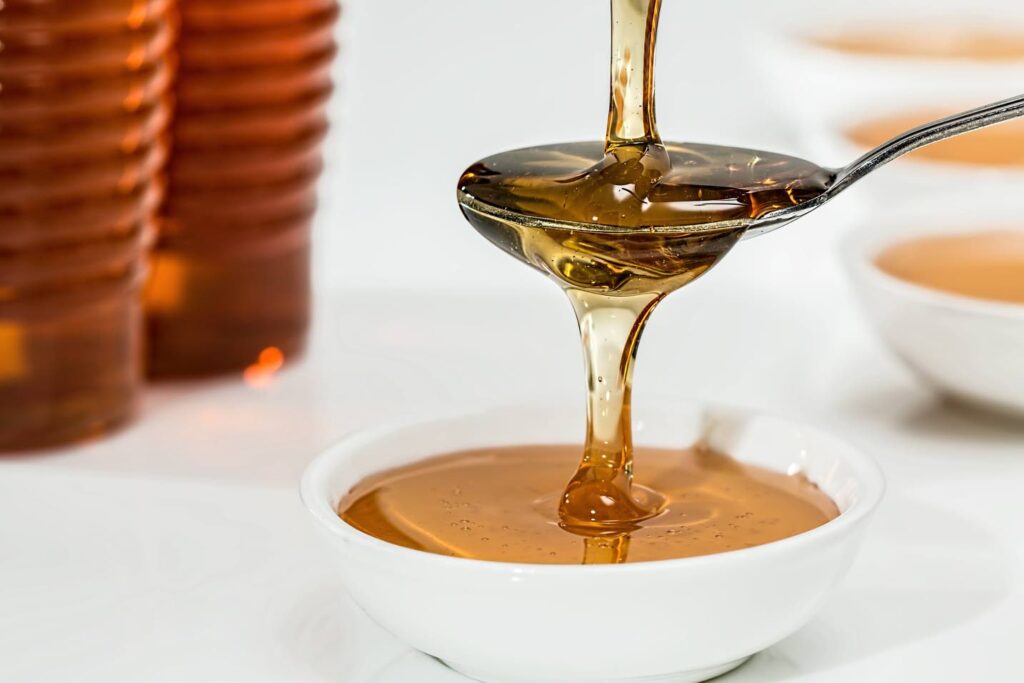
THE loss of approximately 16,000 bee colonies following the passage of Hurricane Melissa has triggered what many describe as a honey shortage across Jamaica, deepening supply challenges in a market in which demand already exceeds supply.
According to Hugh Smith, head of the Apiculture Unit in the Ministry of Agriculture, Fisheries, and Mining, the Category 5 storm resulted in an estimated $600 million in losses for the sector. However, while urging beekeepers to keep prices fair, he said efforts are already under way to restore the supply to pre-hurricane levels.
The shortage is being felt throughout the supply chain. Jamaica Manufacturers and Exporters Association (JMEA) Executive Director Kamesha Blake is reporting that manufacturers are struggling to source honey. Joel Harris, managing director of Shavuot International — a company that manufactures herbal products — said he has been searching for honey for approximately three months, stung by high prices. Meanwhile, suppliers like Roger Mitchell are grappling with the overwhelming demand and having to choose between prioritising colony rehabilitation and honey production.
Blake, declaring that there is a shortage, said the JMEA has, since January, received calls from its members seeking honey suppliers with stable supply and pricing to help maintain consistent manufacturing costs.
“I can’t say how many of our members utilise honey, but so far we have been asked for assistance from three people to help source honey. It’s not the best, because I have one particular member that we would have put out an ad for, and the feedback from the suppliers would have been that the price offered is ridiculously low, so there are challenges. You can just imagine the retail market now would be the highest purchaser so, naturally, having a shortage in supply, with retail being able to pay the higher premium price, then the suppliers would be more interested in retail,” she told the Jamaica Observer.
Harris said the amount of honey he has been able to source for his company is less than pre-Hurricane Melissa levels. He said, too, that he has been on the hunt for honey since March, with most of the suppliers informing him that they have not rebuilt their capacity, and the hurricane has shifted the honey production season.
“We purchase honey for certain products, and we have found that because of the scarcity we have had to adjust our production volume according to what the honey producers can supply,” said Harris.
He stated that while beekeepers are accessible, the problem remains that many do not have any honey.
SMITH…each gallon of honey produced by colonies could earn approximately $20,000 at market price
“The problem with the honey farmers is that their capacity has been diminished or they have been sold out because, as they produce a little honey, people from all over buy it up in one go because of how scarce honey is on the market. It has been gruesome to lock down suppliers because of that,” he added.
In the meantime, Smith, in explaining the current market reality, said the Apiculture Unit has observed a decrease in supply among apiaries across the island, which has led to a decrease in the level of returns from investment for beekeepers.
“We have seen some investors who would have had to push back some of their operations because their plans would have been to earn a certain amount so they can push that investment for the next two to five years, so it’s really a big damage to the industry when you have lost a good portion of your bee population,” Smith told the Sunday Observer.
He noted that of the 16,000 colonies destroyed, each colony would produce approximately three gallons of honey, with each gallon earning approximately $20,000 at market price. Jamaica had an estimated 120,000 colonies before the onslaught of Hurricane Melissa. Smith said it would take two years to replenish the approximately 10,000 to 16,000 colonies lost during the passage of the devastating weather system.
While he did not state that there is currently a shortage of honey, he said, “If you are seeing a reduction in the available honey, it could be hinting at that [honey shortage].”
Smith said the Apiculture Unit is projecting that the stock of honey ready for market could diminish before the start of the next honey season, but noted that, due to climate change, beekeepers could see honey produced in the off season, balancing the scales.
“For this year, we have seen the pushback or the delay in the time in which honey would be produced in some zones, so you may see a month or two months, and in some cases three months’ pushback, in the time in which honey would have been produced. If your expectation was that you would have had a February honey crop, that would have been pushed back [by] probably two months in that zone, so the productivity of some — and I am only speaking with farmers [who] have reported the pushback — some persons would have lost probably a gallon or two gallons less than what they would have received from each colony. So it is not only the colonies that you have lost, but the colonies…[for which] productivity has changed,” he added.
BLAKE…JMEA has, since January, been receiving calls from members seeking honey suppliers with stable supply and pricing
The head of the Apiculture Unit said the ministry is doing its best to ensure that the impact on the sector is minimal. He shared that the unit has engaged beekeepers in advanced queen-breeding techniques to help return colonies to pre-hurricane numbers.
Additionally, the unit is working to restore vegetation lost due to the hurricane so as to provide food for the bees. As part of this push, 1,500 fruit tress are to be placed across the country, particularly in spaces where development has taken over vegetation. An investment of $40 million has also been made for sugar to feed bees and keep them alive while the vegetation is restored, added Smith.
Mitchell, a beekeeper in St Elizabeth, said he and most of his colleagues have lost almost half of their bee population. He told the Sunday Observer that the need for honey has increased, with each week bringing at least one call from a distributor or manufacturer — an occurrence that was previously a rare one for him.
“There are people that we have not heard of before, and people that we have not met or done any business with before, calling,” he said.
As he tries to recover, Mitchell said his team has been trying to split and multiply the colonies, rather than focusing on honey production, which makes the situation worse.
“We are sacrificing one year and hoping for the next year. This whole season this year is gone bad, so next honey season we expect to get [more] honey. For the whole of this 2026 year we are not really expecting to produce anything,” he said.
He said, too, that many beekeepers have honey in stock but are planning to hold off on selling the product in the hopes that it will increase in value as it gets scarce.
“Even then, it [the honey production] is nothing compared to our usual year,” he said.
Syndicated from Jamaica Observer · originally published .
Legal context · powered by Jurifi
Get the legal angle on this story. Pick a prompt and Jurifi's AI will explain it using Jamaican law.
AI replies are based on Jamaican law via Jurifi. Not legal advice.
Other coverage

Jamaica Magazine - 14.06.2026
Jamaica Information Service (Video)Watch
Standing Finance Committee || June 10, 2026
PBC Jamaica (Video)Watch
REPAIR RAGE - Protest erupts over stalled reconstruction at Westmoreland high school
Jamaica Gleaner
Jamaica News Today June 10, 2026 /Real News Media TV
Realnews YtWatch
Parottee Residents Still In Limbo After Hurricane Melissa | TVJ News
Television Jamaica (Video)Watch