
Jamaica to petition King Charles on reparatory justice September 6
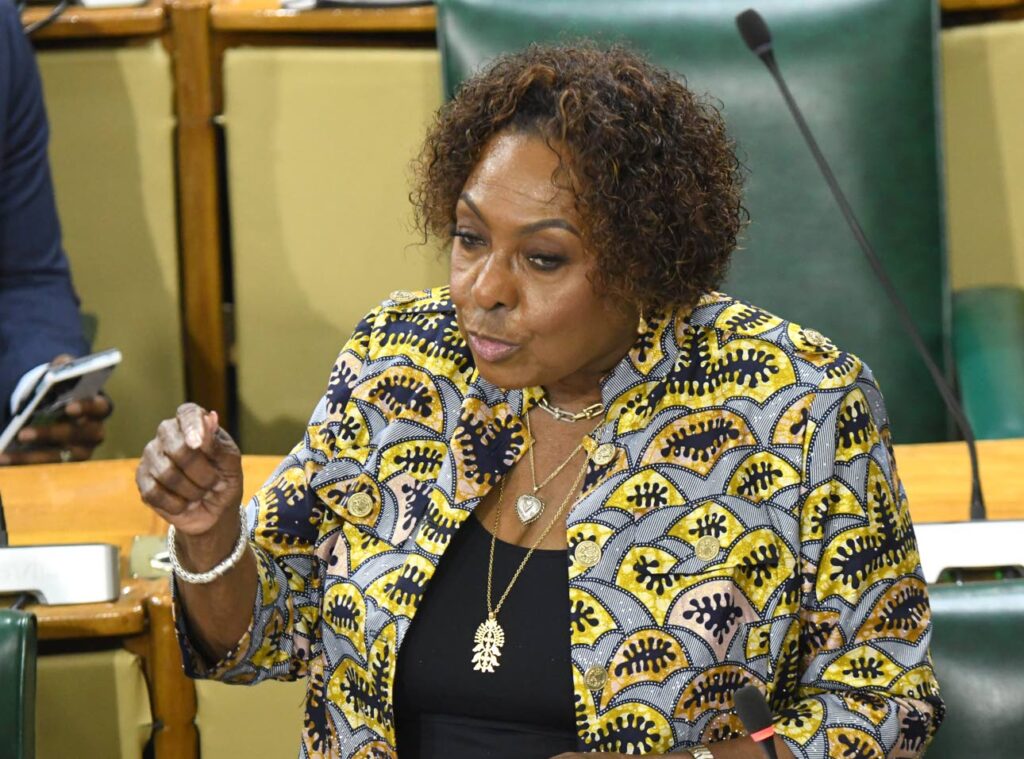
THE Jamaican Government will formally petition Britain’s King Charles lll on reparation for slavery on September 6, which the Minister of Culture, Gender, Entertainment and Sport Olivia Grange has described as a “historic day”.
Grange addressed the matter on Tuesday during her contribution to the 2026/27 Sectoral Debate in the House of Representatives.
She told the Parliament that September 6 marks the date in 1781 when the Zong slave ship departed West Africa for Jamaica with 442 enslaved Africans. She outlined that throughout the journey the ship ran into trouble and the captain kept throwing enslaved Africans overboard in order to claim insurance for loss of cargo. The result was that 140 enslaved Africans were killed and the ship finally arrived in Black River, St Elizabeth, on December 21, 1781.
“We erected a monument to the murdered Africans in Black River where the ship docked. Interestingly, when Hurricane Melissa devastated the town, it was the only monument standing as if to remind us of our duty to seek reparatory justice,” Grange remarked.
She explained that the petition to the king will request that he refers to the Privy Council — the final appellate Court of Jamaica — three questions related to the criminal nature of the transatlantic trafficking and racialised chattel enslavement of Africans in Jamaica.
The three questions relate to: a) whether the forced transportation of African people from their homelands to Jamaica and their subsequent enslavement in Jamaica were lawful, because such unauthorised removal and enslavement was contrary to the fundamental principles of the common law; b) whether the forced transportation and subsequent enslavement of people of African descent up until 1838 constituted crimes against humanity under international law, for which the UK bears responsibility; c) in light of the said actions/illegalities, whether the UK is under an obligation to provide a remedy to the Jamaican people for the unlawful transportation and enslavement of African people in Jamaica under British rule up until 1838, and for the continuing consequences of the same.
“This request is made to His Majesty the King in his capacity as head of State of Jamaica and from whom we expect protection,” said Grange while noting that Jamaica has the full support of Caricom in the execution of this action.
Minister Grange pointed out that the enslavement of our ancestors lasted more than 300 years before, by their own sustained effort, they were able to remove the shackles of enslavement. She noted that when the ancestors achieved their emancipation in 1834 the planters were compensated for loss of “property” while the former enslaved people were forced to endure a period of apprenticeship.
The minister also highlighted that on March 25 this year — International Day of Remembrance of the Victims of Slavery and the Slave Trade — the Government of Ghana secured in the United Nations the passing of a resolution, namely the Declaration of the Trafficking of Enslaved Africans and Racialized Chattel Enslavement of Africans as the Gravest Crime against Humanity.
Grange noted that while “Jamaica and the rest of Caricom supported the declaration. Regrettably, all the countries of Europe abstained”.
She has invited every Jamaican to join the conversation and the movement for reparatory justice on behalf of our ancestors.
Meanwhile, in an effort to improve public awareness on the matter of reparations, the Ministry of Culture, Gender, Entertainment and Sport will soon publish a document titled One Hundred Discussion Points on Reparations, contributed by three members of the National Council on Reparations [NCR]: Dr Jahlani Niaah, Professor Clinton Hutton and Dr Michael Barnett.
According to Grange, the aim is to fill the gap of knowledge and guide deliberations at this strategic moment.
“Additionally, the NCR has developed a programme for the integration of reparatory justice and the history of our people into the curriculum of schools at every level of education,” the minister said.
Grange said this is about developing content, teaching methodologies, and approaches to integrating reparatory justice and the history of our people into all subjects.
Syndicated from Jamaica Observer · originally published .
Legal context · powered by Jurifi
Get the legal angle on this story. Pick a prompt and Jurifi's AI will explain it using Jamaican law.
AI replies are based on Jamaican law via Jurifi. Not legal advice.
Other coverage

UK slavery reparations must be top issue at Commonwealth summit, says former Caribbean leader
The Guardian (Jamaica)
JISTV | Sitting of the House of Representatives - Sectoral Debate - June 30, 2026
Jamaica Information Service (Video)Watch
JMDA Praises MOH's Response to Interns' Concerns | Midday News
Television Jamaica (Video)Watch
GoodHeart | Kenya Wagstaffe finds sense of belonging in Jamaica
Jamaica Gleaner
National Security Minister again rejects suggestions that persons with criminal backgrounds will be allowed into the country, saying the country has worked too hard to reduce crime
Jamaica Inquirer