
Ladif | The Arc of Justice: Lessons from the World Cup for the USA and Jamaica
“Justice must not only be done, but must also be seen to be done.” — Lord Chief Justice Hewart (1924)
Sport mirrors life. The principles that govern society—fairness, justice, accountability and integrity—are equally applicable on the field of play. What affects one nation today may well affect another tomorrow.
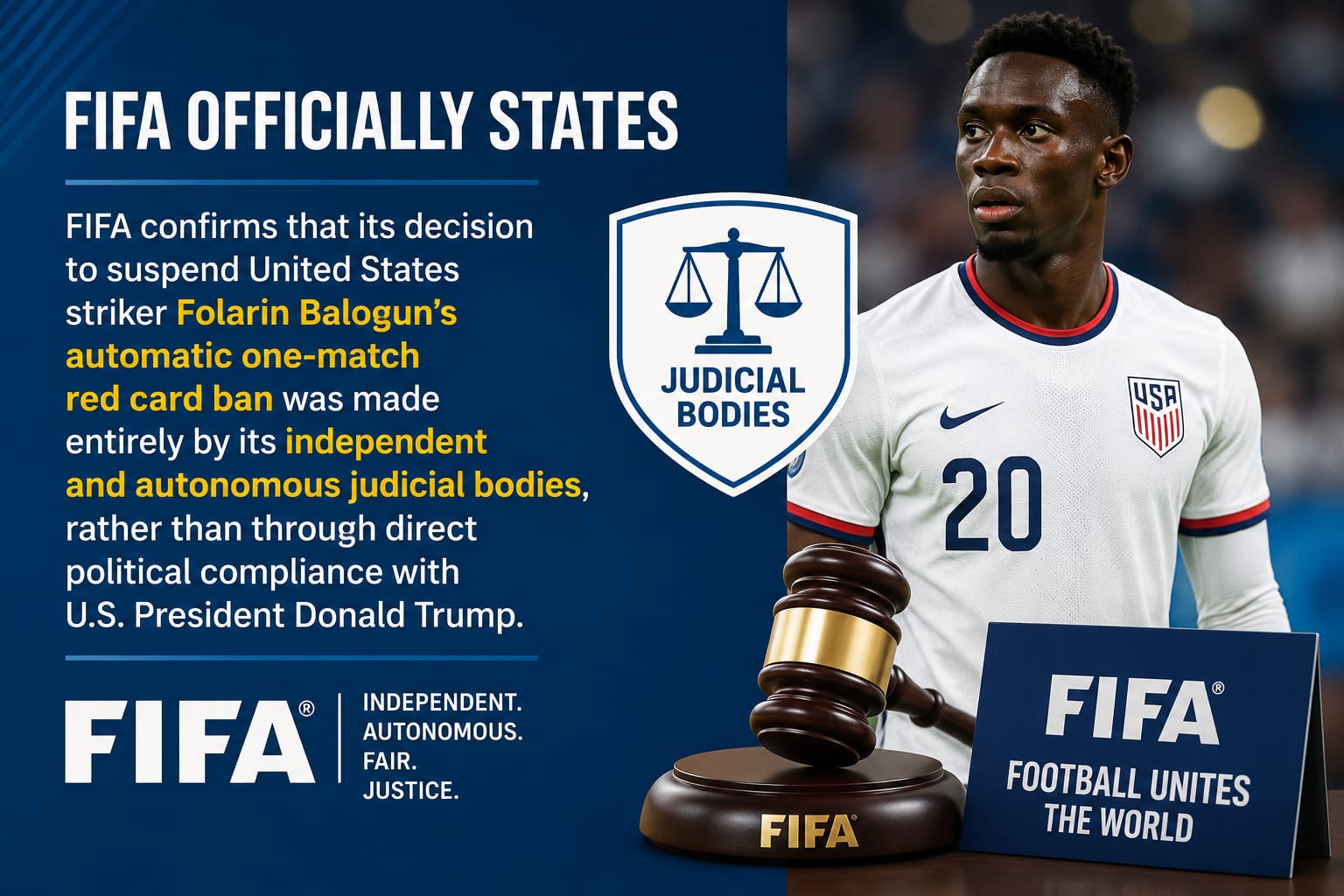
For many observers, the United States’ exit from the FIFA World Cup following its 4–1 defeat to Belgium was a case of poetic justice.
As hosts and fellow members of CONCACAF, the United States carried the hopes of much of the region. Many within CONCACAF, whether openly or quietly, wanted to see them progress towards what could have been a historic World Cup final.
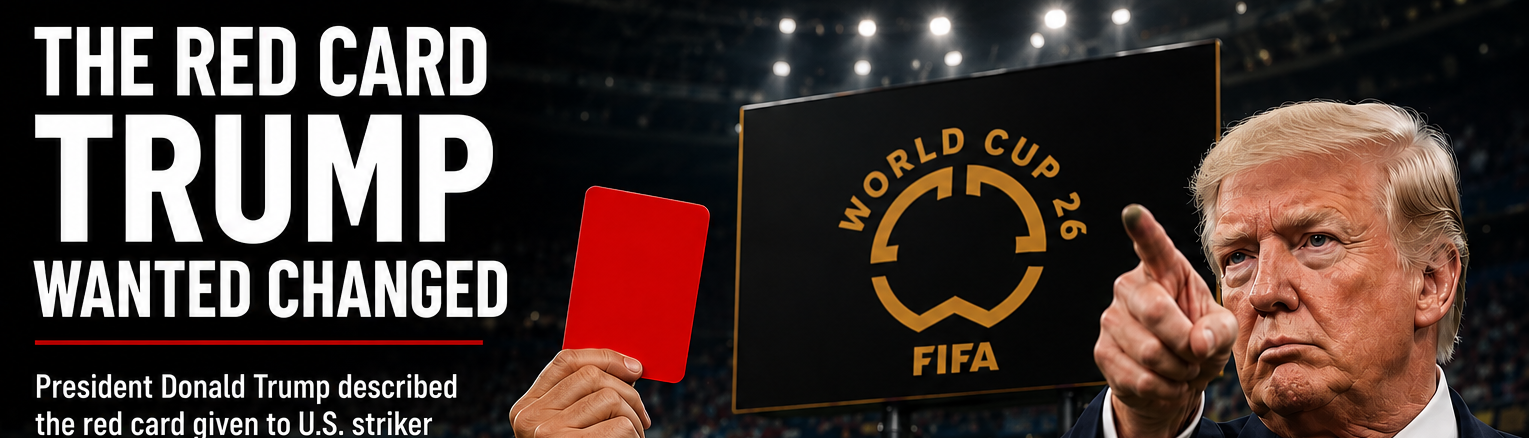
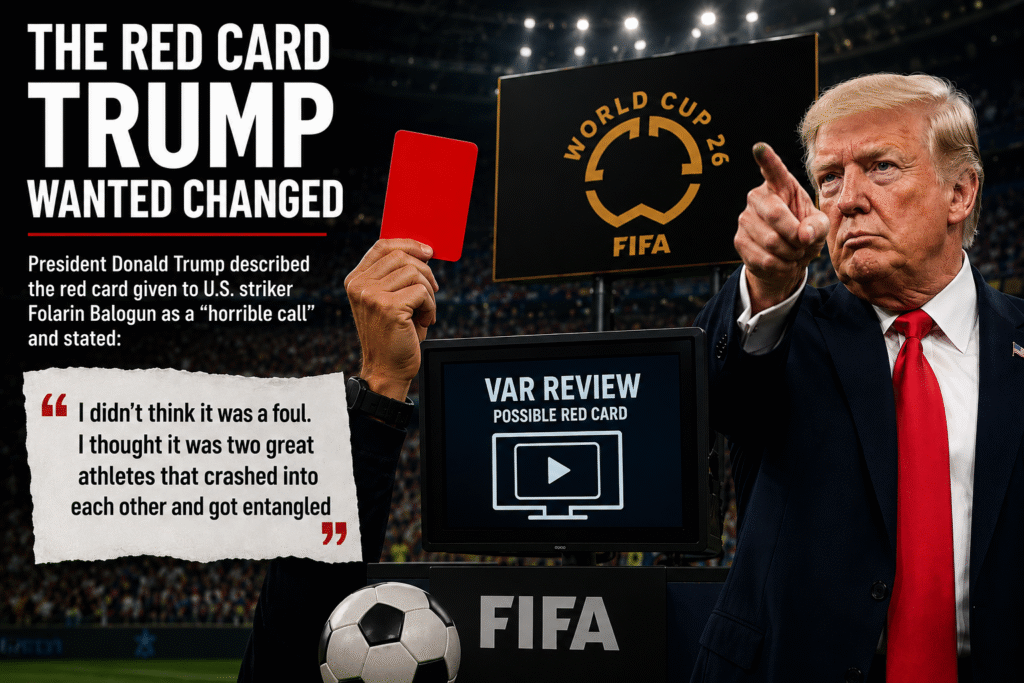
Then came the red card.
The dismissal was ruled as violent conduct—an offence considered to have endangered an opponent. Whether one believes the decision was correct or a consequence of the magnifying effect of slow-motion replay is ultimately beside the point. The referee made the decision, and FIFA’s Laws and disciplinary regulations make clear that such dismissals are generally not subject to appeal.
Then came something far more remarkable.
Reports emerged suggesting that the President of the United States intended to contact the FIFA President in an effort to have the suspension overturned. Whether those reports were entirely accurate or not, the optics alone created the impression that political influence might be attempting to enter a process that is designed to remain independent.
That perception sits uneasily with anyone who values sporting integrity.
It also raises an uncomfortable question.
If extraordinary consideration could even be contemplated in one case, why was Paraguay’s Miguel Almirón not afforded similar consideration for his own suspension? His dismissal was for a non-violent offence and, arguably, a less serious infringement. If exceptions are to be contemplated, should consistency not apply to all?
Perhaps Almirón simply did not have a president with direct access—or what Ivan Pavlov might have described as the conditioned response—to the FIFA President.
For those unfamiliar with FIFA’s governance, the organisation has consistently maintained that governments and domestic courts should not interfere in football administration. Against that backdrop, any suggestion of political intervention appears to colour outside FIFA’s own lines.
Martin Luther King Jr. famously said:
“Injustice anywhere is a threat to justice everywhere.”
Whether one agreed with the red card or not, many football supporters across the world—including many within CONCACAF—found themselves supporting Belgium, not because they opposed the United States team, but because they wished to see the integrity of the process preserved.
Ironically, the controversy overshadowed the tremendous achievements of the American players, whose performances deserved to be judged on football alone.
The lesson, however, extends well beyond the United States.
It reaches Jamaica.
Martin Luther King Jr. also reminded us that:
“The moral arc of the universe is long, but it bends toward justice.”
Jamaican football has, in many respects, experienced its own version of that principle.
The expanded World Cup format and a tournament hosted within the CONCACAF region presented Jamaica with perhaps its greatest opportunity since qualifying for France 1998.
Our fellow World Cup debutants from 1998 have continued to build and establish themselves on the world stage. Jamaica, meanwhile, has too often appeared to be running in circles—like the proverbial agouti chasing its own tail.
By the third round of the current World Cup cycle, nine national team coaches around the world had already lost their jobs because results were deemed unacceptable.
That fact deserves reflection.
Looking back, Carl Brown achieved FIFA rankings comparable to those attained under René Simões when Jamaica qualified for the 1998 World Cup. Yet, despite changes in head coaches over the years, Jamaica has struggled to make meaningful progress in the FIFA rankings or establish sustained international competitiveness.

Instead of critically evaluating every aspect of the programme, we have repeatedly changed coaches while leaving much of the wider football structure intact.
In my view, that has been a fundamental mistake.
The technical leadership and administrative structures have remained largely unchanged despite years of inconsistent results. Rather than broadening expertise and embracing wider stakeholder participation, the system has too often appeared resistant to meaningful reform.
The Jamaica Football Federation has faced significant governance challenges in recent years, including FIFA oversight and calls for governance reforms. Questions have also been raised regarding transparency and the conduct of elections—issues that have affected public confidence in the administration of the game.
Whether one agrees with every criticism or not, perceptions matter.
As Lord Hewart reminded us over a century ago, justice must also be seen to be done.
I place little blame on Jamaica’s overseas-based players for our failure to qualify.
Football history is filled with teams containing world-class individuals who failed because they never became true teams.
When Jamaica qualified in 1998, the squad spent extended periods together. They trained together, lived together, and played numerous preparation matches. Overseas-based players arrived and immediately immersed themselves in a culture, identity and team spirit that already existed.
Today, many overseas players arrive only a day or two before international matches. There is little opportunity for acclimatisation, tactical preparation or the development of the chemistry that separates good teams from great ones.
Building that environment is not the responsibility of the players.
It is the responsibility of the football administration.
Those foundations are laid long before kick-off.
Yet Jamaica continues with structures that appear ill-equipped to take the country to the next level while those entrusted with leadership remain firmly in place.
If we continue along this path, Jamaica risks remaining a football minnow while nations that once looked to us as peers steadily move ahead.
The moral arc of justice has bent.
Unfortunately, Jamaican football finds itself on the wrong side of that arc.
Whether we choose to learn from it will determine whether we remain there.
Syndicated from Our Today · originally published .
Legal context · powered by Jurifi
Get the legal angle on this story. Pick a prompt and Jurifi's AI will explain it using Jamaican law.
AI replies are based on Jamaican law via Jurifi. Not legal advice.
Other coverage

U.S. SOCCER FEDERATION OFFICIALLY LAUNCH JOINT BID TO HOST FIFA WOMEN’S WORLD CUP 2031™
Jff
Should Folarin Balogun Have Stood Down For America?
Jamaica Inquirer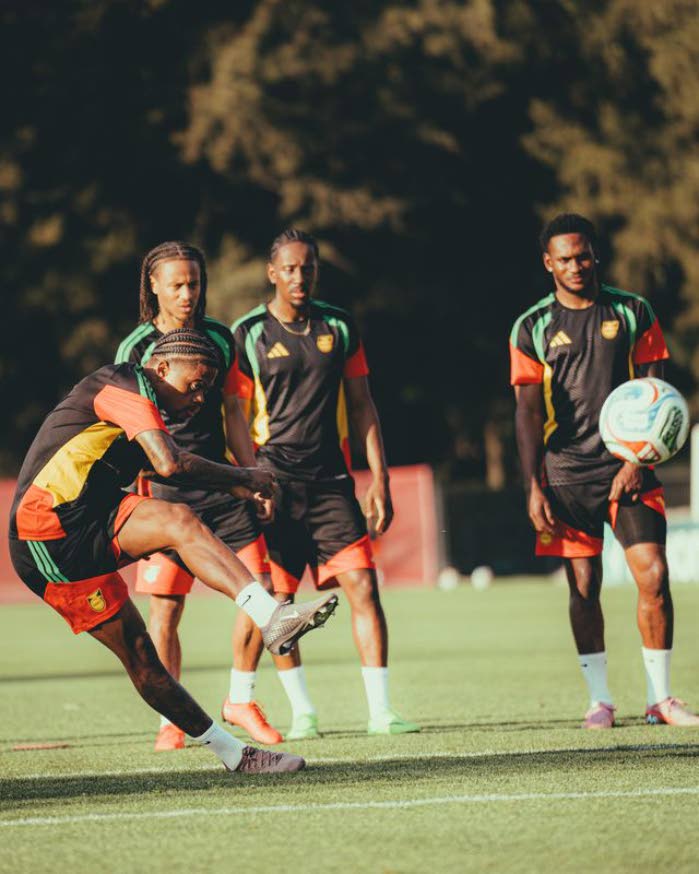
‘Don’t cuss the JFF’
Jamaica Observer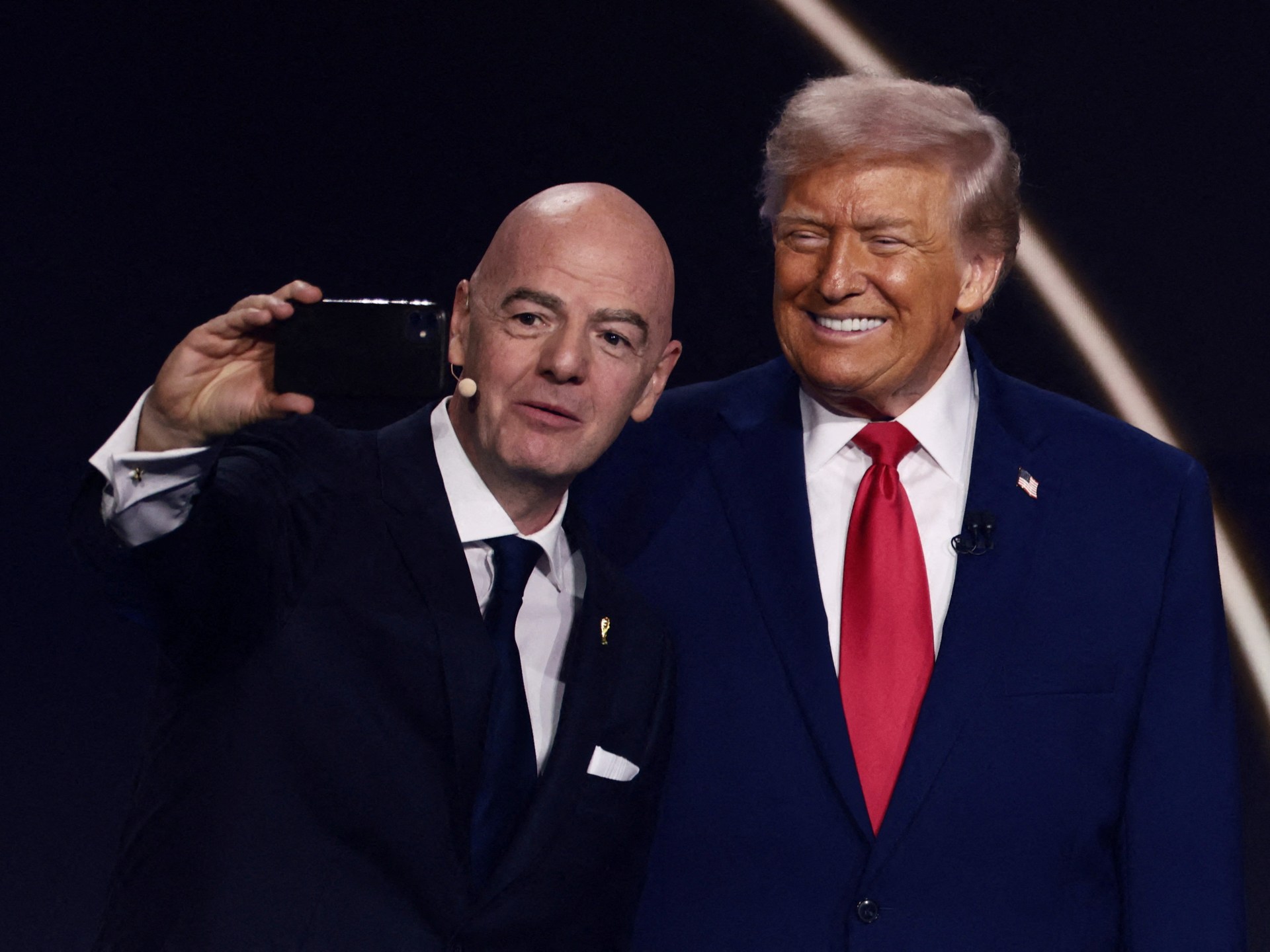
European MPs call for probe of FIFA boss Infantino over red card suspension
Jamaica Inquirer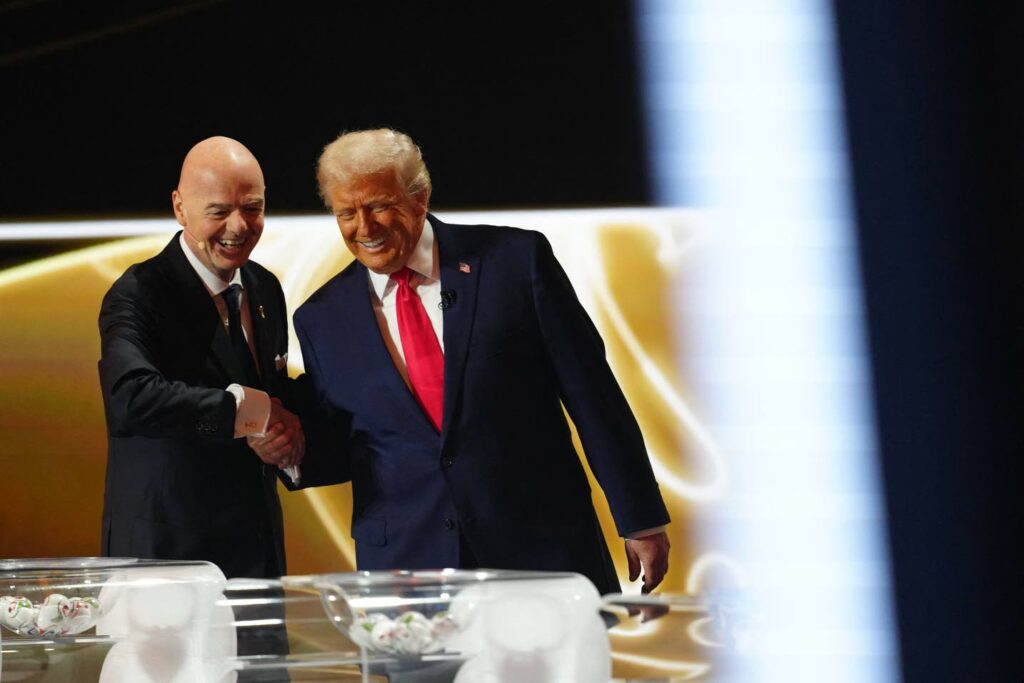
Infantino told Trump FIFA disciplinary body is ‘independent’
Jamaica Observer