
Lawyers drill witness over unmatched DNA
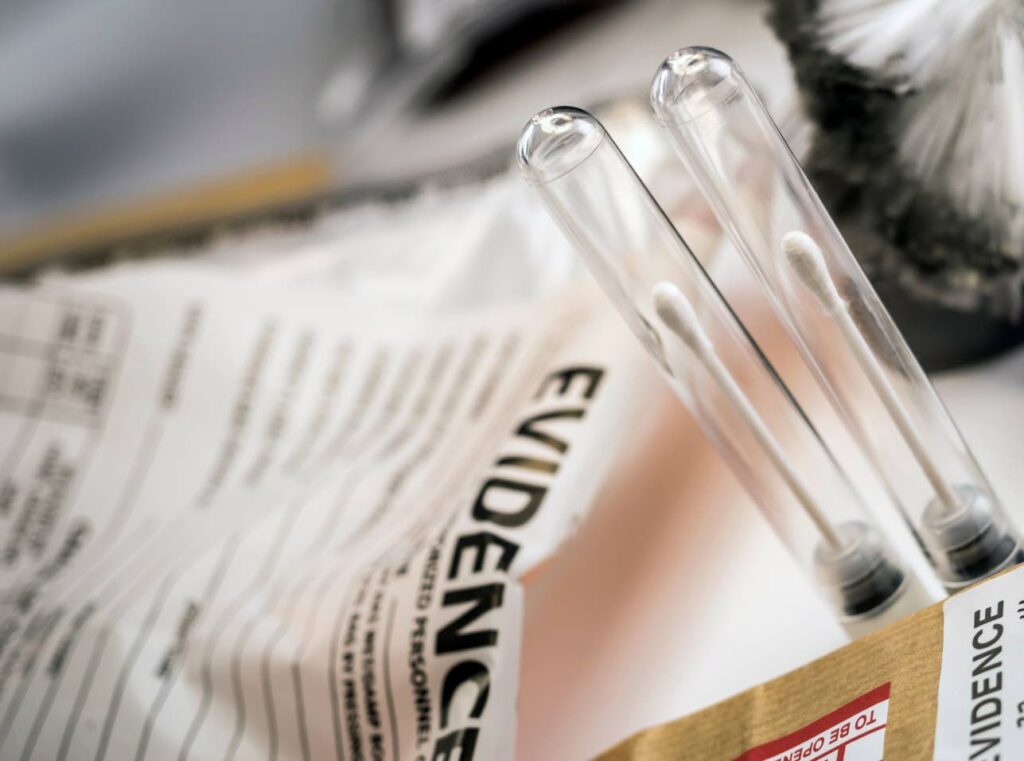
ATTORNEYS representing six policemen on trial for murder quizzed a DNA forensic analyst on Wednesday about the possible source of an additional piece of DNA sample purported to have been taken from a car in which three now-deceased men were travelling on January 12, 2013.
On trial for murder in relation to the shooting deaths of Matthew Lee, Ucliffe Dyer, and Mark Allen are Sergeant Simroy Mott and Corporal Donovan Fullerton, along with constables Andrew Smith, Sheldon Richards, Orandy Rose, and Richard Lynch. Corporal Fullerton is also charged with making a false statement to the Independent Commission of Investigations.
It is alleged that the three men were killed in a shoot-out with cops after lawmen signalled the driver of a blue Mitsubishi Outlander motor vehicle to stop. Two illegal firearms were seized and the cops have maintained that a fourth man escaped.
The incident took place on Acadia Drive, close to its intersection with Evans Avenue in Barbican, St Andrew.
During cross-examination by defence attorney John Jacobs, the analyst said that in relation to the unmatched DNA allegedly taken from the Mitsubishi, she “can’t say who it came from at all”.
The witness told Jacobs, the seven-member jury, and trial judge Sonia Bertram-Linton that the sample she tested did not generate a DNA profile. The only detail she managed to get from the sample was that it came from a male.
While she was unable to arrive at a match in relation to that sample, the analyst confirmed that matches were made to the three deceased, following testing of DNA samples allegedly obtained from the car and the general scene.
The witness explained to attorney Althea Grant-Coppin that several samples were taken from the Outlander, but only one — exhibit J — failed to produce results in the DNA markers that were tested.
Grant-Coppin got the witness to explain that currently, based on international standards, DNA analysts in present day test for 20 DNA markers and not 13, as was the case in 2013.
“In 2013, 13 markers were used. That was standard at the lab at the time and also international standards,” the witness said.
She explained that the standard was changed in 2017 when the forensic community decided to expand the number of areas tested to increase power of discrimination. She added that moving the number to 20 allows for results to be obtained from smaller and smaller amounts of DNA samples.
“As a result, the Institute of Forensic Science and Legal Medicine made the decision to implement these discriminatory measures,” she said.
The analyst told attorney Hugh Wildman that she could not tell the court which seat in the vehicle the male DNA sample of unknown origin came from.
“The description I have for exhibit J is swab taken from the Blue Mitsubishi Outlander. I cannot tell you which side of the vehicle it came from,” said the analyst.
In response to a question from Wildman, the witness said she was not able to tell the court whether the sample could belong to one of the three deceased.
“When I did the analysis, I would need more from the DNA to be obtained. The sample failed to produce a reading.”
Syndicated from Jamaica Observer · originally published .
Legal context · powered by Jurifi
Get the legal angle on this story. Pick a prompt and Jurifi's AI will explain it using Jamaican law.
AI replies are based on Jamaican law via Jurifi. Not legal advice.
Other coverage

Jamaica News Today May 27, 2026 /Real News Media TV
Realnews YtWatch
Mvrder Case Updates & Severe Weather Warning | Jamaica News May 28, 2026
Realnews YtWatch
Jamaica News Update: Fatal Shooting at Sangster Airport | Acadia Murder Trial Objections
Realnews YtWatch
Women Cop Top Spots In Ryeep Agribusiness Pitch Competition
Jamaica Information Service
Styling Dreams At 11 | TVJ Smile Jamaica
Television Jamaica (Video)Watch