
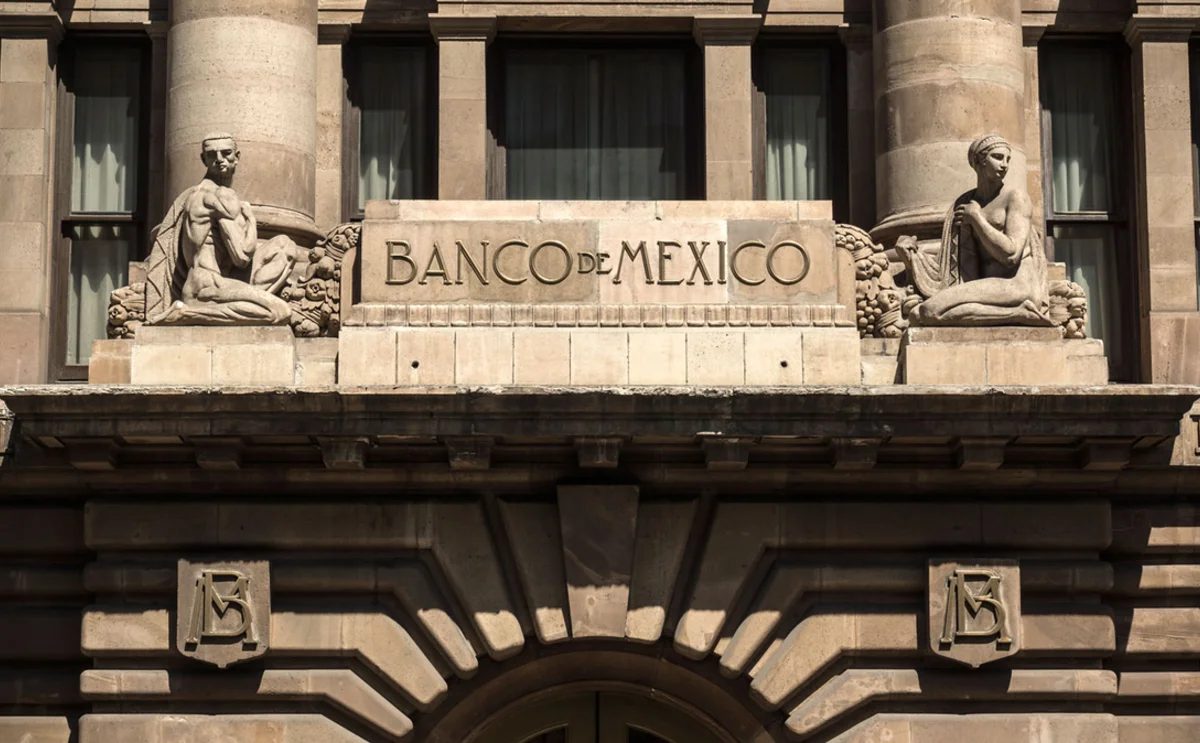
Mexico’s credit outlook weakens as fiscal pressures tightens
Mexico’s credit outlook is coming under increased pressure as rating agencies continue to signal concern over the country’s fiscal position, weakened growth prospects and rising debt-servicing costs.
Mexico is currently facing a fragmented credit landscape with S&P rating the country at BBB with a negative outlook, Moody’s assigning a Baa2 rating with a negative outlook, and Fitch maintaining a BBB- rating with a stable outlook, which was reaffirmed in March 2026.
This divergence has placed renewed attention on the possibility of greater rating alignment across the major agencies. Analysts note that once a negative outlook is assigned, agencies rarely maintain it for an extended period without taking further action.
In this context, the key question for Moody’s is whether Mexico can retain its Baa2 rating or whether it will be downgraded to Baa3, the lowest level of investment grade and the same broad position reflected in Fitch’s current rating.
Downgrade risk
The risk of a downgrade has increased as several of the concerns previously flagged by rating agencies appear to be materialising. Banamex and Kapital Grupo Financiero have warned that a lower rating could reduce Mexico’s relative attractiveness among emerging markets, raise borrowing costs, and limit international investor exposure to Mexican assets.
A downgrade would therefore have implications not only for sovereign credit perception but also for broader capital flows and market confidence. Fiscal pressures remain central to these concerns. S&P has pointed to persistent fiscal weakness with the general government deficit estimated well above the average recorded in recent years.
This imbalance is expected to push public debt higher over the medium term, increasing the burden on government finances. Rising debt-servicing costs are also becoming a more significant constraint, with interest payments projected to absorb a larger share of government revenues in the coming years.
This trend reduces fiscal flexibility and limits the government’s ability to fund social programmes, infrastructure, and other priorities without relying on additional borrowing.
Warning from analysts
Analysts have been warning that if two of the three major agencies were to downgrade Mexico below investment grade, some institutional investors could be forced to reduce exposure, potentially triggering capital outflows and additional upward pressure on yields. At the same time, weak economic growth is reinforcing the negative outlook.
S&P expects the economy to expand by only 1 per cent in 2026, significantly below the government’s more optimistic projections. Recent data also point to subdued momentum with growth slowing in 2025 and remaining weak at the start of 2026.
Lower private investment and rising energy costs are weighing on industrial activity and limiting the economy’s ability to generate stronger expansion. Together, these factors have increased concern that Mexico’s investment-grade status could come under greater pressure over the medium term if growth remains weak and fiscal consolidation fails to materialise.
While a single downgrade may not immediately destabilise markets, analysts argue that signs of stress are becoming more evident. Long-term interest rates are therefore likely to remain under upward pressure, reflecting investor caution over Mexico’s fiscal trajectory and credit outlook.
Syndicated from Our Today · originally published .
Legal context · powered by Jurifi
Get the legal angle on this story. Pick a prompt and Jurifi's AI will explain it using Jamaican law.
AI replies are based on Jamaican law via Jurifi. Not legal advice.
Other coverage

Mexican officials announce 10 dead in early-morning shooting in Tehuitzingo
Jamaica Inquirer
Caribbean Round-Up: CARICOM, Dominica, Guyana, Haiti, and Jamaica
Caribbean Life
Double challenge
Jamaica Observer
Vaz says fuel costs could wipe out proposed taxi fare increase
Jamaica Star
Speaking Notes: Review of Economic Performance, January–March 2026
Planning Institute of Jamaica