
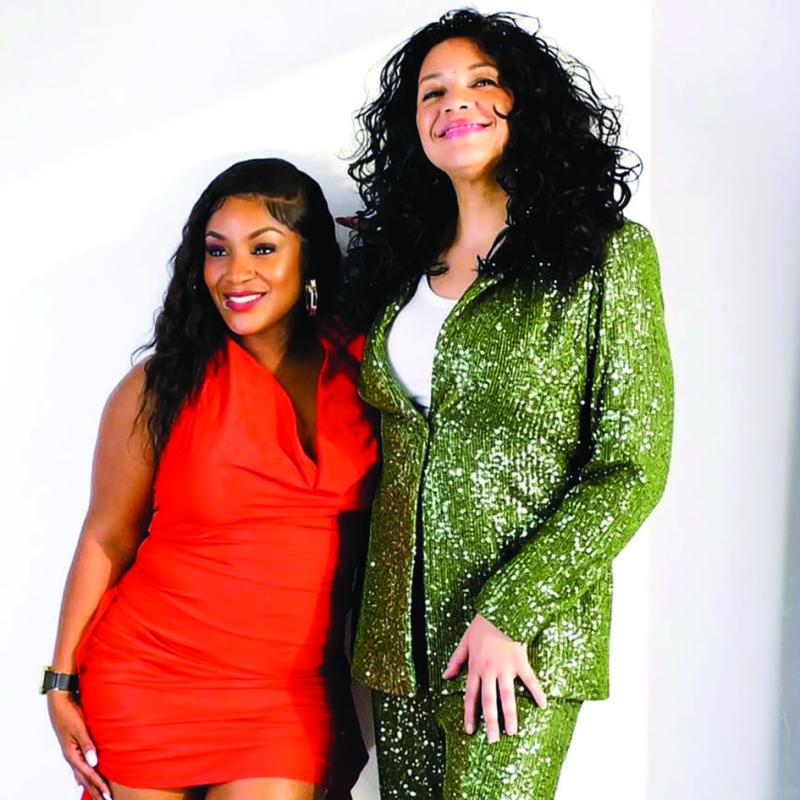
Remembering Kanya King - Entertainment luminaries fondly recall the MOBO Queen
Kanya King, founder of the Music of Black Origin Awards (MOBO), remains arguably one of the most consequential black Britons of the last century. I worked closely with King from 1996 to 2005, and what a time it was. A visionary and champion of black music, King passed away quietly on the night of June 3 following an 18-month battle with colon cancer. She was 57.
Opportunities were few for black music artistes to thrive and be seen nationally in the United Kingdom (UK) during the 1990s when the MOBOs got its start. The awards show gave unseen and unsung UK artistes a voice and visibility. In addition, the MOBOs has always been a good friend to Jamaica with artistes such as Sean Paul, Damian Marley, Shenseea, Beenie Man, Shaggy, Popcaan, and more performing and receiving top honours. Even as recently as 2025, Worl’ Boss Vybz Kartel was the recipient of the prestigious MOBO Impact Award.
So what did the late ‘90s black music landscape in the UK look like before the MOBOs was created? Loads of UK-originated world-class artistes, such as diasporan talent R&B singer Beverley Knight; Stevie Wonder’s favourite south Londoner, Omar and a myriad of names and faces, populated the scene. These artistes had the hits and club careers, but – whether a feature or a bug of a system they had little control over – most struggled to make a consistent impact nationally. There had been a UK Black Music Awards from 1990, but by 1995, it had run its natural course. A vacancy had been created, and as we all know, nature abhors a vacuum. As a result, in 1996, everything changed.
Enter King and her business partner at the time, Andy Ruffell. “I guess it was 1995, no ‘94," began Ruffell, the MOBO Awards co-founder. “I met Kanya as part of the events business I was running. I went to check on the staff at a show, and then Kanya walked past. We realised we had mutual friends. We got talking, and that's how it all began,” he recalled of how their dynamic partnership started.
“We got to know each other well, and Kanya said she wanted to do an award show for black music. I said, ‘Well, that sounds like a great idea!’ And that started the ball rolling. Initially, the industry reaction wasn't good at all. People in power said, ‘We don't need this kind of show.’ We said we thought we did. So, we set a date and put on the first show at the Connaught Rooms in London. It was 1996,” he shared.
“A few weeks out from the show, we had only sold a literal handful of tickets,” grimaced Ruffell. “What changed the game, though, was when we managed to get Lionel Richie to agree to perform, and that lowered the resistance from a few record labels. Richie’s inclusion turned the whole thing on its head, as on announcing him, we technically sold out. We managed to get the first show off the ground, but financially, it was a disaster,” Ruffell laughed warmly. By the early 2000s, he had dissolved his partnership with King in order to extend his production talents into electronic music, firstly with his Dancestar Awards and currently as CEO of Lifestyle Video Networks.
Yet, even without Ruffell on board, King refused to give up. As an associate, legendary UK broadcaster, DJ Trevor Nelson, reflected from his London broadcast studio. “I first met Kanya King in 1995. She was keen on doing a black British music award show and came up with a brilliant title, the Music of Black Origin. That title, ‘M-O-B-O’, made sense to me.” Nelson continued, “I thought we needed an award show desperately to elevate black music in the UK because we didn't have much television exposure.
“She was vivacious,” he recalled. “She bounced into my office and, you know, I just didn't know where she came from. I was pleasantly surprised at her tenacity to get her show over the line. It was when I saw the future prime minister of Great Britain, Tony Blair, at the very first MOBO Awards in 1996, that I knew she was a serious mover and shaker.”
King's PR firm, The Outside Organisation, was founded by ‘The Godfather of UK PR’, Alan Edwards. He told The Sunday Gleaner a similar story. Edwards recalled, “My first recollection of meeting Kanya was way back, just before a show, to try and get recognition for black music artistes,” stated Edwards. “At that time, I was quite likely working with Usher and Beverley Knight, amongst others, so [I] was naturally aligned with her aims.
“It didn't feel like the music was getting a fair hearing, and major award shows seemed to be giving out the same prizes every year. Kanya was already a force of nature, and I instinctively wanted to help where I could. The Outside Organisation became involved with the MOBOs early on, maybe [in] the second year. I quickly became aware of the challenges that Kanya was having to deal with, and I probably only saw the tip of the iceberg,” Edwards reasoned.
As a black woman, independently building a high-profile business in an industry run primarily by white men, King was forced to become a skilful operator and charming diplomat by default. As her mentee and protégée, Vannessa Amadi-Ogbonna (née Amadi), now manager of Tiwa Savage and UK girl pop group, the Sugababes, recounted, “Wow. I was 17 years old,” Amadi-Ogbonna began. “I was at college. I was transitioning into university and working at ‘Top of the Pops' doing work experience for [industry legends] Angela Ferreira and Chris Cowey, the TV show’s producer. One day, this beautiful black lady with big hair comes into the office. I recognised her face because I had read about her in the New Nation newspaper as MOBO had had its first year in 1996.”
Amadi-Ogbonna continued: “The piece said it was successful and how she had another show coming in 1997. I introduced myself and said, ‘I'd love to come and do some work experience. She gave me her number. I contacted her. I came in. She said to me, ‘I'd like you to join the PR department as an assistant/coordinator’. And that was it!
“I was doing everything that no one else wanted to do. Work experience meant doing whatever anyone wanted: Andy needed cigarettes? I'd go out and buy them. Kanya wanted press clippings? Back then, you had to buy all the newspapers and go through, read all of it and then cut out any bits that were MOBO or black music artiste-related,” Amadi-Ogbonna chuckled. “Being in this office led by this black woman was a revelation. I just didn't see many black women in executive roles. There were a few, of course. So, one of my first memories was of this black woman of Ghanaian descent steering her own ship. That was always something that really stood out for me,” she added.
As King's former executive assistant and now an award-winning global influencer and anti-ageism activist, Mia Maugé recalled meeting King on the set of a Gabrielle’s Dream music video in 1993. “Kanya was calm, quiet and had the kindest smile. We sat next to each other and bonded over lunch. Over the next few years, we ran into each other on the music circuit many times. She somehow got my number and called to ask if I’d be involved in organising the first MOBO Awards. We only had six weeks to produce the show. Kanya was at the helm with Andy Ruffell, and she was on a mission. We all were!”
Maugé went on to be MOBO’s head of PR for years, before leaving and returning as King’s executive assistant. “We became close. Kanya was big on loyalty. It meant more to her than anything else. Kanya was fun-loving, and her dazzling smile was often the precursor to the biggest laugh! She loved to dance. I don’t recall a particular time, but laughter was never far away when she wasn’t focused on work,” Maugé shared.
So, what was it like working with King on her generationally-significant awards show in those early days? Diaspora daughter Kubi Springer, another protégée, now a Dubai-based award-winning brand marketing expert, explained: “I initially started as the MOBO Organisation’s project manager, but it soon became apparent that they needed a marketing manager. I became that person. I was 26.
“But before that, in my first year at university, my tutors arranged for me to go in and interview Kanya. I was 17 or 18. What struck me immediately with her was how fearless she was,” Springer marvelled. “As a young black woman, Kanya’s passion just resonated so deeply.”
And where did King’s fearless spirit come from? Perhaps it was born from being one of nine siblings raised in a cramped North London flat. Or, maybe it was being written off by society at 16, as a single mother to her only son, Jermaine. King never gave up. It wasn't in her DNA.
King was honoured by the British monarch, firstly in 1999 with a Member of the Order of the British Empire (MBE) for her work and service to the music industry. She was upgraded to a Commander of the Order of the British Empire (CBE) in 2018.
King made MOBO a unique environment where black women could thrive. Over the many years and countless discussions I’d had with King, her overriding passion was always centred on visibility and giving those with talent and foresight the opportunity to flourish. As songwriter and producer Carla Marie Williams, writer of Beyoncé’s Freedom, and founder of Girls I Rate, remarked, “Kanya was an inspiration to many and also to me. She took me under her wing 10 years ago and gave me the space to be my authentic self. She supported my business and put my name forward to receive my MBE. She was always trying to move things forward and was a pioneer for everything she did.”
But it's that word, ‘tenacity', that is the theme of all my contributors' recollections about King. This trait and her rhino-thick skin made her stand apart. She wasn't interested in the status quo. She had an axe and was keen to clear the gate-kept forest by any means necessary. The MOBOs was her table, and she carved it leg by leg, drawer by drawer.
So how do we measure King's legacy? “If you asked me in 1995, would the MOBOs last 30 years, I wouldn't be sure. Why? Because you need the industry to get behind you, and to her credit, she managed to do that. She made it last 30 years, and that is the legacy,” Nelson shared. “Kanya remains a remarkable woman with incredible patience, perseverance and tenacity, as that's what it took.”
Friend and collaborator, Eva Simpson, an award-winning journalist and founder of ESPR, stated, “It's easy to underestimate the impact of the brand Kanya created and her tireless work to ensure music of black origin was celebrated, recognised and valued on a par with every other genre. She built MOBO into a brand that stood alongside the biggest awards in the world. That's why artistes such as Tina Turner, Jay-Z, Amy Winehouse and D’Angelo and so many graced its stage.”
Edwards continued in the same vein. “Kanya was an integral part of a change and the acceptance of black music, which has become so much [of] a dominant feature of the charts. For UK artistes, the MOBO support has been seismic; it has given them a platform to create massive careers, often globally, and not all of that would have been possible without the MOBOs and specifically Kanya. It's an incredible achievement.”
He added, “The MOBOs fundamentally changed perceptions. We won't even be able to analyse and assess properly the impact that she has had for many years to come, but whichever way you look at it, Kanya –in a relatively short time on the planet – changed the world.”
Toussaint Davy is the author of The Editor Who Knew Too Much and the founder of Jamaica Cold-Pressed Juices. He is also the former editor of Touch Magazine. His published work, features and credits include BBC Radio 4’s Front Row, The Power List, The Independent, MOBO Magazine, Blues & Soul, The Mirror, The Sun, BBC News, MTV Base and various undisclosed ghostwritten projects.
Syndicated from Jamaica Gleaner · originally published .
Other coverage

Cancer no more 12-year-old wins her battle against dreaded disease
Jamaica Star
Rising Voice Of Maroon Culture | TVJ Smile Jamaica
Television Jamaica (Video)Watch
Witness sinks Munga murder trial
Jamaica Observer
Spice Talks Crossover Hits, “Volcano” and the Digital Era: “We Have Our Own Legends Here”
Kaboom Jamaica
Straight outta Brown’s Hall Referee Oshane Nation’s inspiring journey from rural community to the World Cup
Jamaica Star