
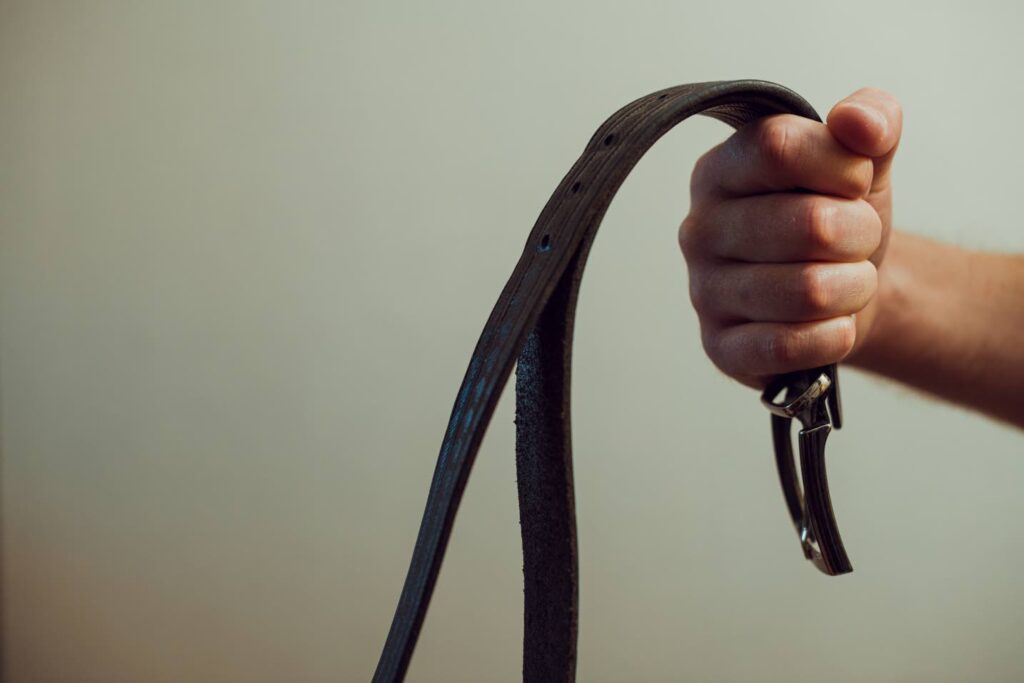
Report it!
THE Child Protection and Family Services Agency (CPFSA) is reminding citizens that reporting child abuse is a legal mandate, even while warning that the rates of violence against children in Jamaica remain alarmingly high.
“Any person who has information which causes that person to suspect that a child has been, is being, or is likely to be abandoned, neglected, or physically or sexually ill-treated, or is otherwise in need of care and protection, shall make a report to the registry [National Children’s Registry],” said legal officer at the CPFSA Kimberly Blackwood-Martin, while referencing the Child Care and Protection Act.
She was speaking during a Zoom virtual meeting on assessing Jamaica’s child protection framework on Wednesday, where she urged citizens to take a more active role in protecting vulnerable children, arguing that the efforts of advocates, policies and legislation would not be enough to tackle the issue.
Blackwood-Martin further reminded Jamaicans that under the legislation, reporting suspected abuse of a child is not optional.
“There was a time where it really took a village to raise a child. I’m talking about in circumstances where you knew that a child was being abused and you made a report, you went to the parent, you retrieved the child from the house, you did whatever you needed to do to ensure that that child was safe. Now we don’t see that anymore,” she said.
During her presentation, she revealed that between the years of 2024 and 2025, the Children’s Registry received 14,183 reports involving children. The reports included allegations of physical abuse, sexual abuse, emotional abuse, verbal abuse, and neglect.
Data presented throughout the meeting also highlighted that in 2026, nearly 76 per cent of children aged one to 14 experienced either psychological aggression or physical punishment, according to the Multiple Indicator Cluster Survey.
Additionally, the report highlighted that over 57 per cent of children experienced physical punishment, with four per cent suffering severe cases, including acts like being beaten in the head or hit in the face repeatedly.
The study further indicated that more than three in four Jamaican children experience at least one form of violence before reaching age 18.
She argued that even as the numbers were worryingly excessive, she was certain that there were cases that had gone unheard, while more children continue to endure abuse silently.
“How many times have you been on the road and you see a child that is begging, [or] you see a child that is dirty and you say to the child ‘oh no, mi nuh have it today’, or you give the child $50 or $100? How many times have you stopped to say, ‘Why are you on the road? What are you doing here?’ How many times have you gone to the police station or called the police to say ‘I just passed this place and I saw this child begging. You need to go and investigate’? How many times have you done that? So now we see where we have a part to play where the legislation provides for these things,” charged Blackwood-Martin, highlighting Section 8, part two of the Act, which speaks specifically to a child who is found to be destitute and or begging.
“How many times possibly in your own family where you realise that something is definitely wrong — or that this child is getting beaten a little bit too frequently — or you see unusual marks on the skin of a child… how many times did we stop to report it to the police or to the registry? How many times do we do that? And so we see where there are so many things that community persons, and civil society can do to assist just as a citizen of Jamaica. We’ve seen these things happen and we leave it alone,” she continued.
Blackwood-Martin also criticised attitudes surrounding corporal punishment, arguing that the cultural acceptance of excessive beatings continues to place children at risk.
She stressed that communities must play a stronger role in identifying and reporting abuse cases, lamenting what she described as the breakdown of traditional support systems.
Blackwood-Martin also encouraged members of the public to contact the NCR through its 211 hotline when concerns arise involving vulnerable children.
“The rates of violence against children are high. We’re not going to pretty it up, we’re not going to pretend. It is alarmingly high and we have to now decide what we are going to do about it. Policies are not enough, Cabinet meetings are not enough, and committee meetings are not enough. These things are not enough anymore,” she said.
Syndicated from Jamaica Observer · originally published .
Legal context · powered by Jurifi
Get the legal angle on this story. Pick a prompt and Jurifi's AI will explain it using Jamaican law.
AI replies are based on Jamaican law via Jurifi. Not legal advice.
Other coverage

From YouTube to NYU | TVJ Daytime Live
Television Jamaica (Video)Watch
Webinar - Doing Business with Jamaica
JAMPRO (Video)Watch
The Faculty of Criminal Investigation Training Graduation Ceremony
JCF — Jamaica Constabulary Force (Video)Watch
Outrage Over Police Killing Of Woman In Granville, St. James | TVJ All Angles
Television Jamaica (Video)Watch
What will football look like in a year? | SportsMax Zone
SportsMax (Video)Watch