
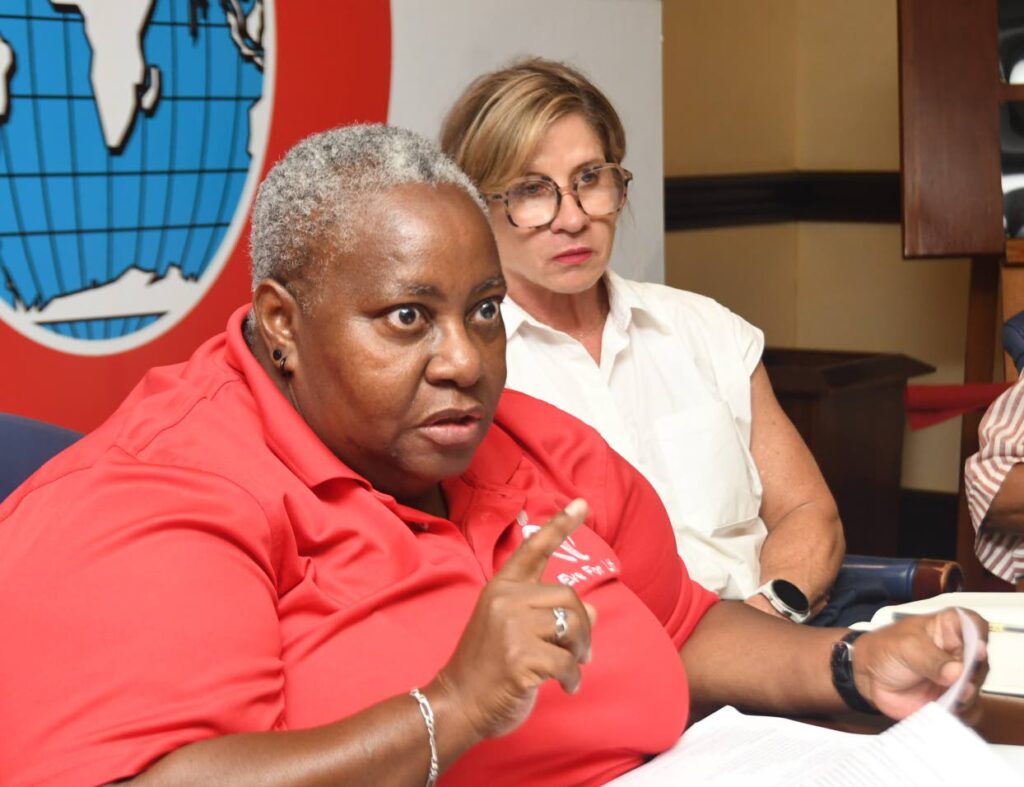
APPLYING for a Charitable Organization Registration Certificate is a process executive director of Eve for Life Joy Crawford says the organisation had done, easily, for almost 18 years, until February 2025 when a month-long process turned into a year-long headache.
The certificate, administered by the Department of Co-operatives and Friendly Societies (DCFS), allows non-profit organisations to legally operate in Jamaica and benefit from tax exemptions.
Addressing a Jamaica Observer Monday Exchange last week, Crawford said her organisation applied for the certificate in February 2025. However, she said the team did not receive the document until March 2026, five months before it is to expire in August 2026.
Crawford said to make matters worse, when the organisation finally received the document, it was back-dated to state that it came into effect in February 2025, despite not being issued to Eve for Life until March 2026. She said her organisation is now in the process of renewing the certification.
“It’s not unique to us, and this is not in the absence of dialogue because we were very engaged and we weren’t getting anywhere. We were very engaged in trying to get it resolved…our [finance operator] he lived there [DCFS] almost every week. We were engaged, it was not [that] we were not engaged. We were engaging, we were sending e-mails, and we were leaving messages. The response time that we got from them was far from adequate, and when we did get a response, it was always that the goalposts were shifting,” she told editors and reporters at the Observer’s Beechwood Avenue, St Andrew offices.
She continued: “There was always something else that just didn’t make sense. We were asked to resubmit stuff that we submitted before, because somebody can’t find something somewhere, and while they’re doing all of that, people are hurting. The efficiency of the unit is something that we need to look at.”
Crawford said the lack of certification severely impacted the non-profit’s operations and donors, and strained its resources.
“It’s not a little bit of money that we move, because you have grants that are coming in and we use them to do shopping — we shop for commodities, we shop for stationery, we buy gas, we buy parts, we do support groups, we give stipends to people, we do care packages, we pay the psychologists — and so we’re always spending, and vendors, without the charity’s [certification] will not remove the general consumption tax (GCT). What it means is that we can’t pass that GCT onto the donor, so it means that Eve for Life would have to absorb it because we can’t reclaim anything,” a frustrated Crawford said.
“…We’ve never had this problem. When we have the certificate, what we do is that when I get an invoice or when the [finance operator] gets it, he uploads the invoice into a platform at Tax Administration [Jamaica] and that system calculates and issues back to us, a document that says that this thing is approved not to be taxed, and then we send that document now, with our payment, to the vendor so the vendor gets their money and they have that document that says the GCT is not to be charged to the NGO [non-governmental organisation].
“Otherwise, you have to pay them GCT, so it’s very important for charities to have their certificates, for those of us who are registered,” she explained, stressing the importance of timely renewals.
The Eve for Life head questioned whether the shift was due to staffing issues or ineffective changes to internal operations, demanding a more effective approach to ensure non-profits do not continue to be burdened.
She told the Observer that the process to renew or apply for a charity certification is already tedious and burdensome, and with a new Non-Profit Organisations (NPO) Act expected in October 2026, she worries that new regulations will cause further delays as both charities and the DCFS adapt to new practices and processes.
“There needs to be changes at the operational level at the level of DCFS, in terms of the turnaround time and the clarity [of information shared], with enough agents to service the non-profit organisations better…There has to be a protocol. If you say I am to send my [documents] in three weeks before expiration, and I’ve done that, then the system should say, ‘In one or in four weeks, you’re going to get a response.’ It can’t be that I don’t know when,” said Crawford.
Syndicated from Jamaica Observer · originally published .
Legal context · powered by Jurifi
Get the legal angle on this story. Pick a prompt and Jurifi's AI will explain it using Jamaican law.
AI replies are based on Jamaican law via Jurifi. Not legal advice.
Other coverage

Female pastor falls for married apostle as his union crumbles
Jamaica Star (Video)Watch
Meeting with the Jamaican Diaspora in Guyana
Andrew Holness (Video)Watch
What happened when this Kingston mom returned home with former conjoined twin?!
Jamaica Star (Video)Watch
Signing of MOU between Jamaica and Guyana
PBC Jamaica (Video)Watch
Dedication & Naming Ceremony The Portia Simpson Miller Building
Office of the Prime Minister