
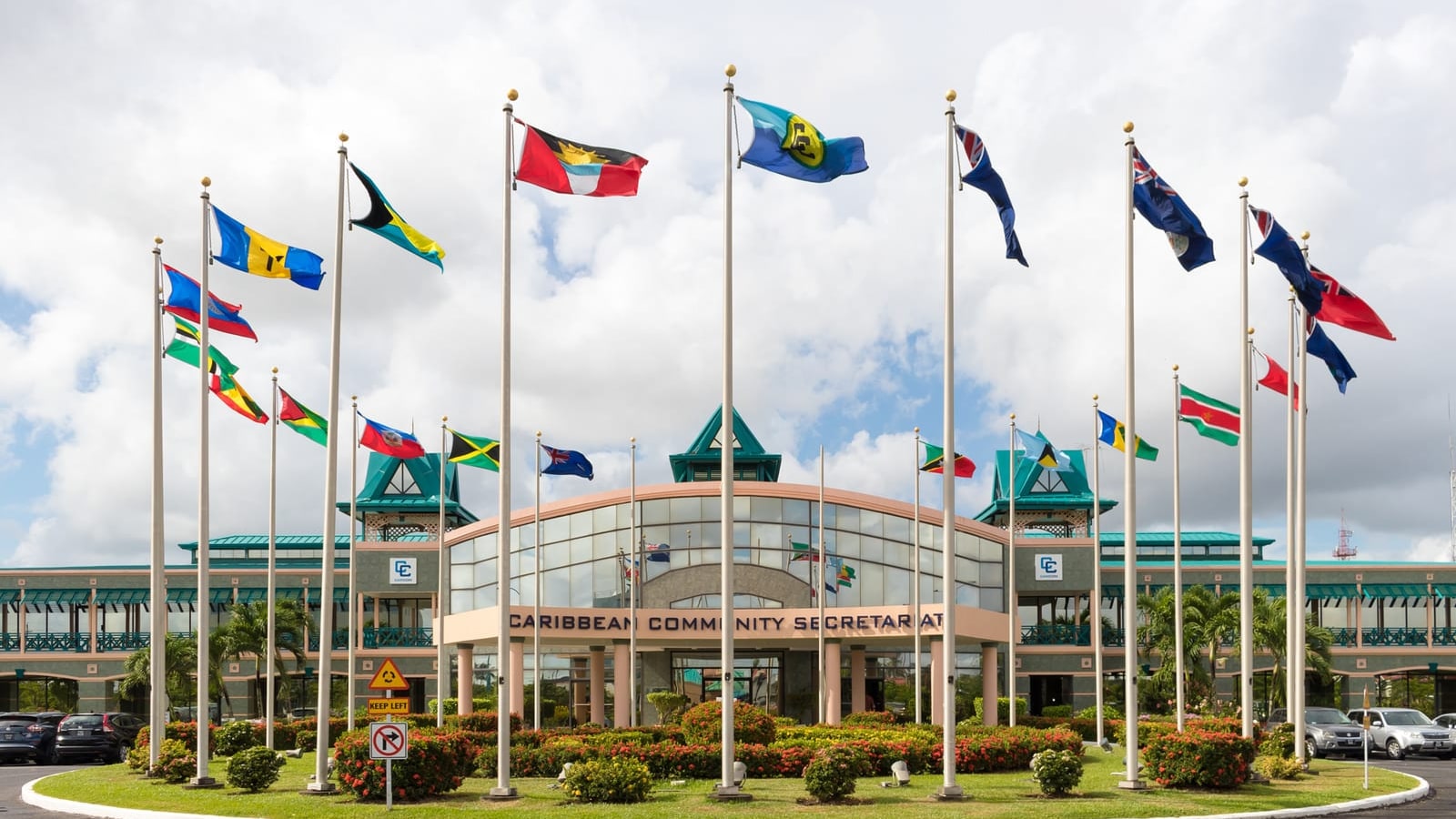
CARICOM leaders and private sector set affordability steps at St Lucia talks
CARICOM Heads of Government and the regional private sector locked in practical steps on affordability at the Second High-Level Breakfast Dialogue in Castries, St. Lucia, earlier this week, reports contributor Durrant Pate.
The encounter at Sandals Grande, Saint Lucia, joined the OECS Business Council, the CARICOM Private Sector Organisation (CPSO) and CARICOM Heads of Government under the theme “Meeting the Affordability Challenge: Toward a Proactive Agenda for Member States and the Private Sector.” It took place on July 6, 2026, on the sidelines of the 51st Regular Meeting of the Conference of Heads of Government of the Caribbean Community.
More than one hundred and twenty senior CARICOM private-sector figures attended, alongside Heads of Government from eleven of the 13 Member States, the Caribbean Congress of Labour, and development finance partners including the Inter-American Development Bank (IDB), the Caribbean Development Bank and the CARICOM Development Fund, as well as other regional bodies.
With living costs climbing across the Community, the gathering weighed concrete options to ease affordability: clearing obstacles to trade within the region, cutting transport and logistics expenses, widening import sources, and drawing in regional investment capital. Participants also considered tighter tourism linkages and the uneven harm the International Maritime Organisation’s Net-Zero Framework is expected to inflict on CARICOM Small Island Developing States.
Talks showed broad agreement that governments, business and organised labour must shift from policy conversation to joint delivery, backed by clear mandates, deadlines and measurable results.
Regional travel and maritime transport led the morning agenda. Delegates stressed that weak transport capacity still undercuts the CSME pledge on free movement of people and goods. They set a September 2026 target to put in place the regulatory framework for mutual recognition of insurance, licences and road taxes — a step needed to close arrangements for a privately run regional ferry service. In the meantime, CARICOM Heads decided to press ahead with an earlier pilot ferry, using a vessel the Government of Trinidad and Tobago has indicated it is prepared to make available to start the service.
On trade, the meeting welcomed the start of operations by Executive Air Cargo, which has begun moving agri-food goods among Member States.
Addressing barriers the region can fix itself, the session endorsed a ‘pairwise’ approach that pairs Member States applying the 57 non-tariff barriers (NTBs) flagged by the private sector as choking intra-regional commerce with the Member States those barriers hurt. A Lead Head of Government will steer the process, with active input from the private sector and the relevant ministerial and regulatory bodies, and with both implementing and affected States committing to time-bound fixes.
Import diversification featured technical work on lowering costs and raising the gains from spreading and de-risking CARICOM’s imports. The meeting noted that the Region could secure expected savings of about USD 2.0 billion from diversifying part of its non-fuel imports alone, with room for still larger savings as fuel imports fall during the shift to renewables. CPSO was pressed to deepen work on the link between fuel imports and the energy transition as an immediate priority. Short-term steps to relieve cost-of-living strain on CARICOM households were also discussed.
Barbados Prime Minister Mia Mottley urged a formal tripartite compact among Governments, the private sector and organised labour covering a basket of essential products. She further asked business to accept lower profits on essentials so living costs ease for CARICOM citizens. Further talks drawing ideas from all sides were judged necessary.
Attention then moved from costs to capital. The session backed urgent efforts to connect surplus liquidity in regional financial institutions with strategic investment in desalination, battery storage, solar, wind and geothermal generation, and port facilities. Because CARICOM citizens still know little about these openings, participants endorsed listing them on a shared regional platform as a first step. Agricultural investment opportunities were specifically marked for inclusion, and a CARICOM-wide agricultural investment compendium was requested for the next High-Level Breakfast Forum.
In the same vein of regional value chains, the meeting reaffirmed support for finishing the Tourism Linkages Project ordered by the 48th Regular Meeting of the Conference of Heads of Government, aimed at tightening ties between tourism and regional agriculture, manufacturing and services.
Syndicated from Our Today · originally published .
Legal context · powered by Jurifi
Get the legal angle on this story. Pick a prompt and Jurifi's AI will explain it using Jamaican law.
AI replies are based on Jamaican law via Jurifi. Not legal advice.
Other coverage
Caribbean RoundUp: Antigua and Barbuda, Barbados, Dominica, and Guyana
Caribbean Life
CARICOM leaders seek to reassure citizens on third-country national transit agreements
Jamaica Gleaner
Caricom To Take Measure To Reduce Impact Of Rising Cost Of Living | TVJ News
Television Jamaica (Video)Watch
CARICOM And The EU Face The Same Global Paradigm Shift
Jamaica Inquirer
Caricom relief ship sails for Venezuela
Caribbean Life