

Novlette Howell, executive director of the Women’s Centre of Jamaica Foundation, has joined mounting pressure for Jamaica’s sex offenders’ registry to be made publicly available, saying neighbourhoods deserve to know when people convicted of sexual crimes are living nearby.
She accepts that errors on such a list could wreck the lives of people who are not guilty, yet holds that the chance to shield children and other at-risk Jamaicans matters more than those dangers.
The debate has sharpened after the rape and killing of 10-year-old Shanai Coke in Trelawny earlier this week. The suspect, Delroy Coke, already had sexual-offence convictions and a record of arrests tied to children and sexual violence. His discharge from prison under a year ago has fuelled anger and fresh demands for clearer information about convicted sex offenders.
The Government has since said it will reassess how sex offenders are supervised. National Security and Peace Minister Dr Horace Chang indicated that law and policy shifts are being weighed.
“As a Ministry, we will actively review and pursue mechanisms to effectively manage how we deal with sex offenders. Decisive action will be taken, and the team has been directed to continue to undertake work in this regard,” Chang said.
In an interview with THE WEEKEND STAR, Howell cast a public registry as a potentially powerful crime-prevention measure. She suggested that men with convictions would hesitate to settle back into places they know if locals could check their identities with ease.
“The general view is that it could act as a deterrent,” Howell said. “The residents themselves would have access to information, something to utilise when they see strange persons coming within their neighbourhood. It can be very protective.”
She said the benefit would be felt most in countryside districts, where neighbours routinely look out for one another.
“It’s a rural space, so they could huddle amongst themselves because they themselves, knowing, could find additional security to protect their children and older family members.” she said.
In her view, wider knowledge would push communities to stay alert instead of remaining unaware. At the same time, she insisted that any open registry must rest on firm legal safeguards, warning that a wrong entry or a false link to a sexual crime could leave lasting ruin.
“Someone can be smeared once their name appears on the list and they may not even be guilty,” she cautioned. “That is what I fear.”
Howell also noted objections about people who have finished their sentences and gone through rehabilitation. Naming them publicly, she said, might block their reintegration and leave relatives open to abuse or attack merely because of the connection.
“If they go into the communities, they take set on them once they know that they are affiliated with rape. Even though they may not do anything, they can be targeted, and that really can have an impact on anybody. Family members can be targeted as well.”
Even so, she argued that children’s safety must come first.
“It is a high risk, but I think it would help more than it would harm,” she said.
She again underlined how serious the danger is when someone is wrongly named or wrongly tied to a sexual offence.
“That’s very difficult because, as you know, persons would get on to the registry and probably didn’t even do the act, so it is hard. That means the Government would have to put in additional measures to protect those persons. It requires additional information among government agencies, developing policies and also legislation.”
Syndicated from Jamaica Star · originally published .
Legal context · powered by Jurifi
Get the legal angle on this story. Pick a prompt and Jurifi's AI will explain it using Jamaican law.
AI replies are based on Jamaican law via Jurifi. Not legal advice.
Other coverage

‘A whole new world’
Jamaica Gleaner‘A whole new world’ - Seniors unlock the power of AI as Excelsior Community College helps them bridge the digital divide
Jamaica Gleaner
Child Protection Concerns Raised After Murder of 10-Year-Old Shani Coke | News at 7 PM | @CVMTVNews
CVM TV News (Video)Watch
PEP’s perfect pair - Nation’s top-performing boy and girl make Creative Kids proud, highlight sacrifices behind the scores
Jamaica Gleaner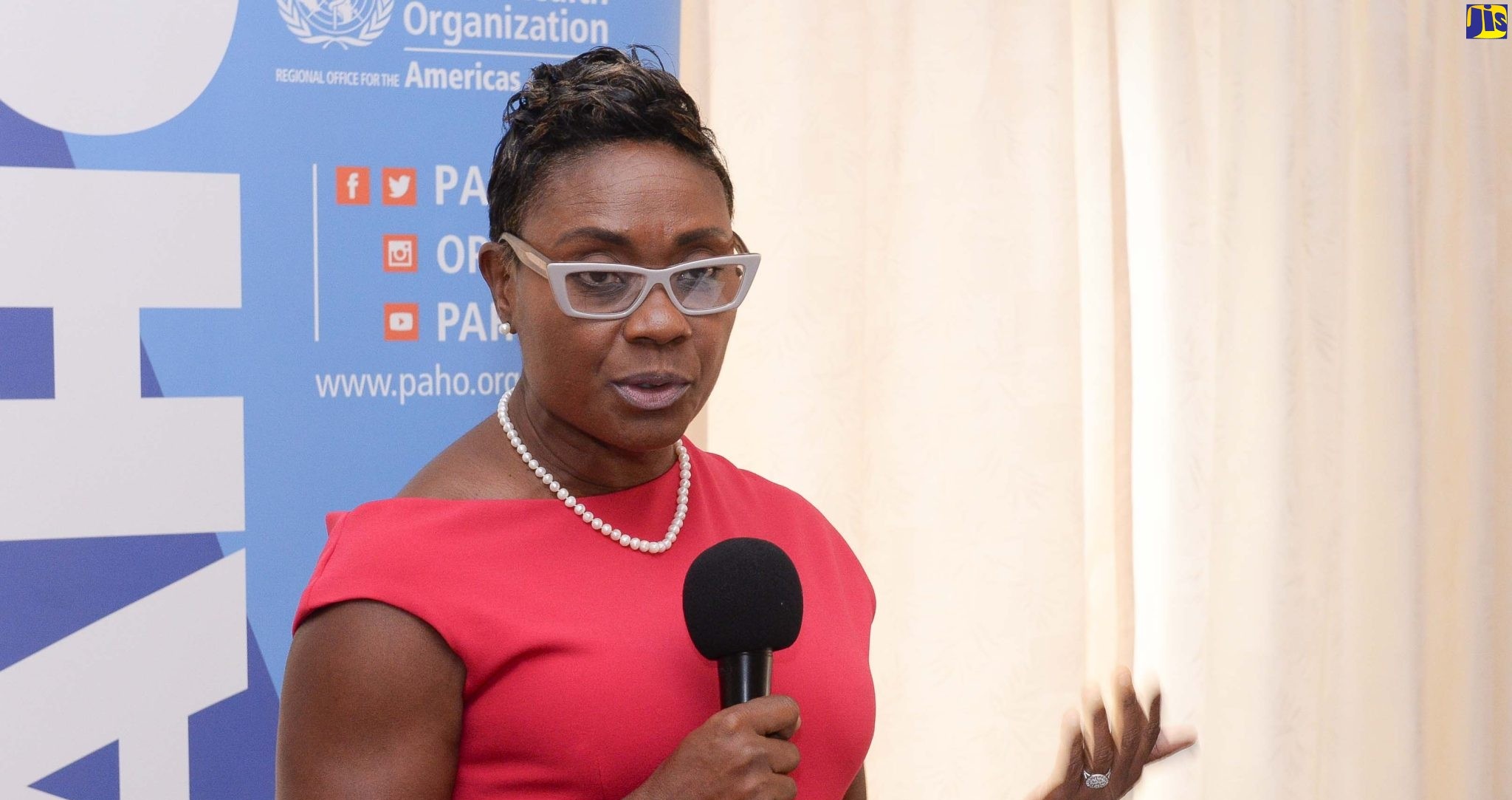
Cuthbert Fires Back at Alleged Integrity Commission Investigation
CVM TV