
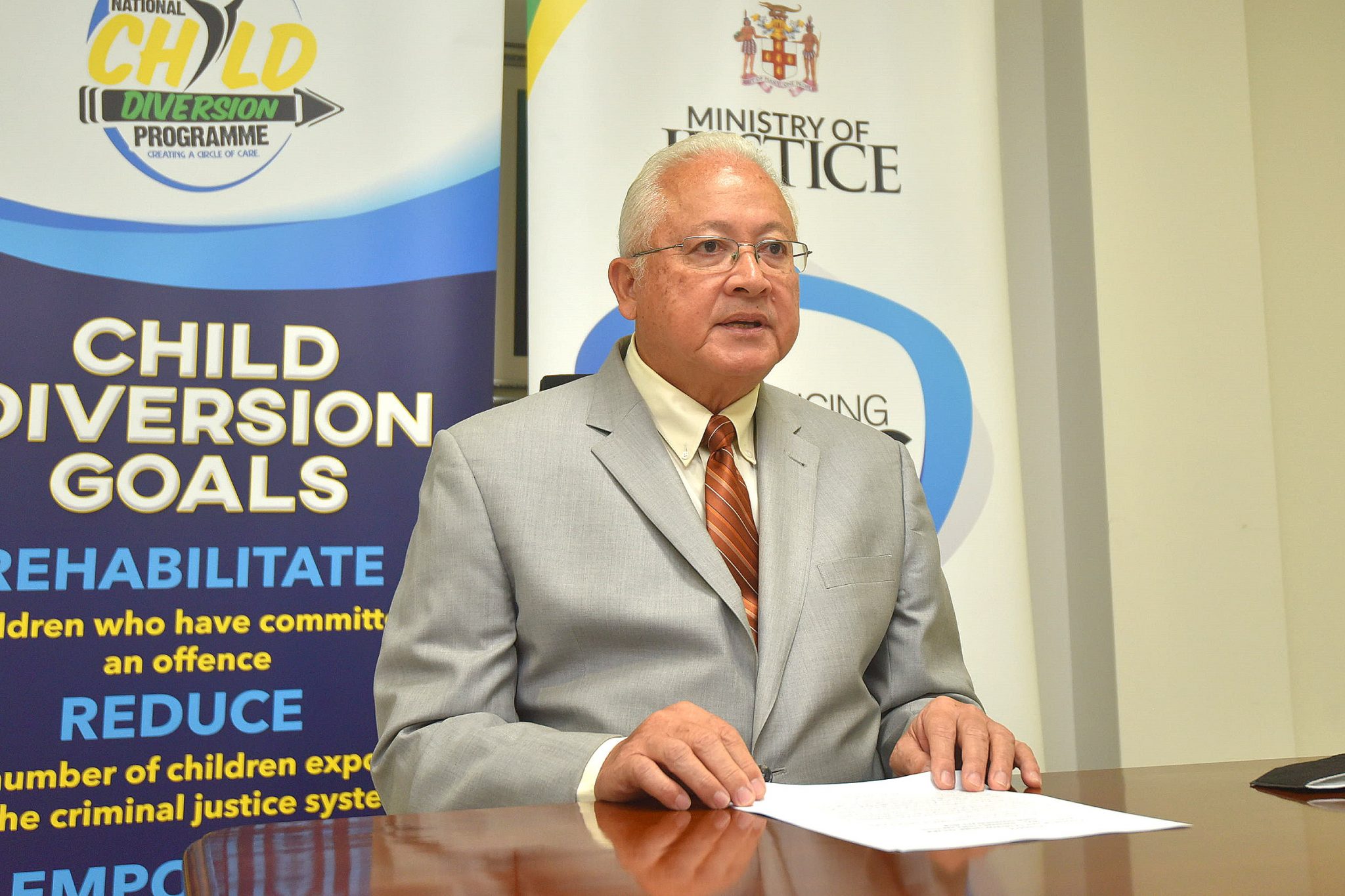
Members of the Joint Select Committee reviewing the Child Diversion Act are studying proposed amendments meant to improve rehabilitation for children who come into conflict with the law.
The legislation creates an option outside the usual court route. Children who qualify and are accused of certain offences can be directed to counselling, mentoring and other rehabilitative support instead of being prosecuted.
Committee member Marisa Dalrymple-Philibert said she is not satisfied that parish child diversion committees are engaged enough in the communities they serve. She argued that stronger outreach could help to identify at-risk children sooner and put support around them before they end up inside the justice system.
Dalrymple-Philibert said, "There has to be a way where the court insists if it is that the child is to go into that, the child doesn't move from there until the child diversion officer comes to the air or something. The child, at 11, put in a place, was there for one week before they got back to court... mother not allowed to see the child, mother lives in St Ann, so, by the time they tell you to come it was not the visiting time - and the child is traumatised and locked up. So, it makes a mockery of an act that you pass, if it cannot, in fact, help the children."
Committee chairman Delroy Chuck also said the Child Protection and Family Services Agency, CPFSA, should be working more closely with the Child Diversion Programme, while making sure the two bodies do not end up duplicating each other's roles. He said the programme has been effective because its committee carries out a full assessment of the child and then sets out a treatment plan.
Chuck said, "We don't want a complete overlap. We want CPFSA and the Child Diversion Committee to be closely working together. Now, the success, as I understand, it of the child diversion is because you have this committee that does a full assessment of the child and maps out a treatment plan for the child. So, one of the things we really want to work with CPFSA, that deviant delinquent behaviour really should be a part of the CPFSA mandate."
At the same time, Chuck said the review is considering adjustments that would widen referrals to the child diversion programme and cut the number of children who have to appear before the courts.
"So, once it is an offense in the schedule, then we don't want them to go to court. The DPP or the clerk should send them to child diversion. But if it is not in the schedule, then they may well have to be charged and let a recommendation go to the judge that this is not in the child diversion schedule because it's a serious offense, but the police or the child diversion or whoever could say to the court this child could benefit from, you know, child diversion treatment."
Syndicated from CVM TV · originally published .
Legal context · powered by Jurifi
Get the legal angle on this story. Pick a prompt and Jurifi's AI will explain it using Jamaican law.
AI replies are based on Jamaican law via Jurifi. Not legal advice.
Other coverage

UTech, Jamaica Real Issues, Real Talk Series: Experts, Youth Advocates Call for End to Fear and Stigma in Addressing Child Sexual Abuse
University of Technology, Jamaica
More fathers fighting to stay in their children's lives
Jamaica Star
CVM News At 7PM: July 2, 2026 | @CVMTVNews
CVM TV News (Video)Watch
Accessibility is a right, not a privilege | Denise Daley| Sectoral Debate 2026
Jamaica PNP (Video)Watch
INDECOM Probes Another Police K1lling | Jamaica News Today
Realnews YtWatch