

Jamaicans must embrace continuous education if the country is to cope with, and benefit from, the Fourth Industrial Revolution, according to Professor Anthony Clayton of The University of the West Indies, Mona.
Clayton, who teaches sustainable development, told the Jamaica Observer on Sunday that artificial intelligence is now central to the latest wave of industrial change. As machines take on a growing share of technical work, he said, the jobs of the future are expected to place greater value on problem solving, original thinking and emotional intelligence.
He said Jamaica will need to redesign how it educates and trains people so those abilities are developed, while also putting in place the infrastructure required for future competitiveness. Clayton said that shift will demand fresh approaches.
The professor noted that a number of major technology companies in the United States have already assumed some functions once associated mainly with universities. He said those firms tend to want staff who are less narrowly academic and more able to tackle practical problems.
Clayton also pointed to Germany and the United Kingdom, where he said mixed industry-and-university arrangements are already in use. Those include workplace placements in industrial settings and company-backed engineering doctorates, where students work on research meant to solve a business challenge or help develop a new product.
He said similar partnerships are likely to become more common, beginning in technology-heavy fields, because they can make learning better aligned with the labour market that is emerging.
Clayton argued that Jamaica would benefit from moving early in that direction as production, manufacturing, logistics, finance, marketing, management, security, planning and government become part of one connected digital economy.
In that environment, he said, most workers will have to become knowledge workers who can contribute through specialised expertise, critical judgement, people skills and a lasting commitment to learning. He added that such a transition would also call for a reconsideration of the roles played by government and key institutions.
Clayton said the right reforms could allow Jamaica to make use of opportunities created by the Fourth Industrial Revolution and break out of its long-running low-growth pattern, positioning the country as a more dynamic economy.
Syndicated from Jamaica Observer · originally published .
Legal context · powered by Jurifi
Get the legal angle on this story. Pick a prompt and Jurifi's AI will explain it using Jamaican law.
AI replies are based on Jamaican law via Jurifi. Not legal advice.
Other coverage
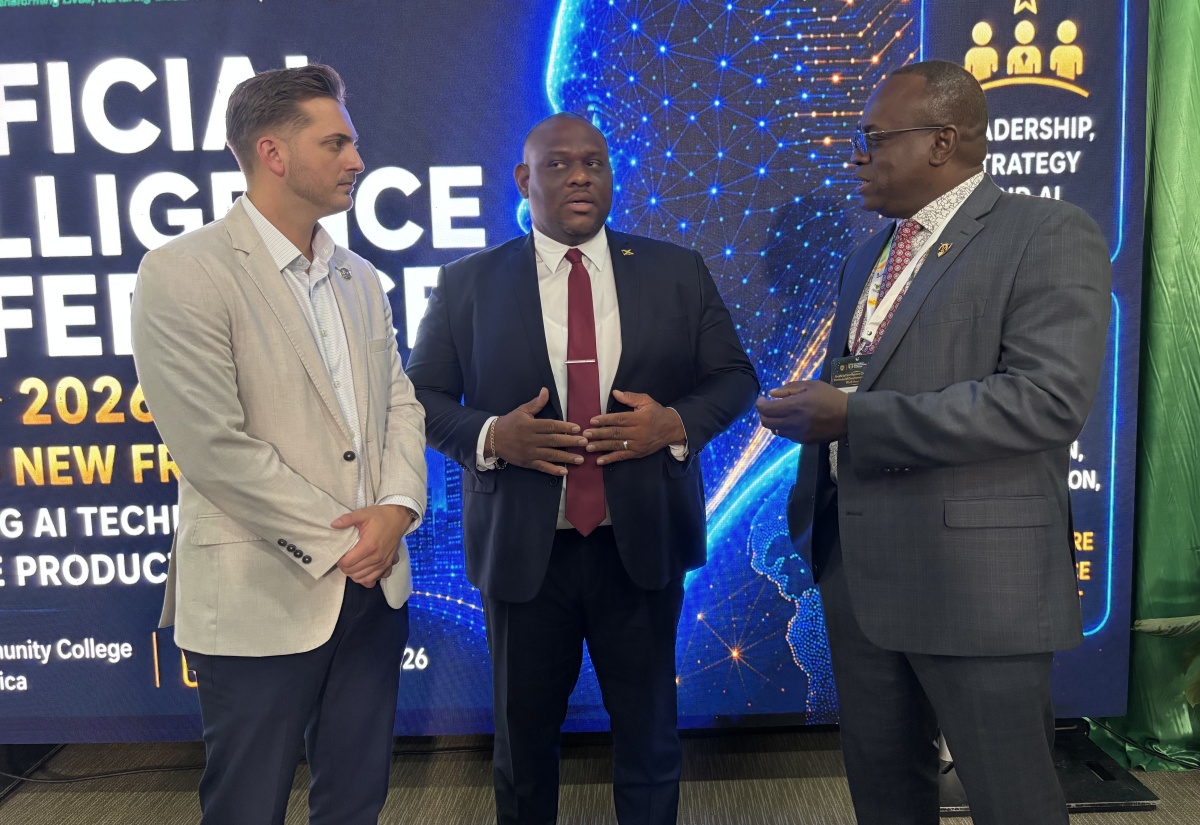
Senator Morgan Highlights Need To Demystify AI To Empower Citizens
Jamaica Information Service
Business leaders endorse Anderson for NaRRA but demand oversight, transparency
Jamaica Gleaner
Douglas Levermore | On the Outside looking In: Will the Caribbean be left out of the AI sweepstakes?
Our Today
Fresh EU funds aim to speed digital reforms
Jamaica Gleaner
Gov’t to Announce JAMRROC Members Soon
Jamaica Information Service