
‘Cyberbullying’: Senator warns online attacks on Speaker crossing into digital abuse
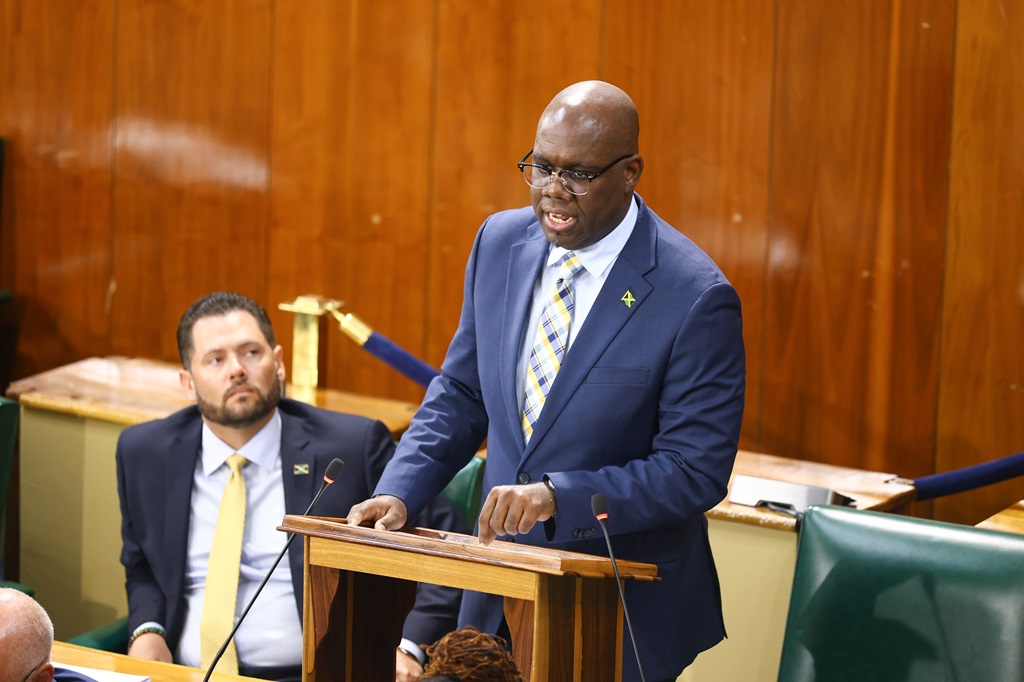
KINGSTON, Jamaica — Government Senator Dr Elon Thompson has warned that some online attacks targeting Speaker of the House Juliet Holness reflect a growing trend of cyberbullying being disguised as political commentary.
Thompson made the remarks on Friday in the Senate during debate on amendments to the Cybercrimes Act, where he argued that Jamaica’s increasingly hostile online political culture is blurring the line between legitimate democratic criticism and coordinated digital abuse.
The senator said criticism of politicians and public officials is a normal and necessary part of democracy, noting that the prime minister, Opposition members, public servants and even private citizens who take public positions are often subjected to scrutiny and backlash.
“I too have received it with persons on social media calling me spineless, a sellout or a traitor simply because I’ve taken a position and added my voice on matters of national interest,” Thompson said.
However, he stressed that the proposed legislation should not be interpreted as an attempt to shield politicians from accountability or criticism.
“Let me be clear, this Bill is not about protecting politicians from criticism. It must never be that. Citizens must be free to criticise their leaders, challenge policy, expose wrongdoing and demand better,” Thompson said.
The Government senator also argued that recent online reactions following the dramatic National Reconstruction and Resilience Authority (NaRRA) debate in the Lower House had exposed what he described as a deeper problem developing in Jamaica’s digital space.
The debate, which stretched into early Wednesday morning, was marked by chaotic scenes after Opposition Member of Parliament (MP) Angela Brown Burke grabbed the ceremonial mace during proceedings, leading to her suspension from the sitting. The incident triggered widespread commentary, memes and criticism online, with some of it directed at Speaker Holness over how she handled the confrontation.
Thompson said that while public officials, including the Speaker, should expect scrutiny and criticism over their decisions and conduct, some of the online commentary following the NaRRA debate had crossed into ridicule and personal attacks.
“We have seen commentary descend into ridicule, bullying, personal attacks, edited visuals, distorted representations and content that seeks to reimagine, mock and dehumanise her. That is not democratic accountability, that is digital mobbing, that is cyberbullying dressed up as political commentary,” he added.
The senator warned that the culture being normalised online could eventually affect not only politicians but ordinary Jamaicans participating in public life.
“If a lady holding one of the highest offices in our Parliament can be reduced online to memes, insults, caricatures and abuse because of how she presided over a difficult sitting, then we must be honest about the culture we are building,” Thompson said.
He cautioned that digital hostility was increasingly becoming embedded in Jamaica’s political culture, particularly as parliamentary proceedings are now rapidly clipped, edited and circulated across social media platforms in real time.
Thompson urged Jamaicans to maintain strong political debate without allowing public discourse to descend into cruelty or dehumanisation.
“We must not confuse the right to criticise with the right to humiliate. We must not confuse free expression with digital cruelty. We must not confuse political disagreement with a licence to strip another human being of dignity,” he said.
Syndicated from Jamaica Observer · originally published .
Legal context · powered by Jurifi
Get the legal angle on this story. Pick a prompt and Jurifi's AI will explain it using Jamaican law.
AI replies are based on Jamaican law via Jurifi. Not legal advice.