
CARICOM Reparations Commission calls for return of BVI and for King Charles to back decolonisation
Decries that the Caribbean remains ‘the most colonised part of the world’
Durrant Pate/Contributor
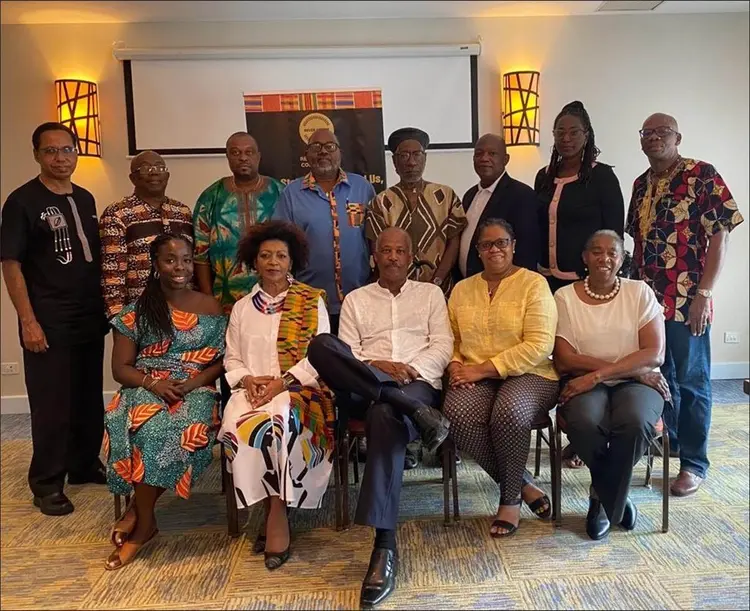
In an Our Today news follow-up… The Caricom Reparations Commission (CRC), which is now in the United Kingdon (UK) campaigning, is calling on the British Empire to return the British Virgin Islands and for King Charles to commit to decolonising Britain’s remaining overseas territories.
In making the call, the CRC, which is the body seeking reparative justice for enslavement, colonialism and their legacies on behalf of the alliance of Caribbean states, is warning of a “resurgence of colonisation” around the world. Having arrived in the UK on Monday for a series of meetings, as part of its campaigning, the CRC decried the fact that the Caribbean remained “the most colonised part of the world”.
CRC Chair, Professor Sir Hilary Beckles, told a meeting yesterday that the Caribbean is the most colonised part of the world; something that had to stop. “We are saying to the world and to the United Nations (UN) to bring an end to colonisation, because if we do not bring it into the framework of reparatory justice, we might see a resurgence of colonisation elsewhere,” Sir Hilary remarked.
Case for most colonised part of the world
Continuing, the Barbadian-born distinguished university administrator, economic historian and education specialist posited, “….and we’re beginning to see signs of that. People are sending their armies and so on into other people’s territories and taking control. We begin to see how power can lead to a resurgence of colonisation.”
He is adamant, “We object to the fact that when we leave our independent islands, and we arrive in Martinique, there’s a sign at the airport that says, ‘Welcome to France’. We object to the fact that in the Virgin Islands, our people cannot make fundamental decisions because they have to consult with the British governor and consult with Downing Street to make decisions … and we want to have it uprooted as part of the enlightenment that we’re calling for – democracy, freedom, sovereignty for everyone.”
The British overseas territories of Anguilla, Bermuda, the British Virgin Islands, the Cayman Islands, Montserrat and the Turks and Caicos have internal self-governance but remain under the control of UK-appointed governors with authority over defence, international affairs and some security and legal matters. Recently, the CRC launched a new manifesto outlining the “moral, ethical and legal case for reparations.”
At a briefing yesterday in London, Barbados’ Ambassador to CARICOM, David Comissiong, trumpeted, “decolonisation has been inserted into this new manifesto…. as a key demand.” He said it is “inconceivable” that, having transcended the oppression of slavery and being “sucked dry” by colonialism, Black people should still find themselves “bereft of self-determination,” citing that there are “no less than 20 colonies – British, French, Dutch and American colonies – in the Caribbean.” He noted that “reparations and decolonisation go hand in hand”.
Wider discussion about global reparations movement
At the briefing, there was a wider discussion about the status of the global reparations movement, which delegates said had been galvanised by Caribbean and African cooperation, and new plans to partner more closely with African Americans. Beckles explained the movement is entering the “stage of negotiations,” highlighting that “an avalanche of apologies” from various institutions and the UN’s vote in March to recognise slavery as the gravest crime against humanity.
As well as speaking to UK parliamentarians this week, the Caribbean delegation has met with senior clerics of the Church of England, urging it to press ahead with its reparations programme, Project Spire, despite what he described as the headwind of “reactionary theology” that clerics faced from critics. Sir Hilary added that he hoped the church would be “critical allies in this struggle for humanity’s future”.
Syndicated from Our Today · originally published .
Legal context · powered by Jurifi
Get the legal angle on this story. Pick a prompt and Jurifi's AI will explain it using Jamaican law.
AI replies are based on Jamaican law via Jurifi. Not legal advice.
Other coverage

Ronald Sanders | Vulgarity of asking enslaved to pay
Jamaica Gleaner
Caricom Reparations Push Highlights Global Divide | TVJ News
Television Jamaica (Video)Watch
Mottley Rejects UK Compensation Claim | TVJ News
Television Jamaica (Video)Watch
Jennifer Nunes | CARICOM secretary-general controversy and the future of regional unity
Jamaica Gleaner
Caribbean governments focus on economic challenges
Caribbean Life