

Dennis Minott | The composite animal Jamaica is quietly creating

The health of a democracy is not measured by whether its leaders are accused. Every leader eventually will be. The real test is how leadership responds when independent institutions raise uncomfortable questions.
Do they invite sunlight?
Or do they begin treating oversight as hostile warfare?
I increasingly worry that Jamaicans are looking at Prime Minister Andrew Holness through the wrong end of the telescope. We debate him as a conventional political figure, measured by ordinary partisan categories: JLP versus PNP, competent versus incompetent. This is a dangerous analytical mistake. What Jamaica is witnessing is not a traditional leader, but the gradual emergence of a hybrid political creature—a composite animal. Not a dictator or a crude strongman; those labels are too primitive. The modern democratic age generates something more insidious: leaders who retain elections, speak the language of efficiency, cultivate corporate confidence, and, while doing so, quietly weaken the very foundations of accountability. This is the true, under-examined danger.
The alarming feature is not any single controversy. Democracies can survive scandals and even waves of corruption. What they struggle to survive is the normalisation of a governing culture in which oversight bodies become irritants, transparency becomes negotiable, and political loyalty supersedes institutional restraint. That is the evolutionary path of the composite animal. To recognise it is the first act of civic self-defence.
The Four Components of the Predator
1. Technocratic Polish
The first visible component is technocratic polish. Holness projects calm managerialism exceptionally well, speaking the language of growth metrics, logistics hubs, and digital transformation. International investors prefer this vocabulary to older Caribbean populism. But a polished presentation is not a democratic virtue. Some of the most durable democratic erosions have emerged from highly disciplined managers who centralise authority quietly while preserving democracy’s outward rituals.
2. Executive Impatience with Scrutiny
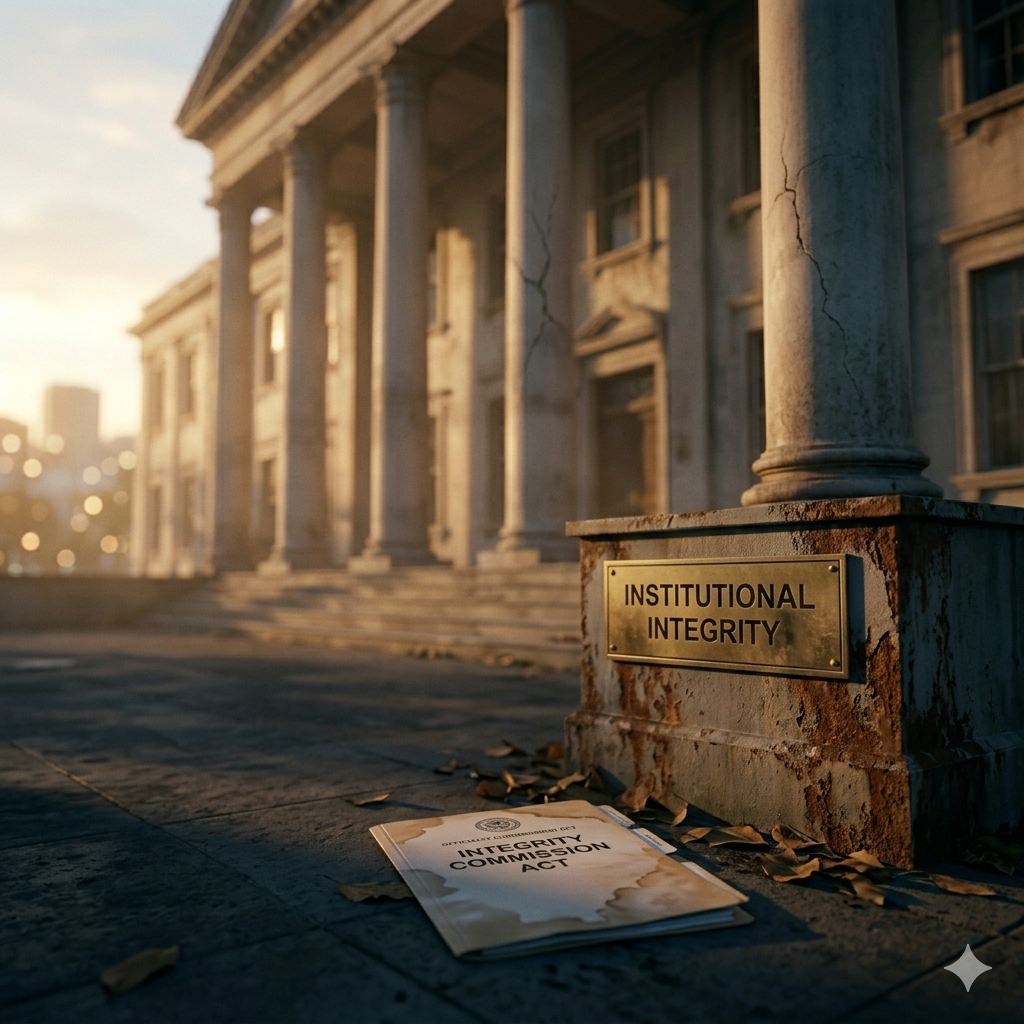
The second component is executive impatience with scrutiny. When serious questions emerged concerning statutory declarations and unexplained financial discrepancies, the Integrity Commission formally reported irregularities in March 2022. Jamaicans should have witnessed an overwhelming demonstration of transparency. Instead, the public observed defensiveness, legal manoeuvring, and efforts to discredit institutional criticism. The government subsequently filed a judicial review to challenge aspects of the Integrity Commission Act—a legal battle that dragged on for years, testing the limits of independent oversight.

3. Disaster-Enabled Centralisation
The third component is disaster-enabled centralisation. Post-Hurricane Melissa, Jamaica entered a psychologically vulnerable phase. Populations traumatised by crisis often tolerate concentrated executive authority in exchange for promises of order and rebuilding. This pattern has occurred repeatedly across the world. Within the half-year following the storm, Parliament approved over J$7.6 billion in supplementary funding for recovery, a significant portion allocated through discretionary channels without standard parliamentary procurement oversight. Crises strengthen executives naturally, but they also create opportunities for weakened scrutiny, the shortcutting of democracy, and the dangerous public belief that “only one man can manage this.”
4. The Weakening of Institutional Courage
The fourth component is the weakening of institutional courage. What is quietly dangerous today is not merely political behaviour, but the growing hesitation of institutions to confront executive power aggressively and consistently. Oversight appears increasingly selective. Parliamentary resistance is anaemic. Even sections of civil society appear exhausted. That exhaustion is politically consequential. Democracy depends not merely on laws but on institutional confidence. Once institutions begin subconsciously adjusting themselves around executive sensitivities, democratic weakening accelerates dramatically.
The Endpoint of Exhaustion
There is a profound lesson to be learned from Mzansi—as South Africa is popularly and affectionately called by its citizens—during its painful era of “state capture” under Jacob Zuma. The tragedy did not begin with a spectacular, overnight collapse. It began gradually. Appointment by appointment. Excuse by excuse.
In Mzansi, institutional exhaustion arrived long before institutional collapse. That is how the predator matures: it evolves through public fatigue. Citizens become accustomed to explanations that once would have shocked them. Eventually, the abnormal becomes ordinary, and the muscles of resistance simply atrophy.
Modern democratic decay is subtler than old-fashioned dictatorship. We wait for tanks, censorship, or martial law. Instead, elections continue. Hotels expand. Speeches celebrate progress. Meanwhile, accountability suffocates underneath the branding.
A Necessary Qualification
It is only fair to note that this composite picture exists alongside genuine achievements. The Holness administration has delivered significant infrastructure projects, navigated the pandemic, and maintained macroeconomic stability under an IMF programme. These are not small things.
But the question posed by the composite animal thesis is not whether the government has accomplished anything. It is whether the manner of governing—the centralisation of discretion, the impatience with oversight, the erosion of institutional courage—is creating a political architecture that will outlast any single administration and serve as a template for democratic decay.
The Civic Choice
When oversight becomes personalised warfare, when watchdogs are portrayed as enemies, when public transparency becomes negotiable, when executive authority grows dominant, and when citizens implicitly consent to explanations they once would have privately rejected—a composite democratic predator is already emerging.
Jamaicans therefore face a profound civic choice. Will we strengthen institutions now while they still possess credibility? Or will we wait until democratic erosion becomes undeniable?
Here is what strengthening institutions looks like in practice:
- For Citizens: We must demand that Parliament restore the Integrity Commission’s full investigatory powers, respect its findings, and adequately fund its independent operations.
- For Civil Society Groups: Vigilant collectives must independently monitor and publicly report on every single dollar spent through disaster-related discretionary channels.
- For the Media: Journalists must relentlessly name the behaviours described here—exposing where technocratic polish masks institutional erosion—without being deflected by calculated accusations of partisanship.
The people of Mzansi asked versions of these questions too late. Jamaica still has time. But not unlimited time. The composite animal is already in plain sight. Recognising the danger is the first step toward containing it. The harder part—demanding institutional accountability with the same energy we devote to political loyalty—is not a single step. It is persistent, unyielding work
Syndicated from Our Today · originally published .
Legal context · powered by Jurifi
Get the legal angle on this story. Pick a prompt and Jurifi's AI will explain it using Jamaican law.
AI replies are based on Jamaican law via Jurifi. Not legal advice.
Other coverage

Aubrey Stewart | NaRRA will be judged by what it delivers
Jamaica Gleaner
Jamaica Ranked Caribbean’s Top Country For Electoral Democracy But What Does That Even Mean To You
Jamaicans.com
Peter Espeut | Our democracy is not working
Jamaica Gleaner
Ruthlyn James | Policing symptoms of developmental failure
Jamaica Gleaner
A new dawn in policing must begin in Granville
Jamaica Gleaner