
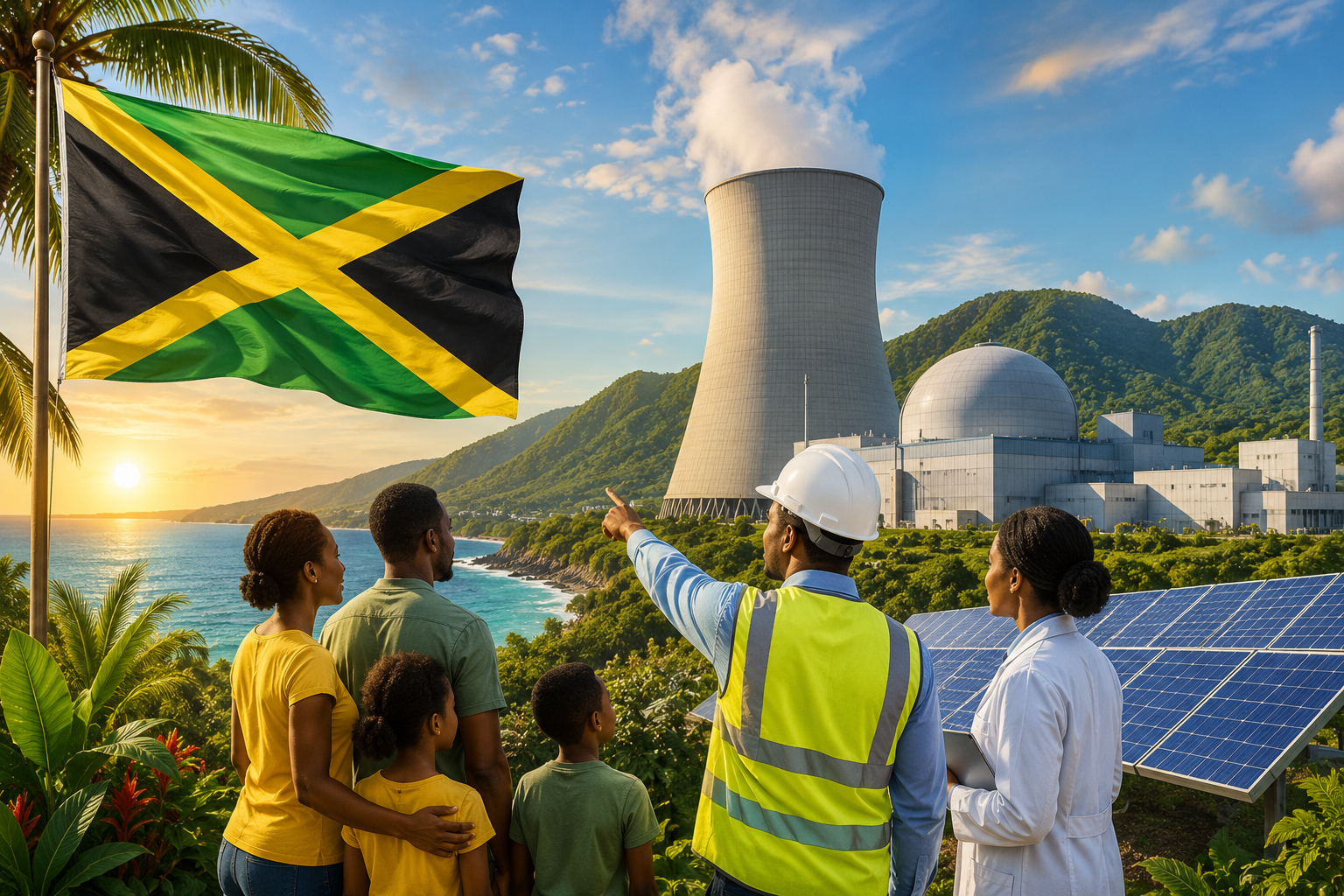
Jamaica must embrace nuclear technology as an energy solution- PM Holness

Jamaica can no longer totally depend on oil and gas imports for its energy and must now prepare to embrace nuclear technology as an alternative energy solution, declared Prime Minister Andrew Holness, speaking at the Jamaica Chamber of Commerce 41st Annual Awards banquet.
The war in the Middle East has seen a steep climb in oil prices this year, leading to global inflation. Jamaica will have to spend in excess of US$2 billion on imported fuel, which undoubtedly makes the cost of living higher in Jamaica. It has become abundantly clear that cheaper energy solutions must be a fillip to the economy.
Jamaica is working with a US$60 per barrel scenario which frames its 2026/27 budget. However, oil prices have shot up from US$61 a barrel in January to US$82 a barrel today on news of an agreement worked out with Iran, which will see the Strait of Hormuz fully opened with no threat to ships. In May of this year, the price went over US$100 a barrel.
“We must put in place energy infrastructure that reduces our dependence on imported fuel and locks in lower costs for households and businesses for decades to come. Energy is a big challenge for us.
“We must explore in meaningful ways the large-scale deployment of alternative energy sources. We must prepare ourselves to be able to deploy nuclear technology because it is becoming the de facto clean energy resource. It’s not going to be long, maybe a decade or so. To deploy nuclear energy, we have to make preparations now. We are looking at the energy sector in real ways to make real changes.”
There are those in Jamaica who caution against going the nuclear route, citing the astronomical upfront costs, radioactive waste management and the disasters at Ukraine’s Chernobyl nuclear power plant and the catastrophe at Fukushima in Japan. In the United States, there was a nuclear meltdown at Pennsylvania’s Three Mile Island facility.
Some say that for a small island dependent on tourism, nuclear facilities pose a danger. However, nuclear technology has developed considerably since the days of Chernobyl, and nuclear energy provides about 9 per cent of the world’s electricity.
Chairman of the NCB Financial Group, Michael Lee Chin is a champion of the nuclear option, arguing that it provides base-load energy to sustain economies and will help in seeing net-zero emissions in the coming decades. For Jamaica, he sees Small Modular Reactors (SMRs) as allowing the country to be self-sufficient while insulating it from volatile movements in oil and gas prices.
As it currently stands, Jamaicans pay 45 cents per kilowatt hour for electricity, one of the highest prices in the hemisphere. This must be placed in context with an income per capita of US$8,500. It is a strain and exorbitant for Jamaican consumers, and the government is intent on seeing to it that the monopoly that is JPS reduces that cost. For many businesses, the input cost of energy makes their enterprises globally uncompetitive, and it scares away investors. The JPS bill makes operating costs high, and it is a line item many are unable to reckon with.
The Prime Minister continued: “Jamaica’s energy costs are prohibitive, and we have to tackle it. We must make substantial improvements. But we cannot have all our hopes for reduction on a renegotiated licence.
“We are going through negotiations with JPS now. The intention is to lock in with a licence, certain changes that will see tangible reductions in electricity and energy costs.”
Syndicated from Our Today · originally published .
Legal context · powered by Jurifi
Get the legal angle on this story. Pick a prompt and Jurifi's AI will explain it using Jamaican law.
AI replies are based on Jamaican law via Jurifi. Not legal advice.
Other coverage

Sutherland Solar Energy Initiative Inauguration re Green Initiative
Andrew Holness (Video)Watch
JISTV | PM Keynote Address at Sutherland Jamaica Solar Energy Inauguration
Jamaica Information Service (Video)Watch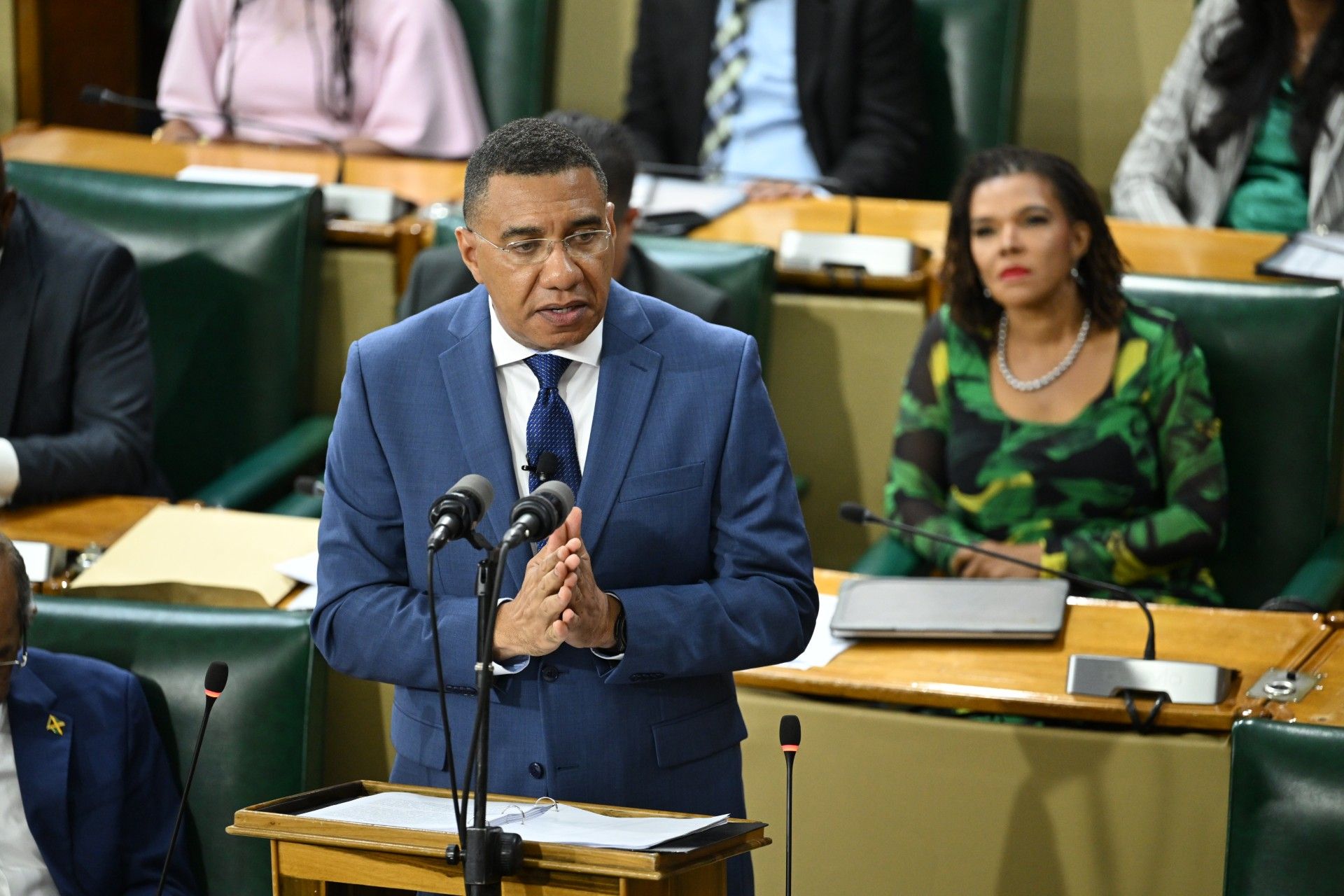
PM Holness describes Jamaica’s energy costs as prohibitive saying energy is a big challenge which must be tackled
Jamaica Inquirer
Keynote Address at the Jamaica Chamber of Commerce 41st Annual Awards Banquet 2026
Andrew Holness (Video)Watch
PM Keynote Address at Sutherland Jamaica Solar Energy Inauguration
PBC Jamaica (Video)Watch