
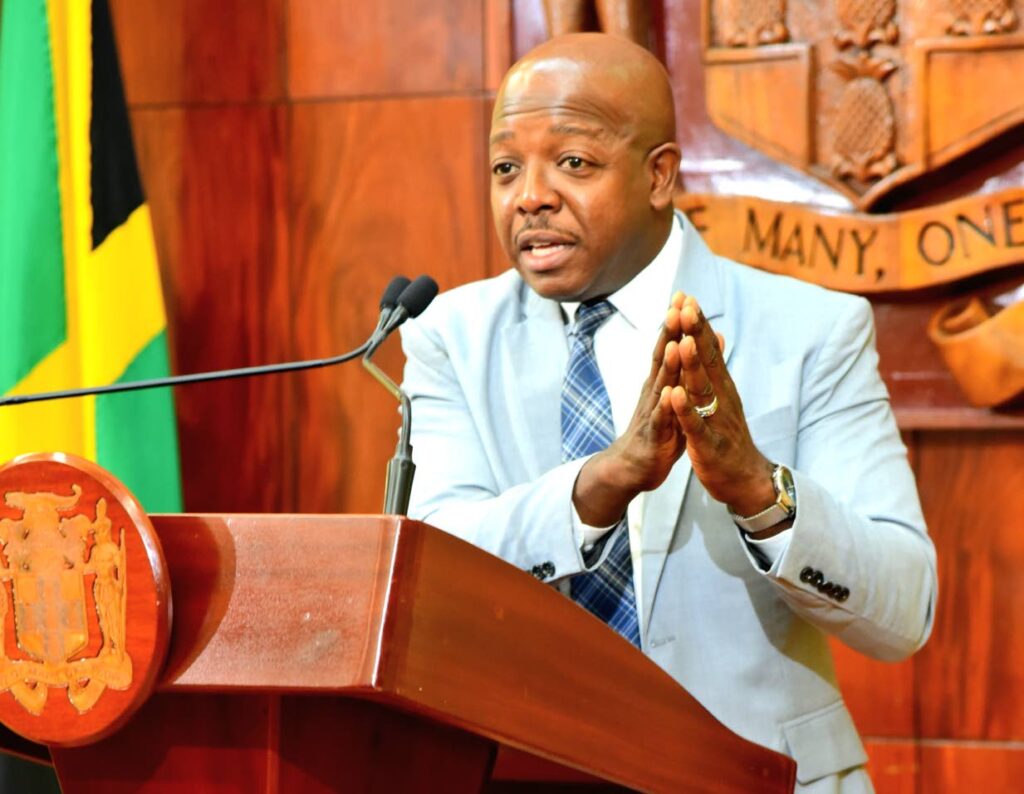
GOVERNMENT members of Parliament’s Integrity Commission Oversight Committee have urged the anti-corruption body to prosecute where necessary, but not persecute.
The charge came during Thursday’s meeting of the committee which examined 64 reports from the Integrity Commission (IC), 57 of which related to the statutory declarations of public servants.
Committee chairman Pearnel Charles Jr, who led the charge, was adamant that the comments were not aimed at chastising officers of the IC or to ridicule honest error.
“The fault we guard against is not zeal. We want a commission that pursues corruption without fear. The fault is acting beyond power, advancing a matter that the evidence does not support, or by a procedure that the law does not permit,” said Charles Jr.
He argued that “zeal within the law is a virtue but zeal beyond the law is dangerous, more so when the body wielding it can both investigate and prosecute.”
According to Charles Jr, the committee has examples where reputations were disparaged and lives gravely affected with nothing to show at the end and no recourse for the persons who were harmed.
“That cannot be the pattern of a mature authority,” declared Charles Jr. “The difference between prosecution and persecution is not the seriousness of an allegation, it is the discipline of the process.
“Prosecution is evidence-led, law-bound and fair. Persecution is what justice becomes when power outruns proof, process or any legal authority.”
Charles Jr told committee members they must guard slavishly against a commission that has the potential to persecute, while not ensuring that whatever is put before it meets the tenets of prosecution.
“If a report is published and no one examines it, the person named is in effect indicted in the court of public opinion by many persons, without trial, without any appeal, and often without any recourse. The publication can unfortunately become punishment,” argued Charles Jr. “A finding that no one is permitted to scrutinise cannot be seen as accountability; that is condemnation without trial.”
Charles Jr further argued that for members of the oversight committee, scrutiny is protection.
He added that when a case is sound, scrutiny will confirm and allow the case to stand stronger.
“Where it is not, scrutiny is literally the only thing standing between an unproven allegation and an irreversible injury to a name,” he said.
CHUCK… you cannot go net fishing and hope to catch somebody; you need to do more spear fishing (Photo: Garfield Robinson)
The Government MP, who serves as minister of labour and social security, pointed out that the gaze falls most often on politicians while the IC’s reach is far wider and includes permanent secretaries, public servants, medical officers, and others.
According to Charles Jr, where an institution has both investigative and prosecutorial functions within its statutory architecture, the standard of care must be higher.
“The public interest is not served by matters being advanced beyond the evidence the law can properly sustain nor is it served if strong cases are weakened by delay, error or lack of clarity,” he warned.
In her contribution to the discussion, MP for Trelawny Southern Marisa Dalrymple-Philibert said it was important to let the country know that the oversight committee supports the work of the IC.
“Our Government supports the Integrity Commission but what we want to do is to prosecute where necessary and not persecute,” said Dalrymple-Philibert.
She insisted that assumptions must not be made when the IC cites persons for failure to provide information.
According to Dalrymple-Philibert — who was charged by the IC for failing to declare a vehicle she had purchased with duty concession on several statutory declarations — in many cases, people honestly forget, or there may be a delay in providing the requested information.
“You cannot assume that simply because information is not provided it is something that you’re hiding,” said Dalrymple-Philibert, who was fined $900,000 following her decision not to contest the charges brought against her by the IC.
Former chair of the oversight committee, Justice Minister Delroy Chuck, was adamant that the IC was too intrusive in its actions, sharing that it recently asked him what improvements he had made to his home and at what cost.
“I find that intrusive… I think this is persecutorial than anything else, so my response was very simple: ‘I have not seen any improvement to the structure but my wife has done a lot of gardening and has doubled the number of orchids that she has on the property,’” Chuck said.
He said he will ask a member of the IC at the next meeting of the oversight committee to comment on whether it is appropriate to ask what improvement a person has made to his/her home and the cost.
Chuck argued that for the IC to succeed, it needs to focus properly on allegations, “but you cannot go net fishing and hope to catch somebody; you need to do more spear fishing.”
Syndicated from Jamaica Observer · originally published .
Legal context · powered by Jurifi
Get the legal angle on this story. Pick a prompt and Jurifi's AI will explain it using Jamaican law.
AI replies are based on Jamaican law via Jurifi. Not legal advice.
Other coverage

CALL FOR IC SHIFT - Samuda proposes FID takes over review of MPs’ financial filings
Jamaica Gleaner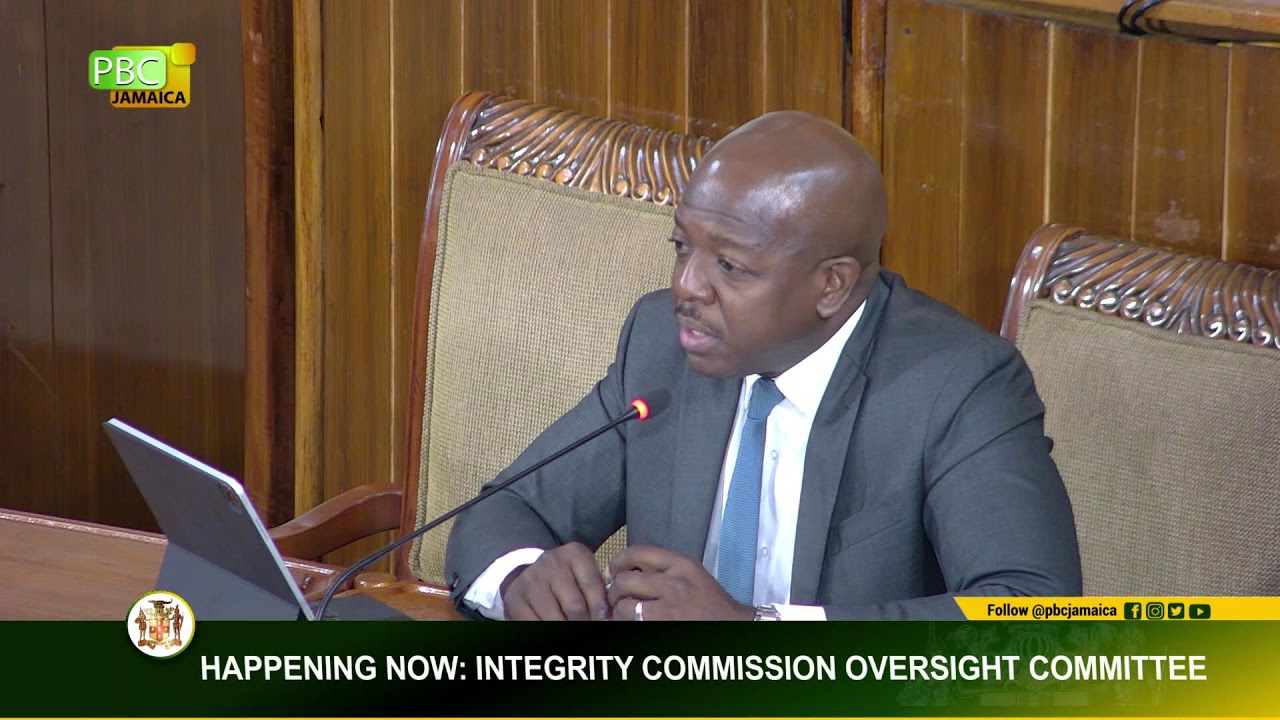
Integrity Commission Oversight Committee
PBC Jamaica (Video)Watch
Antigua And Barbuda Cannot Receive What It Cannot See
Jamaica Inquirer
Stepson using my home like a motel
Jamaica Star
Pregnant for a married man
Jamaica Star