
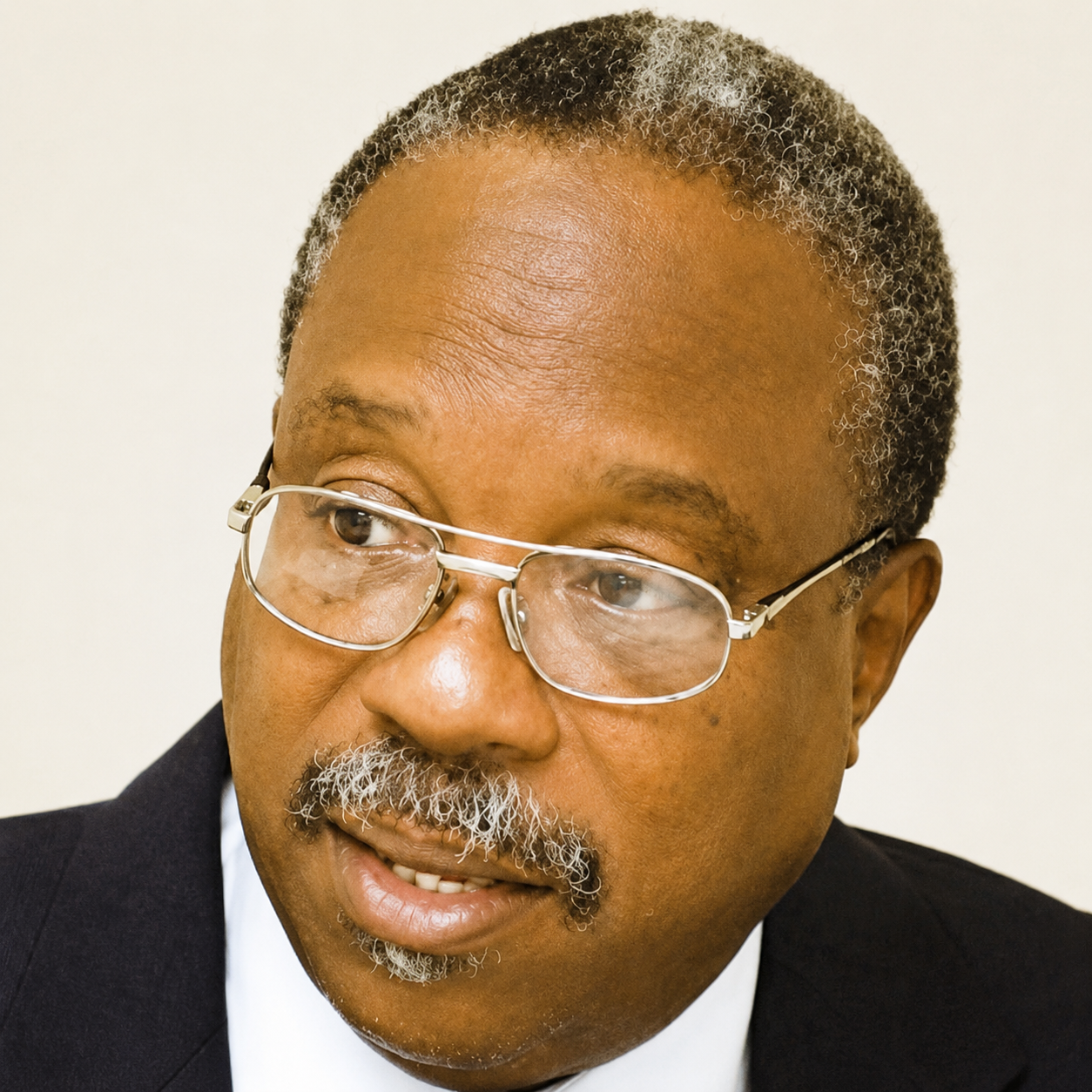
Dennis Minott | The Overseer’s Shadow: Intermediary elites and the erosion of trust in modern Jamaica
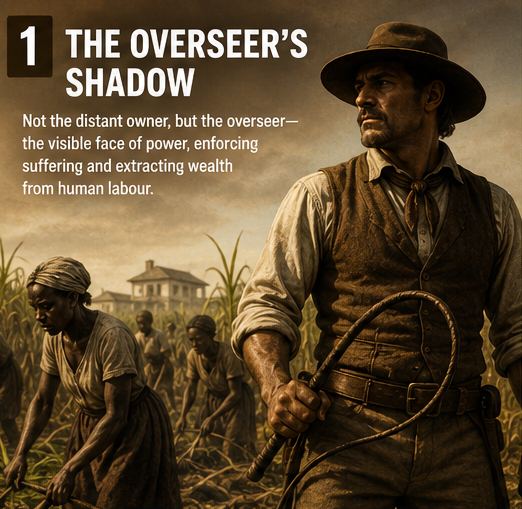
Among the most haunting figures in Jamaican history is not absentee plantation owners residing comfortably in a London townhouse, nor the distant merchant who profited from sugar, rum, and human misery without ever dirtying his fingernails in the mud of a cane field. It is the overseer.
The overseer occupied a deeply conflicted, deeply transactional space between concentrated power and systemic suffering. Often, he was neither the architect nor the ultimate financial beneficiary of the plantation complex. Yet he became its visible, domestic face. It was the overseer who enforced production targets, maintained daily discipline, administered physical punishment, and ensured that wealth extracted from human labour flowed continuously upward.
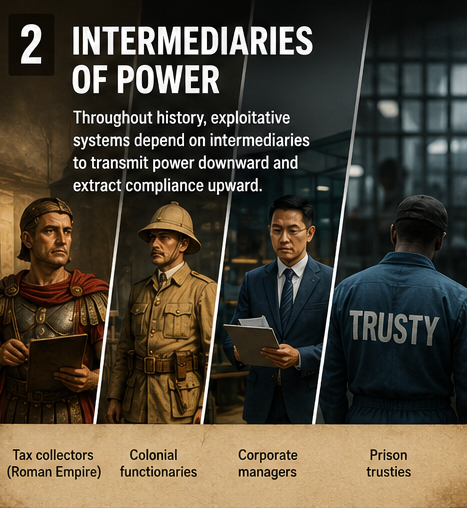
History teaches a painful, universal lesson: exploitative hierarchies rarely function through distant elites alone. They depend upon a dedicated class of intermediaries. The Roman Empire of old relied upon provincial “biblical’ tax collectors and local collaborators; colonial administrations depended upon native functionaries; modern corporations employ regional managers; and prisons have long utilised trusties. Every hierarchical structure develops a stratum of people whose principal structural task is to transmit power downward and extract compliance upward.
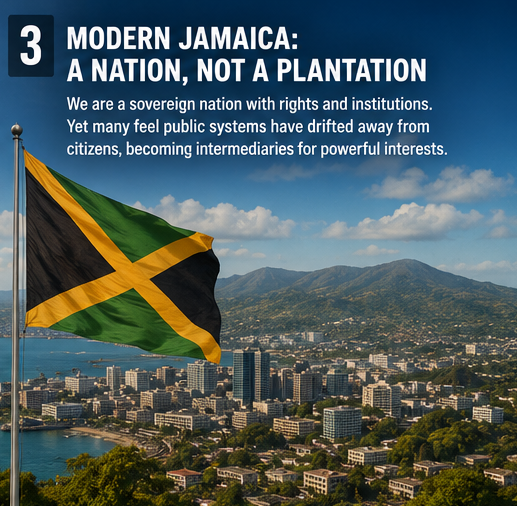
This historical pattern continues to trouble me whenever I reflect upon contemporary Jamaica. To be absolutely clear, the comparison is imperfect. Modern Jamaica is neither a plantation colony nor a slave society; we are a sovereign nation defined by universal adult suffrage, constitutional protections, and democratic institutions. Yet many Jamaicans increasingly sense that certain public institutions and public officials have drifted away from the ordinary citizen, mutating into modern ministers and other intermediaries for billioneering interests that possess vastly greater wealth, international influence, and structural access than the average taxpayer.
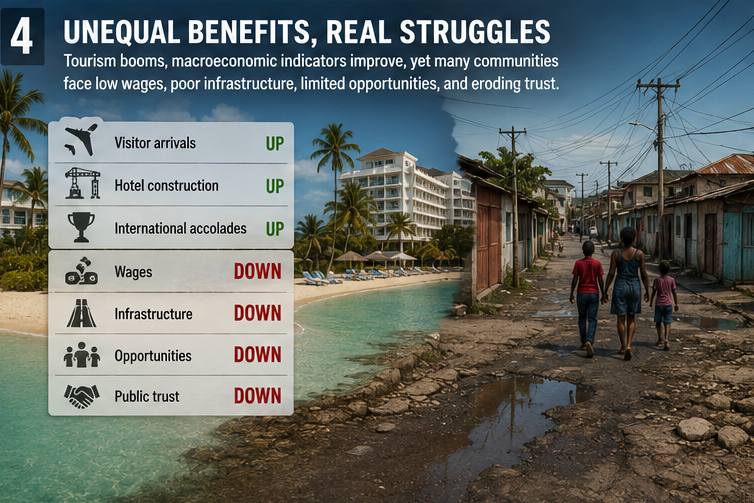
This profound unease is particularly visible within the spheres of tourism, labour, industry, and public health. Consider tourism, long heralded as the indispensable engine of national growth. Visitor arrivals climb to record heights, hotel construction accelerates along our–really their– coastlines, and international accolades multiply. Yet many communities immediately adjacent to these mega-resorts continue to struggle with broken infrastructure, low wages, insecure housing, and stagnant social mobility. The question ordinary citizens ask is entirely straightforward: who benefits most from this success? This is not an argument against tourism, which remains vital to our macroeconomic survival. Rather, it is an argument for examining whether the domestic distribution of benefits reflects the immense sacrifices made by Jamaican workers, local communities, and taxpayers.
A similar tension characterises contemporary labour relations. Jamaica’s macroeconomic achievements over recent years are genuine and commendable. Inflation has moderated, debt-to-GDP ratios have dramatically improved, and international financial institutions routinely praise the country’s fiscal discipline. However, stability alone is not development. On the ground, workers frequently report that wage growth lags far behind rising living costs, while young graduates confront a structural labour market defined by underemployment and intense migration pressures. Citizens are left to scratch their heads as to whether policy-makers have become fundamentally more attentive to the demands of global capital and credit-rating agencies than to the immediate anxieties of domestic labour. Di dutty sill tuff eena Ochi.
In industry, successive administrations have spoken eloquently about productivity, innovation, and global competitiveness. Yet Jamaica continues to struggle with limited value-added manufacturing, weak research commercialisation, and inadequate public investment in science and technology. As a Portland Maroon physicist who has spent decades advocating for renewable energy, agro-industrial innovation, and technological self-reliance, I have repeatedly observed how transformative, locally grown ideas receive enthusiastic speeches but deficient implementation. The resulting stagnation fosters a persistent suspicion that public policy serves established, risk-averse commercial interests far more effectively than it nurtures emerging, indigenous innovators.
Perhaps nowhere is this emotional friction more acute than in the arena of public health. The COVID-19 pandemic revealed the extraordinary dedication of Jamaican health-care workers, who performed heroically under immense systemic pressure. Yet the wider health system continues to confront chronic shortages, decaying infrastructure, and exhausting waiting times. When citizens encounter these harsh institutional realities while simultaneously hearing official declarations of progress, public trust begins to systematically erode. And trust, once lost, is remarkably difficult to restore.
This brings us back to the structural lesson of the overseer’s shadow. The true legacy of the plantation system is not defined by race, complexion(?), or ancestry; it is defined by the political economy of power and accountability. The overseer became a feared and resented figure because he was perceived as enforcing the priorities of an external elite while remaining entirely insulated from the human consequences borne by those beneath him. Modern democratic societies become endangered the moment citizens begin to view their elected representatives through that very same lens.
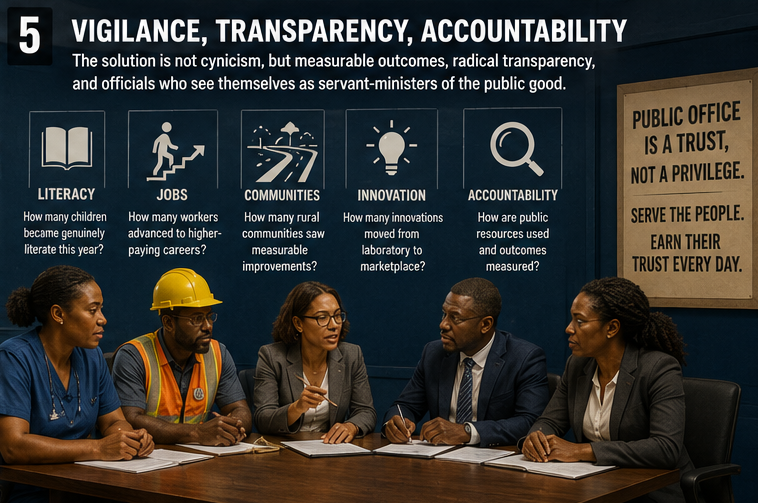
The solution to this crisis of faith is neither cynicism nor the blanket demonisation of ministers, public servants, investors, or employers. Rather, it lies in radical transparency, measurable outcomes, and unyielding institutional accountability. Governments must stop merely reporting financial inputs and start demonstrating human outputs. We must ask the questions that actually matter to the fabric of society: How many children became genuinely literate this year? How many workers advanced into higher-paying, secure careers? How many rural communities of Portland experienced measurable infrastructure improvements? How many innovations moved from the laboratory to the marketplace?
These questions become uniquely urgent during periods of national crisis and reconstruction. Disasters create profound suffering, but they also create a peculiar species of opportunity. Public fear weakens civic scrutiny, citizens become desperate for rapid relief, extraordinary executive powers are granted, and vast sums of capital are mobilised with immense speed. Under such exceptional conditions, the intermediary class invariably flourishes wondrously.
This historical reality explains why some Jamaicans view developments surrounding emergency rehabilitation and mechanisms like the National Reconstruction and Recovery Agency (NaRRA) with a degree of structural unease. The agency’s stated objectives are noble—hurricane victims require urgent assistance, and damaged infrastructure must be rebuilt. No reasonable person disputes these necessities. Yet history dictates that citizens must remain exceptionally vigilant whenever emergency mechanisms acquire substantial, expedited authority over public resources, procurement waivers, land-use concessions, and reconstruction priorities. The issue is never whether relief is necessary; the issue is whether institutional accountability remains equally vigorous when the rules are relaxed.
The greatest danger facing modern democracies is seldom the return of overt, naked exploitation. Instead, it is the reinvention of top-down compliance through benevolent, modernised language. The old plantation overseer carried a visible whip in the cane field; his modern successor carries a polished PowerPoint presentation, a consultancy contract, a procurement exemption, or a carefully managed press release.
The instruments have changed, but human nature and the temptations of power have not. Some Jamaicans quite rationally fear that agencies established to alleviate suffering may, if left inadequately supervised, inadvertently become vehicles through which wealth, influence, and structural opportunity are transferred upward to select individuals rather than distributed fairly among those most affected–“Los de Abajo“. (known in English as The Underdogs) was written by the Mexican author and physician Mariano Azuela. First published in 1915 is widely regarded as the foundational novel of the Mexican Revolution
The overseer’s shadow still lingers across our history, and our duty is not merely to remember it. Our duty is to ensure that it never finds comfortable, settled, computer-assisted modern disguises capable of eluding ordinary citizens and deceiving the innocent, the trusting, and therefore the foolable. For the danger confronting democratic societies today arrives wrapped in spreadsheets, algorithms, public-relations campaigns, and reassuring official jargon. The old overseer stood visibly in the sun, making his allegiances unmistakable. His modern counterpart sits behind a glowing computer screen, insulated by bureaucracy, technology, sockpuppetting while astroturfing and socially distant from the ultimate human consequences of his decisions.
Decent people naturally want to trust the institutions built to serve them. Exploitation in a mature democracy succeeds primarily because citizens are decent enough to extend that trust to systems that ought to deserve it. That is why vigilance remains the primary, unceasing duty of citizenship, and absolute transparency the first duty of government. A healthy democracy requires public officials who view themselves never as overseers of the people, but strictly as servant-ministers for the public good.
Syndicated from Our Today · originally published .
Legal context · powered by Jurifi
Get the legal angle on this story. Pick a prompt and Jurifi's AI will explain it using Jamaican law.
AI replies are based on Jamaican law via Jurifi. Not legal advice.
Other coverage
Editorial | Supporting oversight
Jamaica Gleaner
Aubrey Stewart | Navigating democracy’s necessary tension
Jamaica Gleaner
Imani Tafari-Ama | The State cannot continue to ‘Serve and Protect’ through fear
Jamaica Gleaner
Accountability Beyond the Lens
JCF — Jamaica Constabulary Force
Body-Worn Cameras and Accountability Beyond the Lens
JCF — Jamaica Constabulary Force