

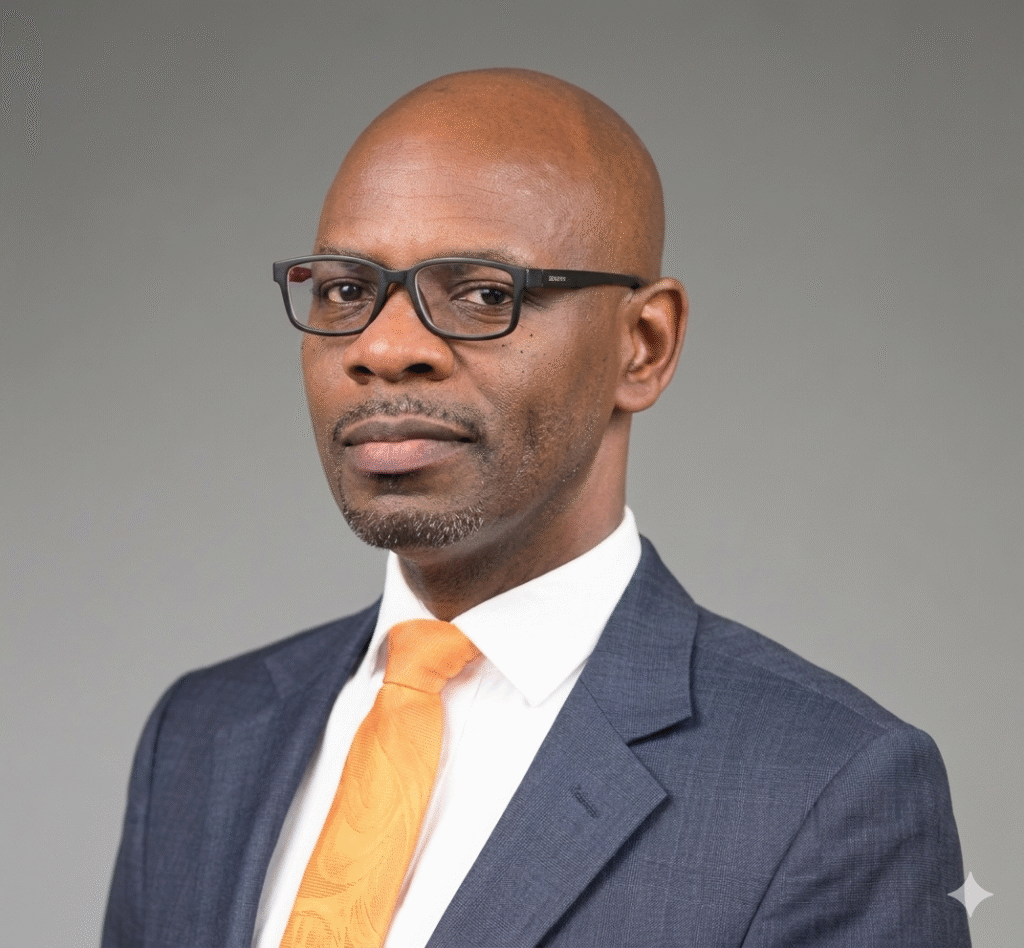
Member of Parliament for South East St Ann and Spokesperson on Rural and Community Development, Dr. Kenneth Russell made his Sectoral Debate presentation in Parliament last week and a good one it was too.
Below is the full text:
Madam Speaker, I speak today on:
- Rural Development, which addresses the location and conditions in which people live, and
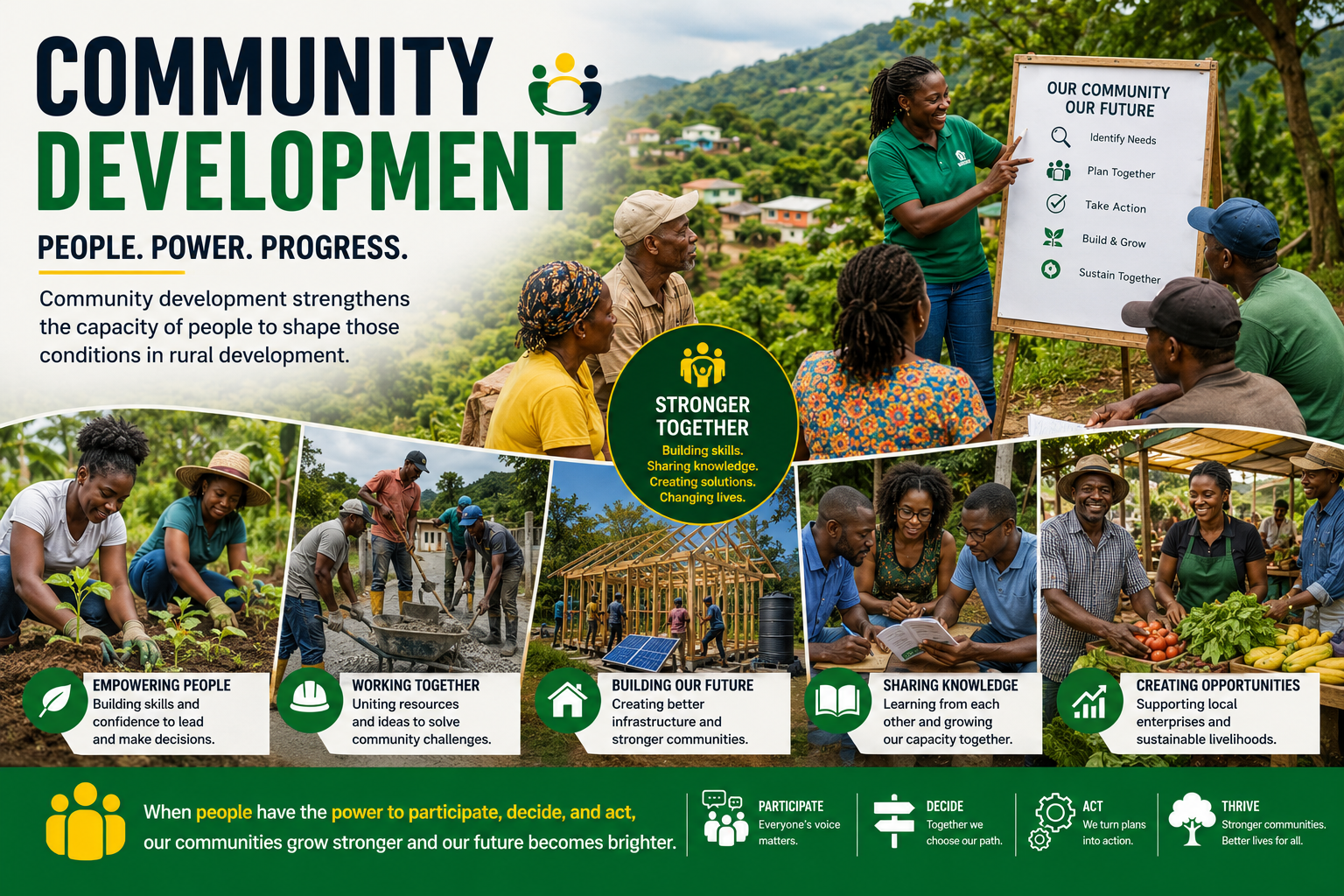
- Community Development, which strengthens the capacity of people to shape those conditions.
They are related but different, and Jamaica needs both. The future of Jamaica depends on our ability to advance both agendas simultaneously.
Madam Speaker, today I will prosecute a simple charge. My charge is not that this Government has done nothing. Some roads have been repaired. Water projects have been undertaken. Some programmes have been implemented. My charge is more serious: Rural and community development have been abandoned as a national priority by this government.
The evidence begins with the Minister’s own Sectoral Presentation. Twenty-three pages. More than an hour and yet, throughout that presentation, the word “rural” appeared not five times, not four times, not three times, not twice, not once. Zero.
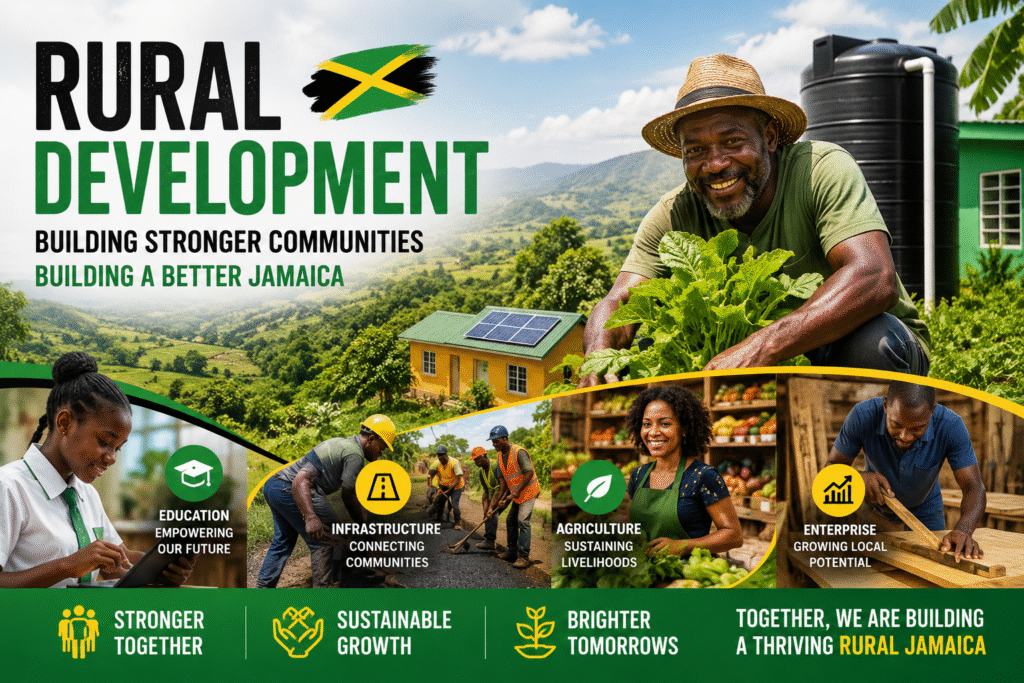
But the larger issue is whether rural development exists as a philosophy of Government. And most importantly, whether it exists in the vision for national development.
Madam Speaker, we are a divided nation. The promise of Jamaica is not experienced equally by all her citizens. For too many Jamaicans, where they live shapes access, opportunity and outcomes. That reality is not accidental. It is not inevitable. And it is not acceptable.
Madam Speaker, here are the facts: almost one of every two Jamaicans live in rural Jamaica.
The poverty rate among residents of rural areas is 11.5 per cent compared to 3 per cent for the Kingston Metropolitan Area. So if you live in rural areas, you are 4 times more likely to live in poverty. Not only is it higher than urban areas and the national average (8.2 per cent), but it also declined at a much slower pace than the rest of the country.
Madam Speaker, let’s consider the statistics for children and young people.
- Approximately 22 per cent of rural children live below the poverty line.
- Among rural adolescents, 24 per cent live in poverty. Nearly one in four.
Madam Speaker, let us look at some more data.
- Only 54.7 per cent of rural households enjoy safely managed drinking water compared with 78.3 per cent in urban Jamaica.[1]
- Household internet access stands at 59.4 per cent in rural communities compared with 71.4 per cent in urban communities.
- Computer ownership is 18.4 per cent in rural, 31.5 per cent in urban Jamaica.
The pattern is unmistakable. Things are worse for those living in rural Jamaica.
Now, some may hear those figures and see them as statistics. But it is so much more: child poverty is a predictor of future educational outcomes, future health outcomes, future earnings and future national productivity.
Madam Speaker, one of the greatest weaknesses in our approach to development is that we examine problems one at a time.
But people do not experience life that way; people experience all of them together.
Imagine a mother living in Long Look, Clarendon, earning the minimum wage and caring for a child with a disability. When her child falls ill, she wants to call the clinic to see if it is open, but the signal is unreliable. She tries to search online for information, but internet access is limited. With no other option, she waits as her child’s condition worsens before spending the last money available to her family on transportation to the clinic. The roads are in poor condition, the fare is expensive, and the difficult journey drains what little energy she has left. When she finally arrives, she learns that the doctor is unavailable. Her ordeal is not the result of a single disadvantage, but of multiple overlapping barriers that compound one another, making access to basic healthcare far more difficult than it should be.
Madam Speaker, so for a Government that used to boast of no new taxes, people in rural Jamaica pay multiple taxes every day:
- Distance tax.
- Poor roads tax.
- No water tax
- Weak connectivity tax.
- Limited transportation tax.
- Delayed access to services tax.
And together they create what I call a quality-of-life tax: a debt paid in opportunities deferred, treatment delayed, earnings lost and human potential diminished. A people constrained, not truly able to optimise potential.
Madam Speaker, we face the challenges because there is no comprehensive development plan for rural Jamaica. There are multiple agencies focused on rural areas: Rural Electrification, Rural Water Supply, Rural Agriculture Development Authority. Yet they do not work in a coordinated way or against a single development framework.
A rural development plan would help to align investment, infrastructure, and land use. The last comprehensive designation of land use and assignment of areas in urban and rural was in the National Physical Development Plan 1978-1998.
An effective plan would also help strike a balance so that investment is not concentrated in a given area, such as the coastline. Case in point, Madam Speaker, the north coast from Port Maria to Rio Bueno.
This failure to plan burdens rural people and undermines national productivity.
As a first step, we should ensure that all parishes complete their Parish Development Orders as quickly as possible.
Madam Speaker, let me share one positive experience. The Minister responsible for Water and Climate Change met with my team and me to think through the best approach to addressing water needs of the constituency. We reviewed community by community across South East St. Ann – Clapham to Cowley. Faith’s Pen to Fort George. Lincoln to Lumbsden. Breadnut Hill to Blackstonedge. Dunnsville to Deadman.
We examined needs. We explored options. We identified practical actions.
That is one aspect of what is required. Yet this is the exception. It should be the norm across the government, and it should be against an established framework for the development of rural parishes.
Madam Speaker, rural development creates opportunity, and community development empowers people to turn opportunity into progress for themselves and their communities.
That is why community development matters not only in rural Jamaica, but across our country. At the centre of that effort stands one of Jamaica’s most important community institutions, the community centre.
The Minister of Local Government and Community Development didn’t offer much in this regard when he spoke, so let me offer some possibilities.
We must reimagine these spaces as multi-purpose and self-sustaining entities. Imagine your community centre maintaining a schedule of events for which you can sign up to participate or support. They run a programme of activities that generate revenues for their upkeep and maintenance.
A place for social events, a meeting place, where skills are taught, where youth innovate and explore, internet access for education and entrepreneurs, where debates and dances are held … a place to be. And yes, they must be purpose-built emergency shelters.
Too many centres sit underutilised and many cannot be used. Many damaged by the hurricane remain untouched. 8 months later. The Minister says he is awaiting the assessment: 8 months and a new hurricane season later, no timeframe, no plan. The community centre must once again become the heart of the community.
Madam Speaker, community development requires belief in oneself, in people, and in the greater good. That belief inspired The Right Excellent Norman Manley to create Jamaica Welfare in 1937. That belief drove him to persuade the banana industry to support an annual allocation of £80,000 to fund Jamaica Welfare. Today that funding is equivalent to approximately J$1.49 billion. [The total SDC budget in 2026 is $1.9 billion, with more than twice the population.]
Nearly ninety years have passed, and so we must now ask difficult questions.
- Have we kept pace with the ambition of that original vision?
- Have we modernised our approach to community development?
Madam Speaker, community development works best when communities trust the institutions that serve them. Trust is the most valuable currency of community development. In this regard, the Social Development Commission occupies a unique place in Jamaican public life.
It enters communities not as a regulator, not as an enforcer, but as a facilitator of participation, leadership and collective action. That role depends on trust.
Communities must continue to have confidence that the institution serves the people of Jamaica rather than the political interests of any administration. When the lines between community development and partisan politics become blurred, the institution’s credibility suffers. Participation suffers. Trust dies. The principle MUST be protected.
So Madam Speaker, we are concerned about a very disconcerting pattern emerging at the SDC – we see a number of former JLP candidates who lost in the elections appointed to senior roles in the SDC. What do I mean?
- The Chairman – losing JLP candidate
- The Executive Director – losing JLP candidate
- The Parish Manager of the KSA – losing JLP candidate
These are not undercover party activists. All contested and lost elections in recent times. This is a serious concern.
Madam Speaker, the Minister must also update us on what is happening with the governance of the SDC.
- What is the status of the board?
- Is there a fully constituted board in place?
Then there is the issue of SDC staffing. Many communities across this country do not know who their community development /liaison officer is because they don’t have one. In South East St. Ann, there are supposed to be 3 officers; we have only had one for multiple years. I understand officers are being recruited. I appeal to the Minister to ensure every effort must be made to get this done as soon as possible. And in a non-partisan way.
Madam Speaker, we ask a lot of the Social Development Commission. We are asking a transformative institution to operate with tools that belong to another era. I believe the time has come for a comprehensive review and modernisation of the legislative framework governing community development. This should start with the Jamaica Social Welfare Commission Act – the 1958 legislation (revised 1965) which governs the SDC. The opportunities, technologies and expectations of today are not the same as those faced 68 years ago.
Madam Speaker, the world is changing fast. The aspirations of our people are changing even faster. Yet too much of our thinking about rural and community development remains trapped in old assumptions. At times it feels as though this Government is playing tic-tac-toe while the rest of society has moved on to Fee Fy Foo.
Madam Speaker, I know what community development can achieve. When I was growing up in Pedro River, the main source of water was a spring up in the hills called Bun Grung. It never ran dry. For generations, people went there with buckets and bottles to fetch water. That changed about twenty-one years ago. Residents came together through a community organisation and built a community water system. Today that system continues to provide water directly to households throughout the community. A similar story exists in Hampstead in Central St. Mary.
Different parish, different community, same experience. They developed and managed a community water system that serves the needs of the community. The lesson from Pedro River and Hampstead is not really about water. The lesson is about what becomes possible when communities are organised, supported and trusted.
Madam Speaker, across rural Jamaica, communities remain resilient. The people have not given up on themselves. They continue to organise, volunteer, worship, and support one another. What is disappearing are the institutions that give communities their voice, identity, cohesion, and capacity to act.
The post offices are leaking, and appeals for repairs go unanswered. The libraries are slowly disappearing. The markets, like Claremont’s, have been destroyed and are awaiting repair. Community associations are struggling to remain active. As each institution weakens, the community’s social fabric grows a little thinner.
This is not simply a story of deteriorating buildings. It is a story of weakening community structures, the very institutions and practices that create belonging. These institutions are what make people feel: “This is my community. I belong here.”
Madam Speaker, the weakening of community institutions did not occur in isolation. It is part of a much larger story about how development has unfolded in Jamaica and whose interests it has served. To understand why so many rural communities struggle today, we must therefore move beyond the symptoms and examine the roots of the problem. We must ask a deeper question: How did we get here?
Madam Speaker, many of the inequalities we see today are not accidents. They are inheritances. Colonial Jamaica was not designed to maximise the well-being of communities. It was designed to maximise extraction – not balanced development.
Some places became connected while others remained isolated. Some areas became centres of investment while others became reservoirs of labour.
As a result, there are communities across Jamaica that have spent generations watching development happen somewhere else. Watching their young people leave because opportunities could not be found at home. Communities that contribute enormously to the national and international economy but continue to struggle to secure basic infrastructure.
Too many rural communities continue to be sites of extraction.
- We must shun the idea that in this day and age an entire community can be moved to allow the lands to be mined.
- We must shun the idea that rural communities host quarries and mining operations that do not recognise the damage they do to communities or compensate for their damage.
- We must shun the idea that rural communities host huge businesses that serve an exclusive clientele but do not address the needs of the local communities.
- We must shun the idea that communities only provide the labour required but cannot be partners in their development.
Let us agree today that these approaches are in the past – we will organise communities to demand their rights to be partners in development.
Madam Speaker, the conversation about rural development must be a conversation about history. It must be a conversation about power. Inequality created intentionally cannot be corrected accidentally. It requires deliberate action. It requires deliberate planning and commitment to equity. To justice – social justice and spatial justice.
But don’t take my word – Marcus Garvey spoke of this eloquently when he said: Chance has never satisfied the hope of a suffering people. Action, self-reliance, the vision of self and the future have been the only means by which the oppressed have seen and realised the light of their own freedom.”
That is why I speak today about Reparatory Development – the conscious decision to organise development in a way that repairs inherited inequalities, expands opportunity, strengthens communities and prevents future harm. It is focused on building social and economic institutions, systems and opportunities to ensure future generations do not inherit the same disadvantages
It recognises that Jamaica must continue to pursue reparations for the historical injustices of slavery and colonialism. The Government must summon the moral fortitude to show leadership in the global discussions on reparations. You must speak and act boldly globally.
At home, Reparatory Development calls on the Jamaican Government to proactively dismantle inherited inequalities and commit to creating conditions for greater equity, opportunity and justice for our people. That is why every Jamaican who is waiting for a title for the land they occupy says no Minister, no Prime Minister – we will not wait 20 years to get a title.
Madam Speaker, for too long, discussions have focused almost entirely on what rural Jamaica lacks. Today I ask a different question: What could rural Jamaica become? The future is what I call the Rural Renaissance. A rural Jamaica that remains rooted in agriculture but more productive, more profitable and more technologically advanced.
A rural Jamaica where tourism benefits local communities rather than merely occupying space around them. A rural Jamaica where culture becomes enterprise. A rural Jamaica where our medicinal herbs – cannabis and others – are dispensed around the world. A rural Jamaica where young people are supported to explore ideas, grow their talent, and build businesses. A rural Jamaica where the people are able to innovate, explore and live full lives.
Madam Speaker, this renaissance is possible, but we must nurture the roots from which development grows. Here are the pillars of a strategy for transformation – five interlinked and integrated pillars to unleash community potential.
First Planning – From Projects to Purpose
Jamaica was not underdeveloped by accident, and we cannot leave our development to chance. Too much of what passes for rural development is ad hoc and haphazard. We therefore propose:
- A National Rural Development Framework — to provide a long-term vision for balanced national development.
- Modernised Parish Development Orders — to guide land use, infrastructure and investment decisions.
- A Rural Development Coordination Council — to align government agencies around common outcomes.
- An Annual Rural Development Report to Parliament — to measure progress, identify gaps and strengthen accountability.
Second: Rebuilding the Foundations of Community Life
Effective rural development is sustained by institutions that organise people, build leadership and strengthen communities. We therefore propose:
- Modernisation of community development legislation — to equip our institutions for present and future challenges.
- Transformation of community centres into development hubs — supporting learning, entrepreneurship, culture, sports and emergency preparedness and response.
- Strengthening of Community Development and Parish Development Committees — to deepen citizen participation in decision-making.
Third: Infrastructure
No Jamaican should pay a penalty because of where they live. We therefore propose:
- Universal access to reliable potable water
- Rehabilitation of strategic rural roads and farm-to-market corridors — to connect people to opportunity and markets.
- Expansion of broadband and telecommunications infrastructure — to connect rural Jamaica to the modern economy.
FOURTH: Unleashing Human Potential
The greatest resource in rural Jamaica is the people. We therefore propose:
- A Rural Youth Achievement Initiative — helping young people realise their full potential.
- Community Skills and Innovation Hubs —use community centres to prepare residents for emerging economic opportunities.
- Expanded support for child development, educational achievement and digital literacy — breaking cycles of disadvantage with universal access to social services based on poverty quintile.
Fifth: Local Wealth Creation – Build the New Rural Economy
The purpose of development is not merely to reduce hardship but to create a diverse economy that expands opportunity, builds community capacity and enables people to prosper where they live.
Communities must be able to participate in, influence, and benefit from development. We therefore propose:
- Enterprise Zones — concentrating infrastructure, financing, training and business support to stimulate local investment and job creation.
- Value-added agriculture and agro-processing — retaining more wealth within rural communities.
- Local Wealth Creation Partnerships — connecting tourism, mining, agriculture and local businesses so communities share in economic growth.
- A Rural and Community Development Partnership Fund — to support community-led solutions and local innovation.
Conclusion
Madam Speaker, throughout this presentation, I have advanced a simple proposition:
Rural and community development have been abandoned as national priorities. Yet, communities have not abandoned themselves. They continue to organise, volunteer, innovate, sacrifice and believe. The vision I have shared will allow us to stop managing inequality and begin creating the conditions for greater equity, opportunity and justice.
As we move forward, I intend to engage colleagues on both sides of this Honourable House on two actions:
- First, establishing a Parliamentary Rural Development Caucus, dedicated to advancing rural development as a national mission and ensuring that rural voices remain part of the national conversation; and
- Second, to support a National Pact for Community Empowerment, dedicated to strengthening community leadership, expanding citizen participation, and ensuring that no community is invisible and no citizen is voiceless.
Community development is ultimately about ensuring that every person has a voice, every community has agency, and every citizen has the opportunity to participate in shaping their future.
Madam Speaker, forty years ago, a teacher looked beyond a test score and saw possibility. She saw potential where the State saw limitation. And because she believed, my life changed.
That is the mission to which we should all dedicate ourselves – to Nurture the Roots. Unleash the People.
I thank you, Madam Speaker.
Syndicated from Our Today · originally published .
Legal context · powered by Jurifi
Get the legal angle on this story. Pick a prompt and Jurifi's AI will explain it using Jamaican law.
AI replies are based on Jamaican law via Jurifi. Not legal advice.
Other coverage
Post Cabinet Press Briefing || June 24, 2026
PBC Jamaica (Video)Watch
News Feature CRP -Transparent governance and sound financial stewardship critical to community development
Planning Institute of Jamaica
St. Andrew South Major Reduction 2026
JCF — Jamaica Constabulary Force (Video)Watch
Sitting of the House of Representatives || Sectoral Debate || June 17, 2026
PBC Jamaica (Video)Watch
CVM News At Noon: June 26, 2026 | @CVMTVNews
CVM TV News (Video)Watch