
Lumber Depot Limited (LUMBER) Audited Financial Statements For Year Ended April 30, 2026
Directors: Jeffrey Hall C.D. (Chairman), Vikram Dhiman, Lisa Kong, Cmd. George Overton, Hon. Paul B Scott O.J. , Melanie Subratie (Maj. Ret’d) Noel Dawes (Managing). Chairman’s Report for the year ended April 30,2026 On behalf of the board of directors of Lumber Depot Limited, we are pleased to share with you the results of our operations for the year ended April 30, 2026 . Lumber Depot generated net profits of $ 122.96 million on revenues of $ 1,561.89 billion. O ur business remains solid and highly competitive . In 2026, we delivered improved revenue and improved gross profits. Profits before net finance income and taxation were up 12 % to $ 153.39 million . Our annualized return on equity continues to be strong. Lumber Depot operates a full - service hardware store in Papine that serves the needs of large - and small - scale building contractors, as well as homeowners doing construction projects, renovations and repairs. The Lumber Depot business has been in operation for over 20 years and during this time has established a market leading position in the communities we direct ly serve and a strong reputation for excellent service and good value across the wider corporate area. We consider our location in Papine to be an important part of our success. The facility in Papine is owned by the company. Papine is a vibrant and fast - g rowing university community that also serves as a main access point to the St. Andrew hills. Our location is immediately within the most trafficked part of the community, is purpose - built and well established. During the year, we took the strategic decision to acquire property adjacent to our flagship Papine location. This move gives us the opportunity to significantly improve parking and traffic flows , goods delivery t imes , our showroom and critical stock levels. In due course, once the adjacent site is renovated, we expect it to afford our customers a positive step change in their user experience. The addition of the new site is reflected in our balance sheet as an increase in property, plant and equipment. We elected to finance the acquisition with a mixture of debt and internal resources. This resulted in a reduction during the year of our finance income and an increase in financing costs. Together with the increase in tax liability (arising from the expiration of 50% of the tax benefit associated with our J amaica Stock Exchange Junior Market listing), this entirely accounted for the reduction in net after tax profits relative to 2025. Absent these factors, Lumber Depot would have shown a comfortable year - on - year increase in net profit. Lumber Depot has concluded that its long - term profit growth will also benefit from investment in select , other opportunities within the hardware industry, but outside of the core Papine location. Accordingly Lumber Depot now holds a 29.3% interest in Atlantic Hardware and Plumbing Company Limited (“Atlantic”). Atlantic is also listed on the Junior Market of the JSE and Lumber Depot Limited 17C Gordon Town Road, Papine Kingston 6, Jamaica Phone: (876) 977 - 5075 Fax: 876 - 970 - 1302 em ail: [email protected] Head Office 4 Victoria Avenue Kingston CSO Phone: 876 - 648 - 5976 Page1
Directors: Jeffrey Hall C.D. (Chairman), Vikram Dhiman, Lisa Kong, Cmd. George Overton, Hon. Paul B Scott O.J. , Melanie Subratie (Maj. Ret’d) Noel Dawes (Managing). is trading profitably. Atlantic is engaged in the supply of plumbing and hardware items to retail hardware establishments across Jamaica and has a well - established position in this important market segment . We continue to be optimistic about the prospects for this investment and will seek ways in the future to contribute to its overall success. We are pleased that despite the ongoing challenges with commodity prices, core product availability and overall economic activity and consumer demand following Hurricane Melissa, Lumber Depot continues to deliver strong results and, importantly, to maintain excellent service levels and customer endorsements. Our strategy is to consistently offer competitive prices on our products and to maintain our service standards and inventory availability. We will continue to judiciously manage our cash with a view to paying solid dividends and improving shareholder returns. At year - end, we held cash and cash equivalents of $296 million. Our board and management are also committed to maintaining the financial capacity to seize and execute the expansion and acquisition opportunities that will support our core business. I thank our board, management and staff for their dedication and overall success. Jeffrey Hall Chairman July 9 ,2026 Page2
LUMBER DEPOT LIMITED FINANCIAL STATEMENTS APRIL 30, 2026 Page3
Rajan Trehan Norman O. Rainford Nigel R. Chambers Nyssa A. Johnson Wilbert A. Spence Sandra A. Edwards Karen Ragoobirsingh Al A. Johnson Damion D. Reid Uday Bhalara KPMG, a Jamaican partnership and a member firm of the KPMG global organization of independent member firms affiliated with KPMG International Limited, a private English company limited by guarantee. KPMG Chartered Accountants P.O. Box 436 6 Duke Street Kingston Jamaica, W.I. +1 (876) 922 6640 [email protected] INDEPENDENT AUDITORS’ REPORT To the Shareholders of LUMBER DEPOT LIMITED Report on the Audit of the Financial Statements Opinion We have audited the financial statements of Lumber Depot Limited (“the company”), set out on pages 7 to 40, which comprise the statement of financial position as at April 30, 2026, the statements of profit or loss, and other comprehensive income, changes in equity and cash flows for the year then ended, and notes, comprising material accounting policies and other explanatory information. In our opinion, the accompanying financial statements give a true and fair view of the financial position of the company as at April 30, 2026, and of its financial performance and its cash flows for the year then ended in accordance with IFRS Accounting Standards as issued by the International Accounting Standards Board (IFRS Accounting Standards) and in the manner required by the Jamaican Companies Act. Basis for Opinion We conducted our audit in accordance with International Standards on Auditing (ISAs). Our responsibilities under those standards are further described in the Auditors’ Responsibilities for the Audit of the Financial Statements section of our report. We are independent of the company in accordance with the International Ethics Standards Board for Accountants International Code of Ethics for Professional Accountants including International Independence Standards (IESBA Code), and we have fulfilled our other ethical responsibilities in accordance with the IESBA Code. We believe that the audit evidence we have obtained is sufficient and appropriate to provide a basis for our opinion. Page4
Page 2 INDEPENDENT AUDITORS’ REPORT (CONTINUED) To the Shareholders of LUMBER DEPOT LIMITED Report on the Audit of the Financial Statements (continued) Key Audit Matters Key matters are those matters that, in our professional judgment, were of most significance in our audit of the financial statements of the current period. These matters were addressed in the context of our audit of the financial statements as a whole, and in forming our opinion thereon, and we do not provide a separate opinion on these matters. Key Audit Matter How the matter was addressed in our audit Equity investment in Atlantic Hardware and Plumbing Company Limited: Determination of the accounting and valuation Accounting treatment Due to the fact that the Company has more than 20% in Atlantic Hardware and Plumbing Company Limited, there is significant judgement in relation to whether the shares are accounted for under IAS 28 Investment in Associates and Joint Ventures or as a financial asset per IFRS 9 Financial Instruments and therefore held at fair value. The judgments include whether significant influence exist and whether the instruments fall within the scope of IAS 28 or IFRS 9. Subjective valuation There is a significant level of judgement involving estimates in relation to determining the fair value of this financial asset. Our audit procedures in response to this matter, included: Considered the entity’s analysis as to why there is no significant influence by analysing the factors that were considered for completeness and relevance and for compliance with the relevant accounting standard. Also considered the adequacy of the related disclosures. Involved our valuation specialist to assess the reasonableness of significant assumptions and suitability of the valuation model used by the Company. Page5
Page 3 INDEPENDENT AUDITORS’ REPORT (CONTINUED) To the Shareholders of LUMBER DEPOT LIMITED Report on the Audit of the Financial Statements (continued) Other Information Management is responsible for the other information. The other information comprises the information included in the annual report but does not include the financial statements and our auditors’ report thereon. The annual report is expected to be made available to us after the date of this auditors report. Our opinion on the financial statements does not cover the other information and we will not express any form of assurance conclusion thereon. In connection with our audit of the financial statements, our responsibility is to read the other information identified above when it becomes available and, in doing so, consider whether the other information is materially inconsistent with the financial statements or our knowledge obtained in the audit, or otherwise appears to be materially misstated. When we read the annual report if we conclude that there is a material misstatement therein, we are required to communicate the matter to those charged with governance. Responsibilities of Management and Those Charged with Governance for the Financial Statements Management is responsible for the preparation of financial statements that give a true and fair view in accordance with IFRS Accounting Standards and the Jamaican Companies Act, and for such internal control as management determines is necessary to enable the preparation of financial statements that are free from material misstatement, whether due to fraud or error. In preparing the financial statements, management is responsible for assessing the company’s ability to continue as a going concern, disclosing, as applicable, matters related to going concern and using the going concern basis of accounting unless management either intends to liquidate the company or to cease operations, or has no realistic alternative but to do so. Those charged with governance are responsible for overseeing the company’s financial reporting process. Auditors’ Responsibilities for the Audit of the Financial Statements Our objectives are to obtain reasonable assurance about whether the financial statements as a whole are free from material misstatement, whether due to fraud or error, and to issue an auditors’ report that includes our opinion. Reasonable assurance is a high level of assurance, but is not a guarantee that an audit conducted in accordance with ISAs will always detect a material misstatement when it exists. Misstatements can arise from fraud or error and are considered material if, individually or in the aggregate, they could reasonably be expected to influence the economic decisions of users taken on the basis of these financial statements. Page6
Page 4 INDEPENDENT AUDITORS’ REPORT (CONTINUED) To the Shareholders of LUMBER DEPOT LIMITED Report on the Audit of the Financial Statements (continued) Auditors’ Responsibilities for the Audit of the Financial Statements (continued) A further description of our responsibilities for the audit of the financial statements is included in the Appendix to this auditors’ report. This description, which is located at pages 5 to 6, forms part of our auditors’ report. Report on additional matters as required by the Jamaican Companies Act We have obtained all the information and explanations which, to the best of our knowledge and belief, were necessary for the purposes of our audit. In our opinion, proper accounting records have been maintained, so far as appears from our examination of those records, and the financial statements, which are in agreement therewith, give the information required by the Jamaican Companies Act in the manner required. The engagement partner on the audit resulting in this independent auditors’ report is Al Johnson. Chartered Accountants Kingston, Jamaica July , 2026 Page7
Page 5 INDEPENDENT AUDITORS’ REPORT (CONTINUED) To the Shareholders of LUMBER DEPOT LIMITED Appendix to the Independent Auditors’ Report As part of an audit in accordance with ISAs, we exercise professional judgment and maintain professional skepticism throughout the audit. We also: Identify and assess the risks of material misstatement of the financial statements, whether due to fraud or error, design and perform audit procedures responsive to those risks, and obtain audit evidence that is sufficient and appropriate to provide a basis for our opinion. The risk of not detecting a material misstatement resulting from fraud is higher than for one resulting from error, as fraud may involve collusion, forgery, intentional omissions, misrepresentations, or the override of internal control. Obtain an understanding of internal control relevant to the audit in order to design audit procedures that are appropriate in the circumstances, but not for the purpose of expressing an opinion on the effectiveness of the company’s internal control. Evaluate the appropriateness of accounting policies used and the reasonableness of accounting estimates and related disclosures made by management. Conclude on the appropriateness of management’s use of the going concern basis of accounting and, based on the audit evidence obtained, whether a material uncertainty exists related to events or conditions that may cast significant doubt on the company’s ability to continue as a going concern. If we conclude that a material uncertainty exists, we are required to draw attention in our auditors’ report to the related disclosures in the financial statements or, if such disclosures are inadequate, to modify our opinion. Our conclusions are based on the audit evidence obtained up to the date of our auditors’ report. However, future events or conditions may cause the company to cease to continue as a going concern. Evaluate the overall presentation, structure and content of the financial statements, including the disclosures, and whether the financial statements represent the underlying transactions and events in a manner that achieves fair presentation. We communicate with those charged with governance regarding, among other matters, the planned scope and timing of the audit and significant audit findings, including any significant deficiencies in internal control that we identify during our audit. We also provide those charged with governance with a statement that we have complied with relevant ethical requirements regarding independence and communicate with them all relationships and other matters that may reasonably be thought to bear on our independence, and where applicable, actions taken to eliminate threats or related safeguards applied. Page8
Page 6 INDEPENDENT AUDITORS’ REPORT (CONTINUED) To the Shareholders of LUMBER DEPOT LIMITED Appendix to the Independent Auditors’ Report (continued) From the matters communicated with those charged with governance, we determine those matters that were of most significance in the audit of the financial statements of the current period and are therefore the key audit matters. We describe these matters in our auditors’ report unless law or regulation precludes public disclosure about the matter or when, in extremely rare circumstances, we determine that a matter should not be communicated in our report because the adverse consequences of doing so would reasonably be expected to outweigh the public interest benefits of such communication. Page9
LUMBER DEPOT LIMITED Statement of Financial Position April 30. 2026 NON-CURRENT ASSETS Property, plant and equipment Equity investment in Atlantic Hardware and Plumbing Company Limited Deferred tax asset CURRENT ASSETS Cash and cash equivalents Investments Accounts receivable and prepayments Inventories Taxation recoverable CURRENT LIABILITIES Accounts payable Current portion of long term loan Taxation payable NET CURRENT ASSETS TOT AL ASSETS LESS CURRENT LIABILITY EQUITY Share capital Other reserve Retained earnings NON-CURRENT LIABILITY Long term loan Notes 4 21 18(d) 6 5 7 8 10 9 12(a) 12(b) 9 TOTAL EQUITY AND NON-CURRENT LIABILITY 2026 $ 373,529,024 425,368,000 2,641,665 801,538,689 296,353,656 36,365,398 147,318,024 480,037,078 130,176,524 7,231,063 15,694,604 153,102,191 326,934,887 1,128,473 576 170,061,991 I 10,367,786 662,069,132 942,498,909 185.974.667 J.128,473 576 2025 $ 171,086,482 377,382,000 2,634,564 551,103,046 193,631,306 15,590,298 38,311,919 145,234,075 62.290 392,829,888 115,879,976 115,879,976 276,949,912 828 052 958 170,061,991 62,381,786 595,609,181 828,052,958 828,052,958 The financial statements on pages 7 to 40 were approved for issue by the Board of Directors on July 8, 2026 and signed on its behalf by: ____/_ -� ., � .. -----✓ --c:________ ,. L.:...._......._ ______ Director �----� _______ Director VikrnmD�an Noel Dawes The accompanying notes form an integral part of the financial statements. Page10
LUMBER DEPOT LIMITED Statement of Profit or Loss and Other Comprehensive Income For the year ended April 30, 2026 The accompanying notes form an integral part of the financial statements. Notes 2026 2025 $ $ Revenue 13 1,561,888,487 1,510,003,968 Cost of sales 14 (1,209,062,103) (1,179,416,792) Gross profit 352,826,384 330,587,176 Impairment reversal on trade receivables 7(ii) 2,109,018 124,664 Impairment reversal on investment, net ( 158,369) ( 14,378) Administrative and other expenses 15 ( 212,828,551) ( 200,927,258) 141,948,482 129,770,204 Other income 16 11,440,549 7,192,644 Profit before net finance income and taxation 153,389,031 136,962,848 Finance income 17 5,840,999 10,455,981 Finance costs 17 ( 17,352,325) ( 7,878,120) Net finance (costs)/income 17 ( 11,511,326) 2,577,861 Profit before taxation 141,877,705 139,540,709 Taxation 18 ( 18,918,753) ( 3,660,417) Profit for the period 122,958,952 135,880,292 Other comprehensive income Item that will not be reclassified to profit or loss Investment in Atlantic Hardware and Plumbing Company Limited – net change in fair value 21 47,986,000 62,381,786 Other comprehensive income for the period 47,986,000 62,381,786 Total comprehensive income attributable to members 170,944,952 198,262,078 Earnings per stock unit 20 0.17 0.19 Page11
LUMBER DEPOT LIMITED Statement of Changes in Equity For the year ended April 30, 2026 The accompanying notes form an integral part of the financial statements. Share Other Retained capital reserve earnings Total $ $ $ $ [(note 12(a)] [note 12(b)] Balances at April 30, 2024 170,061,991 - 509,165,513 679,227,504 Profit for the period - - 135,880,292 135,880,292 Other comprehensive income for the period - 62,381,786 - 62,381,786 Dividends [note 12(a)(iii)] - - ( 49,436,624) ( 49,436,624) Balances at April 30, 2025 170,061,991 62,381,786 595,609,181 828,052,958 Profit for the period - - 122,958,952 122,958,952 Other comprehensive income for the period - 47,986,000 - 47,986,000 Dividends [note 12(a)(iii)] - - ( 56,499,001) ( 56,499,001) Balances at April 30, 2026 170,061,991 110,367,786 662,069,132 942,498,909 Page12
LUMBER DEPOT LIMITED Statement of Cash flow For the year ended April 30, 2026 The accompanying notes form an integral part of the financial statements. Notes 2026 2025 $ $ CASH FLOWS FROM OPERATING ACTIVITIES Profit for the year 122,958,952 135,880,292 Adjustments for: Depreciation 4 6,490,259 5,604,194 Interest income 17 ( 6,669,800) ( 9,533,467) Loan Interest 17 8,464,321 - Gain on extinguishment of liability ( 4,413,358) - Unrealised exchange gains - ( 249,336) Amortisation of borrowing costs 117,260 - Taxation 18 18,918,753 3,660,417 Cash generated before changes in working capital 145,866,387 135,362,100 Accounts receivable and prepayments 2,378,996 ( 10,095,104) Inventories (2,083,949) 6,033,335 Accounts payable 19,009,148 ( 29,831,884) Taxation recoverable - ( 2,475,551) Cash provided by operations 165,170,582 98,992,896 Interest paid ( 8,464,321) - Tax paid ( 3,168,960) - Net cash provided by operating activities 153,537,301 98,992,896 CASH FLOWS FROM INVESTING ACTIVITIES Purchase of property, plant and equipment 4 (208,932,801) ( 1,844,374) Proceeds from sale of investments 15,590,298 - Purchase of equity investment in Atlantic Hardware and Plumbing Company Limited - ( 90,650,000) Interest received 6,237,325 10,055,697 Net cash used in investing activities (187,105,178) ( 82,438,677) CASH FLOWS FROM FINANCING ACTIVITIES Dividends paid ( 56,798,243) (40,600,646) Loan proceeds 9 200,000,000 - Loan repayment 9 ( 3,393,750) - Loan transaction costs paid 9 ( 3,517,780) - Net cash provided by/(used in) financing activities 136,290,227 ( 40,600,646) Net increase/(decrease) in cash and cash equivalents 102,722,350 ( 24,046,427) Cash and cash equivalents at beginning of period 193,631,306 217,677,733 Cash and cash equivalents at end of period 296,353,656 193,631,306 Page13
LUMBER DEPOT LIMITED Notes to the Financial Statements April 30, 2026 Incorporation and Identity Page14
LUMBER DEPOT LIMITED Notes to the Financial Statements (Continued) April 30, 2026 2. Basis of preparation and Statement of compliance (continued) (a) Statement of compliance (continued): New and amended standards and interpretations that are not yet effective (continued): IFRS 18 Presentation and Disclosure in Financial Statements (continued) IFRS 18 also requires companies to analyse their operating expenses directly on the face of the income statement – either by nature, by function or using a mixed presentation. Under the new standard, this presentation provides a ‘useful structured summary’ of those expenses. If any items are presented by function on the face of the income statement (e.g. cost of sales), then a company provides more detailed disclosures about their nature. IFRS 18 requires some ‘non-GAAP’ measures to be reported in the financial statements. It introduces a narrow definition for management performance measures (MPMs), requiring them to be a subtotal of income and expenses, used in public communications outside the financial statements and reflective of management’s view of financial performance. For each MPM presented, companies will need to explain in a single note to the financial statements why the measure provides useful information, how it is calculated and reconciles it to an amount determined under IFRS Accounting Standards. Management initial assessment revealed that IFRS 18 presentation and disclosure of financial statements is likely to impact the presentation of the statement of profit or loss and other comprehensive income, Management will however conduct a detailed assessment of the impact that this standard will have on its financial statements when it becomes effective. The following new and amended standards and interpretations are not expected to have a significant impact on these financial statements: - Amendments to IFRS 9 and IFRS 7, Classification and Measurement of Financial Instruments - Amendments to IFRS 19, Subsidiaries without Public Accountability: Disclosures (b) Basis of measurement: The financial statements are prepared using the historical cost basis, modified by certain items that are measured at fair value and equity investment designated as at FVOCI, measured at fair value. (c) Functional and presentation currency: The financial statements are presented in Jamaica dollars ($), which is the functional currency of the company. Page15
LUMBER DEPOT LIMITED Notes to the Financial Statements (Continued) April 30, 2026 2. Basis of preparation and Statement of compliance (continued) (d) Use of estimates and judgements (continued): The preparation of the financial statements to conform to IFRS requires management to make estimates and assumptions that affect the reported amount of assets and liabilities, contingent assets and contingent liabilities at the reporting date and the income and expense for the year then ended. Actual amounts could differ from those estimates. The estimates and underlying assumptions are reviewed on an ongoing basis. Revisions to accounting estimates are recognised in the period in which the estimate is revised and future periods if the revision affects both current and future periods. There are no significant assumptions applied in these financial statements, with a risk of material adjustment in the next financial year. Judgements made by management in the application of IFRS that have a significant effect on the financial statements and estimates with a significant risk of material adjustment in the next financial year are discussed below: (i) Judgements: In the process of applying the company’s accounting policies, management has made the following judgment, apart from those involving estimations, which have the most significant effect on the amounts recognised in the financial statements: Equity investment in Atlantic Hardware and Plumbing Company Limited (AHPC) The company owns 29.3% (2025: 29.3%) of stake in AHPC. The management has decided to carry the investment at fair value through other comprehensive income on the ground that the company has no significant influence on the financial and operating decisions of AHPC given that only non-executive directors are represented from the company. Further information is disclosed in Note 21. (ii) Assumptions and estimate uncertainties: Key assumptions concerning the future and other sources of estimation uncertainty: Fair value of equity investment Fair value of equity investment involves the determination of the value in use. Determination of value in use involves the estimation of future cash flows from the business taking into consideration the growth rates, inflation rates and the discount rate. Any changes in these variables would impact the value in use calculations (Note 21). Page16
LUMBER DEPOT LIMITED Notes to the Financial Statements (Continued) April 30, 2026 3. Material accounting policies (a) Property, plant and equipment: (i) Property, plant and equipment are measured at cost, less accumulated depreciation and impairment losses, if any. Cost includes expenditures that are directly attributable to the acquisition of the asset. The cost of replacing part of an item of property, plant and equipment is recognised in the carrying amount of the item if it is probable that the future economic benefits embodied within the part will flow to the company and its cost can be measured reliably. The costs of day-to-day servicing of property, plant and equipment are recognised in profit or loss. Gains and losses on disposal of property, plant and equipment are determined by comparing proceeds with the carrying amount and are included in profit or loss. (ii) Depreciation: Depreciation is computed on the straight-line basis at annual rates estimated to write down the cost of the assets to their estimated residual values at the end of their expected useful lives. No depreciation is charged on freehold land. Annual depreciation rates are as follows: Building 2.5% Machinery and equipment 10-20% Furniture, fixtures and office equipment 10-20% Computers 22.50% Motor vehicle 20% The depreciation methods, useful lives and residual values are reassessed at each reporting date and adjustments made if appropriate. (b) Inventories: Inventories are measured at the lower of cost, determined on the weighted average basis, and net realisable value. (c) Financial instruments: A financial instrument is any contract that gives rise to a financial asset of one entity and a financial liability or equity instrument of another entity. In these financial statements, financial assets comprise investments, deposit, cash and cash equivalents and accounts receivable. Financial liabilities comprise accounts payable and long term loan. (i) Recognition and initial measurement Trade receivables are initially recognised when they are originated. All other financial assets and financial liabilities are initially recognised when the company becomes a party to the contractual provisions of the instrument. Page17
LUMBER DEPOT LIMITED Notes to the Financial Statements (Continued) April 30, 2026 3. Material accounting policies (continued) (c) Financial instruments (continued): (i) Recognition and initial measurement (continued) A financial asset (unless it is a trade receivable without a significant financing component) or financial liability is initially measured at fair value plus, for an item not at FVTPL, transaction costs that are directly attributable to its acquisition or issue. A trade receivable without a significant financing component is initially measured at the transaction price. (ii) Classification and subsequent measurement On initial recognition, a financial asset is classified as measured at: amortised cost; fair value through profit or loss (FVTPL); or fair value through other comprehensive income (FVOCI). Financial assets are not reclassified subsequent to their initial recognition unless the company changes its business model for managing financial assets, in which case all affected financial assets are reclassified on the first day of the first reporting period following the change in the business model. A financial asset is measured at amortised cost if it meets both of the following conditions and is not designated as at FVTPL: - it is held within a business model whose objective is to hold assets to collect contractual cash flows; and - its contractual terms give rise on specified dates to cash flows that are solely payments of principal and interest on the principal amount outstanding (SPPI). In assessing whether the contractual cash flows are solely payments of principal and interest, the company considers the contractual terms of the instrument. This includes assessing whether the financial asset contains a contractual term that could change the timing or amount of contractual cash flows such that it would not meet this condition. Amortised cost represents the net present value (“NPV”) of the consideration receivable or payable as of the transaction date. This classification of financial assets comprises the following captions: Cash and cash equivalents Accounts receivables Corporate bonds at amortised cost All financial assets not classified as measured at amortised cost are measured at FVTPL. On initial recognition, the company may irrevocably designate a financial asset that otherwise meets the requirement for amortised cost measurement to be measured at FVTPL. Page18
LUMBER DEPOT LIMITED Notes to the Financial Statements (Continued) April 30, 2026 3. Material accounting policies (continued) (c) Financial instruments (continued): (ii) Classification and subsequent measurement (continued) Cash and cash equivalents: Cash and cash equivalents comprise cash, bank balances, and certificate of deposit and resale agreements. Cash and cash equivalents include cash in hand and deposits held at call with banks. Certificates of deposit where the maturities do not exceed three months from the date of acquisition. Resale agreements are short-term transactions which mature within three months or less whereby an entity buys securities and simultaneously agrees to resell them on a specified date and at a specified price. The difference between the purchase and resale considerations is recognised as interest income on the accrual basis over the period of the agreements, using the effective interest method. Accounts receivables: Trade and other accounts receivables are measured at amortised cost, less impairment losses [see note 3(d)]. Fair value through other comprehensive income (FVOCI) Financial assets that are held for collection of contractual cash flows and for selling that assets, where the assets’ cash flows represent solely payments of principal and interest, and that are not designated at FVTPL are measured a fair value through other comprehensive income(FVOCI). Equity investments: Equity investments are instruments that meet the definition of equity from the issuer’s perspective; that is, instruments that do not contain a contractual obligation to pay and that evidence a residual interest in the issuer’s net assets. Management has elected, at initial recognition, to irrevocably designate as equity investment at FVOCI. Equity investment designated at FVOCI are held for business strategic reason and are not traded. Financial liabilities All financial liabilities are recognised initially at fair value and in the case of borrowings, plus directly attributable transaction costs. The company’s financial liabilities, which include trade, other payables and long term loan are recognised initially at fair value, subsequent to initial recognition, trade, other payables and long term loan are measured at amortised cost. Page19
LUMBER DEPOT LIMITED Notes to the Financial Statements (Continued) April 30, 2026 3. Material accounting policies (continued) (c) Financial instruments (continued): (ii) Classification and subsequent measurement (continued) Financial assets and liabilities – Subsequent measurement and gains and losses Financial assets at FVTPL are subsequently measured at fair value. Net gains and losses, including any interest or dividend income, are recognised in the profit or loss. Financial assets at amortised cost are subsequently measured at amortised cost using the effective interest method. The amortised cost is reduced by impairment losses. Interest income, foreign exchange gains, and losses and impairment are recognised in profit or loss. Any gain or loss on derecognition is recognised in profit or loss. (iii) Derecognition Financial assets The company derecognises a financial asset when the contractual rights to the cash flows from the financial asset expire or it transfers the rights to receive the contractual cash flows in a transaction in which substantially all of the risks and rewards of ownership of the financial asset are transferred or in which the company neither transfers nor retains substantially all of the risks and rewards of ownership and it does not retain control of the financial asset. Financial liabilities The company derecognises a financial liability when its contractual obligations are discharged or cancelled or expired. (d) Impairment of financial assets: The company recognises loss allowances for expected credit losses (ECLs) on financial assets measured at amortised cost. 12-month ECLs are the portion of ECLs that result from default events on a financial instrument that are possible within 12 months after the reporting date. Financial instruments for which a 12-month ECL is recognised are referred to as ‘Stage 1 financial instruments. Life-time ECLs are the ECLs that result from all possible default events over the expected life of the financial instrument. The maximum period considered when estimating ECLs is the maximum contractual period over which the company is exposed to credit risk. The company measures loss allowances at an amount equal to lifetime ECLs. Loss allowances for trade receivables are always measured at an amount equal to lifetime ECLs. Page20
LUMBER DEPOT LIMITED Notes to the Financial Statements (Continued) April 30, 2026 3. Material accounting policies (continued) (d) Impairment of financial assets (continued): When determining whether the credit risk of a financial asset has increased significantly since initial recognition and when estimating ECLs, the company considers reasonable and supportable information relevant and available without undue cost or effort. This includes both quantitative and qualitative information and analysis, based on the company’s historical experience and informed credit assessment and including forward looking information. The company assumes that the credit risk on financial assets has increased significantly if it is more than 60 days past due. The company considers a debt investment security to have low credit risk when its credit risk rating is equivalent to the globally understood definition of ‘investment grade’. The company does not apply the low credit risk exemption to any other financial instruments. Credit-impaired financial assets At each reporting date, the company assesses whether financial assets carried at amortised costs are credit-impaired. A financial asset is ‘credit-impaired’ when one or more events that have a detrimental impact on the estimated future cash flows of the financial asset have occurred. The company recognises loss allowances for ECLs and considers a financial asset to be in default when: - the borrower is unlikely to pay its credit obligations to the company in full, without recourse by the company to action such as realising security if any is held; or - the financial asset is more than 180 days past due. Evidence that a financial asset is credit-impaired includes the following observable data: - a breach of contract such as a default or past due event; - significant financial difficulty of the debtor or issuer; or - it is becoming probable that the debtor will enter bankruptcy or other financial reorganisation. Measurement of ECLs ECLs are a probability-weighted estimate of credit losses. Credit losses are measured as the present value of all cash shortfalls (i.e. the difference between the cash flows due to the company in accordance with the contract and the cash flows that the company expects to receive). ECLs are discounted at the effective interest rate of the financial asset. Presentation of allowance for ECL in the statement of financial position Loss allowances for financial assets measured at amortised cost are deducted from the gross carrying amount of the assets. Page21
LUMBER DEPOT LIMITED Notes to the Financial Statements (Continued) April 30, 2026 3. Material accounting policies (continued) (d) Impairment of financial assets (continued): Write-off The gross carrying amount of a financial asset is written off (either partially or in full) when there is no reasonable expectation of recovering a financial asset in its entirety or a portion thereof. This is the case when the company determines that the debtor does not have assets or sources of income that could generate sufficient cash flows to repay the amounts subject to the write-off. This assessment is carried out at the individual asset level. Recoveries of amounts previously written off are included in ‘impairment losses on financial instruments’ in the statement of profit or loss. Financial assets that are written off could still be subject to enforcement activities in order to comply with the company’s procedures for recovery of amounts due. (e) Impairment of non - financial assets: The carrying amount of the company’s non-financial assets is reviewed at each reporting date to determine whether there is any indication of impairment. If any such indication exists, the asset’s recoverable amount is estimated. An impairment loss is recognised whenever the carrying amount of an asset or its cash-generating unit (CGU) exceeds its recoverable amount. Impairment losses are recognised in profit or loss. The recoverable amount of an asset or CGU is the greater of its value in use and its fair value less costs to sell. In assessing value in use, the estimated future cash flows are discounted to their present value using a pre-tax discount rate that reflects current market assessments of the time value of money and the risks specific to the asset. For an asset that does not generate largely independent cash inflows, the recoverable amount is determined for the cash-generating unit to which the asset belongs. An impairment loss is reversed if there has been a change in the estimates used to determine the recoverable amount. An impairment loss is reversed only to the extent that the assets’ carrying amount does not exceed the carrying amount that would have been determined, if no impairment loss had been recognised. (f) Long term loan: (i) Interest-bearing borrowings: Interest-bearing borrowings are recognised initially at fair value plus transaction costs directly attributable to the issue of the financial liabilities. Subsequent to initial recognition, interest-bearing borrowings are measured at amortised cost using the effective interest method. (ii) Debt issuance costs: These represent legal, accounting and financing fees associated with securing certain long-term loans, which are amortised on an effective rate basis over the lives of the loans. Page22
LUMBER DEPOT LIMITED Notes to the Financial Statements (Continued) April 30, 2026 3. Material accounting policies (continued) (g) Employee benefits: Employees’ entitlement to annual leave and other benefits are recognised when they accrue to employees. (h) Share capital: (i) Ordinary shares Incremental costs directly attributable to the issue of ordinary shares are recognized as a deduction from equity. (ii) Other reserve Net change in the fair value of equity investment. (i) Revenue: Revenue is measured based on the consideration specified in a contract with a customer. The company recognises revenue when it transfers control over a good or service to a customer. Revenue is recognised at a point in time in the amount of the price, before tax on sales and after deducting discounts and rebates, expected to be received by the company for sale of lumber, hardware supplies and related products in their ordinary activities, as performance obligations are fulfilled, and the product is delivered to the customers. The invoices are generated, and the revenue recognised at that point in time. Invoices are usually payable within 30 days. Other income Other income comprises mainly rental income. Revenue is recognised on a straight-line basis over the lease term. (j) Finance income and Finance cost Interest income Interest income is recognised in profit or loss using the effective interest method. The “effective interest rate” is the rate that exactly discounts the estimated future cash receipts through the expected life of the financial instruments to its gross carrying amount. When calculating the effective interest rate for financial instruments, the company estimates future cash flows considering all contractual terms of the financial instrument, but not ECL. The calculation of the effective interest rate includes transaction costs and fees paid or received that are an integral part of the effective interest rate. Transaction costs include incremental costs that are directly attributable to the acquisition of a financial asset. Page23
LUMBER DEPOT LIMITED Notes to the Financial Statements (Continued) April 30, 2026 3. Material accounting policies (continued) (j) Finance income and Finance cost Interest income (continued) The ‘amortised cost’ of a financial asset is the amount at which the financial asset is measured on initial recognition minus the principal repayments, plus or minus the cumulative amortisation using the effective interest method of any difference between that initial amount and the maturity amount and, for financial assets, adjusted for any expected credit loss allowance. The ‘gross carrying amount of a financial asset’ is the amortised cost of a financial asset before adjusting for any expected credit loss allowance. The effective interest rate of a financial asset is calculated on initial recognition of a financial asset. In calculating interest income, the effective interest rate is applied to the gross carrying amount of the asset (when the asset is not credit-impaired). The effective interest rate is revised as a result of periodic re-estimation of cash flows of floating rate instruments to reflect movements in market rates of interest. Finance cost Finance cost comprises bank charges and foreign exchange losses and is recognised in profit or loss. (k) Taxation: Taxation on the profit or loss for the year comprises current and deferred tax. Income tax is recognised in profit or loss except to the extent that it relates to items recognised directly in other comprehensive income or equity, in which case it is also recognised accordingly. Current tax is the expected tax payable on the taxable income for the year, using tax rates enacted at the reporting date, and any adjustment to tax payable in respect of previous years. Deferred tax is provided for temporary differences between the carrying amounts of assets and liabilities for financial reporting purposes and the amounts used for taxation purposes. The amount of deferred tax provided is based on the expected manner of realisation or settlement of the carrying amount of assets and liabilities, using tax rates enacted at the reporting date. A deferred tax liability is recognised for all taxable temporary differences associated with investments in subsidiaries, except to the extent that the company is able to control the timing of the reversal of the temporary difference and it is probable that the temporary difference will not reverse in the foreseeable future. A deferred tax asset is recognised only to the extent that it is probable that future taxable profits will be available against which the asset can be utilised. Deferred tax assets are reduced to the extent that it is no longer probable that the related tax benefit will be realised. Page24
LUMBER DEPOT LIMITED Notes to the Financial Statements (Continued) April 30, 2026 3. Material accounting policies (continued) (l) Foreign currencies: Transactions in foreign currencies are converted at the foreign exchange rates ruling at the dates of the transaction. Monetary assets and liabilities denominated in foreign currencies are translated at the foreign exchange rates ruling at the reporting date. Foreign exchange differences arising from fluctuations in exchange rates are recognised in profit or loss. Non- monetary assets and liabilities denominated in foreign currencies, which are measured at historical cost, are translated at the foreign exchange rates ruling at the date of the transaction. Non-monetary assets and liabilities denominated in foreign currencies that are measured at fair value are translated to the functional currency at the foreign exchange rates ruling at the dates that the values were determined. For the purposes of the statement of cash flows, foreign exchange gains and losses are treated as cash items and included in cash flows along with the movements in the relevant balances. (m) Fair value measurement: Fair value is the price that would be received to sell an asset or paid to transfer a liability in an orderly transaction between market participants at the measurement date. Market price is used to determine fair value where an active market exists as it is the best evidence of the fair value of a financial instrument. The carrying values reflected in the financial statements for cash and cash equivalent, trade and other receivables, and trade, other payables and long term loan are assumed to approximate fair value due to their relatively short-term nature. The fair value of amounts due from related party are assumed to approximate carrying value due to their relatively short-term nature. (n) Segment reporting: A segment is a distinguishable component of the company that is engaged either in providing products (business segment), or in providing products within a particular economic environment (geographical segment), which is subject to risks and rewards that are different from those of other segments. The company’s activities are limited to the sale of lumber, hardware supplies and related products to Jamaican consumers, operating in a single segment, therefore no additional segment information is provided. Page25
LUMBER DEPOT LIMITED Notes to the Financial Statements (Continued) April 30, 2026 4. Property, plant and equipment Furniture Plant and and Motor Land Building machinery fixtures Computers vehicle Total $ $ $ $ $ $ $ Cost: April 30, 2024 50,000,000 121,473,421 17,305,942 1,423,655 4,236,654 8,015,936 202,455,608 Additions - 976,312 92,203 97,416 678,443 - 1,844,374 April 30, 2025 50,000,000 122,449,733 17,398,145 1,521,071 4,915,097 8,015,936 204,299,982 Additions 102,221,567 105,540,933 77,000 - 1,093,301 - 208,932,801 April 30, 2026 152,221,567 227,990,666 17,475,145 1,521,071 6,008,398 8,015,936 413,232,783 Accumulated depreciation: April 30, 2024 - 7,311,740 8,969,488 447,328 3,433,947 7,446,803 27,609,306 Charge for the year - 3,042,937 1,439,808 147,062 405,254 569,133 5,604,194 April 30, 2025 - 10,354,677 10,409,296 594,390 3,839,201 8,015,936 33,213,500 Charge for the year - 4,598,975 1,150,307 127,880 613,097 - 6,490,259 April 30, 2026 - 14,953,652 11,559,603 722,270 4,452,298 8,015,936 39,703,759 Net book values: April 30, 2026 152,221,567 213,037,014 5,915,542 798,801 1,556,100 - 373,529,024 April 30, 2025 50,000,000 112,095,056 6,988,849 926,681 1,075,896 - 171,086,482 Page26
LUMBER DEPOT LIMITED Notes to the Financial Statements (Continued) April 30, 2026 5. Investments 2026 2025 $ $ Amortised cost: Corporate bonds: United States Dollars nil (2025: US$100,000)] (i) - 15,590,298 (i) These are stated net of allowances for impairment losses of $177,702 in 2025. These bonds were disposed of during the year 6. Cash and cash equivalents 2026 2025 $ $ Cash in hand 3,660,419 2,312,207 Cash in bank (a) 99,166,987 118,502,422 Resale agreements (b) 153,320,165 7,743,602 Certificate of deposit (c) 40,206,085 65,073,075 296,353,656 193,631,306 (a) Cash in bank includes US$1,078, (2025: US$1,078) which earns interest at an average rate of 0.01% (2025: 0.01%) and J$98,998,085, (2025: J$118,332,419) which earns interest at an average rate of 0.25% (2025: 0.25%). (b) The resale agreement is held with JN Fund Managers Limited. The resale agreement equates to US$418,605 (2025: US$49,275) which earns interest at an average rate of 3.37% (2025: 1.15%) and J$88,120,403 (2025: Nil) which earns interest at an average rate of 5.15%. (c) Th e certificate of deposits are held with Jamaica Money Market Brokers Limited and earns interest at an average rate of 5.65%(2025:Nil). The certificate of deposits are held Sagicor Bank Jamaica Limited and earns interest at an average rate of 4.25% (2025: Nil). The certificate of deposits were held with JN Fund Managers and earned interest at an average rate of 5% in 2025. 7. Accounts receivable and prepayments 2026 2025 $ $ Trade receivables (i) 25,159,232 35,604,447 Less: Allowances for impairment losses (ii) ( 4,977,367) ( 7,086,385) 20,181,865 28,518,062 Prepayments 5,388,865 7,229,375 Advance deposit 8,300,275 588,682 Interest receivable 2,043,443 1,610,968 Other 450,950 364,832 36,365,398 38,311,919 Page27
LUMBER DEPOT LIMITED Notes to the Financial Statements (Continued) April 30, 2026 7. Accounts receivable and prepayments (continued) (i) Included in trade receivables is $2,406,668 (2025: $2,314,881) due from related parties in the ordinary course of business [note 11(b)]. No provision was made for these amounts as management did not identify any indicators of impairment. (ii) Allowances are determined upon origination of the trade accounts receivable based on the ECL model. Under the ECL model, the company uses accounts receivable based on days past due and determines an average rate of ECL, considering actual credit loss experience over the last 12 months and analysis of future delinquency, that is applied to the balance of the accounts receivable. A weighted average ECL rate is used as at April 30, 2025 to apply against the accounts receivable balance [note 22(b)]. Movement in trade receivables impairment allowance is as follows: 2026 2025 $ $ Balance as at May 1 7,086,385 7,211,049 Impairment reversal (2,109,018) ( 124,664) Balance as at April 30 4,977,367 7,086,385 8. Inventories 2026 2025 $ $ Merchandise 147,231,384 142,105,845 Goods in transit 86,640 3,128,230 147,318,024 145,234,075 No provision has been made in these financial statements for other expenses to be incurred in clearing goods-in-transit. During the period, merchandise inventories included in cost of revenue amounted to $ 1,192,146,615 (2025: $1,150,348,024). In addition, inventories have been reduced by $1,471,473 (2025: 4,216,967) as a result of the damaged goods. These damaged goods were included in cost of sales. Page28
LUMBER DEPOT LIMITED Notes to the Financial Statements (Continued) April 30, 2026 9. Long term loan 2026 $ Sagicor Bank Jamaica Limited 196,606,250 Less: current portion ( 7,231,063) 189,375,187 Less: Debt issuance costs At the beginning of the year - Debt issuance cost for the year 3,517,780 Amortised for the year ( 117,260) At the end of the year 3,400,520 Non-current portion 185,974,667 This loan in the original amount of J$ 200,000,000 (2025: Nil) is for a period of 180 months and bears interest rate of 8.5 % (2025: Nil) per annum paid in quarterly. The loan is secured by land and building owned by the company. and is repayable in quarterly instalments of J$5,929,035 (2025: Nil). Reconciliation of movements of liabilities to cashflows arising from financing activities: 2026 $ At the beginning of the year - Proceeds received 200,000,000 Repayment made ( 3,393,750) Debt issuance costs paid ( 3,517,780) Amortisation of debt issuance costs 117,260 At the end of the year 193,205,730 10. Accounts payable 2026 2025 $ $ Trade payables 81,304,701 58,103,806 Audit fee accruals 3,548,066 5,721,340 Statutory payables 1,708,330 1,490,498 Customer deposit 19,062,998 9,220,690 GCT payables 654,520 2,856,161 Refund liability 2,291,509 4,764,221 Bonus provision 4,452,228 4,568,686 Dividend payable 8,536,736 8,835,978 Other payables 8,617,436 20,318,596 130,176,524 115,879,976 Page29
LUMBER DEPOT LIMITED Notes to the Financial Statements (Continued) April 30, 2026 10. Accounts payable (continued) Included in trade payables is amount of $ 9,523,789 (2025: $3,937,737) due to related parties [note 11(c)]. Included in other payables is amount of $ 1,775,062 (2025: $2,792,020) due to related parties [note 11(a)]. 11. Due from/(to) related party and related party transactions A related party is a person or entity that is related to the company. The company has related party relationships with: i) a company or any member of a company of which it is a part provides key management services to the company; or ii) a company that has significant influence over the company. (a) Included in other payables: 2026 2025 $ $ Blue Power Group Limited (significant influence) (250,062) (1,385,770) Directors’ fees (1,525,000) (1,406,250) (1,775,062) (2,792,020) (b) Included in trade receivables: 2026 2025 $ $ Blue Power Group Limited (significant influence) - 14,029 Guardsman Group of Companies (common directors) 2,406,668 2,300,852 2,406,668 2,314,881 (c) Included in trade payables: 2026 2025 $ $ Blue Power Group Limited (significant influence) ( 76,532) - Atlantic Hardware and Plumbing Company Limited (investment) (9,447,257) ( 2,987,309) Guardsman Group of Companies (common directors) - ( 950,428) (9,523,789) ( 3,937,737) (d) The amounts due to/from related parties are unsecured, interest-free and due within twelve months of the reporting date. Page30
LUMBER DEPOT LIMITED Notes to the Financial Statements (Continued) April 30, 2026 11. Due from/(to) related party and related party transactions (continued) (e) Related party transactions: 2026 2025 $ $ Sales to related parties: Blue Power Group Limited (significant influence) 330,709 487,123 Musson Jamaica Limited (common directors) 3,742,699 - Geddies Grant Limited (common directors) 2,932,888 - Directors 550,746 - Guardsman Group of Companies (common directors) 16,544,626 30,976,601 24,101,668 31,463,724 Purchase from related party: Atlantic Hardware and Plumbing Company Limited (investment) (79,747,171) (75,584,119) Blue Power Group Limited (significant influence) ( 1,135,907) ( 914,330) (80,883,078) (76,498,449) Management fee: Blue Power Group Limited (significant influence) ( 2,571,479) ( 6,498,932) Rental expenses: Blue Power Group Limited (significant influence) ( 4,254,300) ( 4,051,694) (e) Key management personnel expense: 2026 2025 $ $ Salaries and other short-term employee benefits (31,750,903) (30,790,310) (f) Directors’ emoluments: 2026 2025 $ $ Fees ( 2,100,000) ( 2,100,000) 12. Share capital and other reserve (a) Share capital 2026 2025 $ $ Authorised: Unlimited ordinary shares of no par value Stated capital: Issued and fully paid: 706,237,500 Ordinary stock units of no par value 170,061,991 170,061,991 (i) On incorporation the company issued 564,990,000 shares of no par value for a consideration of $564,991. Page31
LUMBER DEPOT LIMITED Notes to the Financial Statements (Continued) April 30, 2026 12. Share capital and other reserve (continued) (a) Share capital (continued) (ii) In December 2019, the company issued 141,247,500 stock units at $1.20 per stock unit for a consideration of $169,497,000. (iii) The company declared and paid dividend of $0.08 (2025: $0.07) per stock unit during the year. (iv) Holders of ordinary shares are entitled to dividends as declared from time to time and are entitled to one vote per share at general meetings of the company. (b) Other reserve Net change in the fair value of Investment in Atlantic Hardware and Plumbing Co. Ltd. 13. Revenue Revenue represents the sale of construction and related hardware supplies and is stated net of General Consumption Tax and after deducting discounts and rebates. 14. Cost of sales 2026 2025 $ $ Cost of goods sold 1,202,726,214 1,173,071,350 Damaged goods written off 1,471,473 4,216,967 Other 4,864,416 2,128,475 1,209,062,103 1,179,416,792 15. Administrative and other expenses 2026 2025 $ $ Salaries and wages 102,910,983 99,109,141 Security 14,905,868 14,718,165 Insurance 15,745,919 13,937,465 Professional fees 16,117,668 13,014,875 Statutory contributions 11,066,997 10,862,884 Audit fees current year 13,400,000 9,625,000 prior year 2,690,000 - Depreciation 6,490,259 5,604,194 Office expenses 6,049,788 5,072,717 Rental expenses [note 11(d)] 4,254,300 4,051,694 Repairs and maintenance 4,012,766 4,228,355 Utilities 3,866,462 3,404,231 Travel and motor vehicle costs 3,773,821 4,235,045 Management fees (note 19) 2,571,479 6,498,932 Commissions , penalties and levy 411,118 1,305,303 Advertising and promotion 400,613 718,378 Miscellaneous 4,160,510 4,540,879 212,828,551 200,927,258 Page32
LUMBER DEPOT LIMITED Notes to the Financial Statements (Continued) April 30, 2026 16. Other income 2026 2025 $ $ Rental income 6,990,312 7,119,710 Gain on extinguishment of liability 4,413,358 - Other 36,879 72,934 11,440,549 7,192,644 17. Net finance income/(costs) 2026 2025 $ $ Finance income: Interest income from corporate bonds 1,046,956 2,076,010 Interest income from certificate of deposit 3,395,898 5,709,932 Interest income from savings account 183,503 136,557 Interest income from Resale agreements 2,043,443 1,610,968 6,669,800 9,533,467 Foreign exchange (loss)/ gain ( 828,801) 922,514 5,840,999 10,455,981 Finance costs: Loan interest ( 8,464,321) - Bank charges and fees ( 8,888,004) ( 7,878,120) (17,352,325) ( 7,878,120) (11,511,326) 2,577,861 total interest income is calculated using the effective interest rate method for the financial assets that are measured at amortised cost. 18. Taxation (a) Tax expense recognised in profit or loss: 2026 2025 $ $ Income tax: Current year tax 18,195,478 6,294,981 Under provision of prior year 730,376 - 18,925,854 6,294,981 Deferred tax: Deferred tax impact on current year ( 7,101) ( 82,920) Deferred tax impact on previous years - (2,551,644) ( 7,101) (2,634,564) Total tax expenses 18,918,753 3,660,417 Page33
LUMBER DEPOT LIMITED Notes to the Financial Statements (Continued) April 30, 2026 18. Taxation (continued) (b) Reconciliation of actual tax charge: 2026 2025 $ $ Profit before taxation 141,877,705 139,540,709 Computed "expected" tax at 25% 35,469,426 34,885,177 Tax effect of differences between treatment for financial statement and taxation purposes: Tax-exempt income ( 208,202) ( 148,202) Expenses not allowable for tax purposes 711,197 141,346 Deferred tax impact on previous years - ( 2,551,644) Income tax under provision of prior year 730,376 - Adjustment for the effect of tax remission [note (c)] ( 17,784,044) ( 28,666,260) 18,918,753 3,660,417 (c) Remission of income tax: The company’s shares were listed on the Junior Market of the Jamaica Stock exchange, effective December 16, 2019. Consequently, the company is entitled to a remission of taxes for ten (10) years in the proportions set out below, provided the shares remain listed for at least fifteen (15) years: Years 1 to 5 (December 16, 2019 to December 15, 2024) 100% Years 5 to 10 (December 16, 2024 to December 15, 2029) 50% The financial statements have been prepared on the basis that the company will retain the benefit of tax remissions for the period when listed to the reporting period end. (d) Deferred tax: Recognised in Recognised in 2024 profit or loss 2025 profit or loss 2026 $ $ $ $ $ Property, plant and equipment - 1,587,470 1,587,470 732,777 2,320,247 Account receivable - 153,785 153,785 456,062 609,847 Unrealised exchange differences - ( 248,862) ( 248,862) (302,495) ( 551,357) Bank loan - - - (850,130) ( 850,130) Accounts payable - 1,142,171 1,142,171 ( 29,113) 1,113,058 - 2,634,564 2,634,564 7,101 2,641,665 Page34
LUMBER DEPOT LIMITED Notes to the Financial Statements (Continued) April 30, 2026 19. Disclosure of expenses Profit attributable to shareholders is stated after charging: 2026 2025 $ $ Directors’ emoluments: Fees 2,100,000 2,100,000 Management remuneration 30,790,310 30,790,310 Management fee (note 15) 2,571,479 6,498,932 Auditor’s remuneration: Current year audit fees 13,400,000 9,625,000 Previous year audit fees 2,690,000 - Taxation services 1,257,296 898,000 20. Earnings per stock unit Earnings per ordinary stock unit is calculated by dividing the profit attributable to shareholders by the weighted average number of stock units in issue during the period. 2026 2025 Profit attributable to shareholders ($) 122,958,952 135,880,292 Weighted average number ordinary stock units in issue 706,237,500 706,237,500 Earnings per stock unit ($) 0.17 0.19 There are no dilutive instruments. 21. Equity investment in Atlantic Hardware and Plumbing Company Limited On May 01, 2024, the company acquired a 35% of equity interest in Atlantic Hardware and Plumbing Company Limited (AHPC), a company that is a distributor of wholesale hardware supplies and related products. During April 2025, the company’s equity interest decreased to 29.3% following the increase in issued share capital of AHPC. 56% percent of AHPC shares are controlled by two other entities who also control the board through the nomination of six of the nine board of directors. The company nominates the remaining three non-executive directors. These directors nominated by the company are not able to influence significantly the financial and operational policies given the non-executive nature of the directors’ appointments. Accordingly, there is no significant influence and the investment is classified as an equity instrument measured at fair value through other comprehensive income. 2026 2025 $ $ Balance at the beginning of the year 377,382,000 280,000,214 Additional investments - 35,000,000 Net change in fairvalue 47,986,000 62,381,786 Balance at the end of the year 425,368,000 377,382,000 Page35
LUMBER DEPOT LIMITED Notes to the Financial Statements (Continued) April 30, 2026 21. Equity investment in Atlantic Hardware and Plumbing Company Limited (continued) The measurement technique for value in use involves estimating future cash inflows and outflows from an asset, applying a discount rate to these cash flows, and considering various risk factors. The fair value of investment in AHPC was arrived at by estimating its future cash flows and discounting those cash flows using long-term discount rates applicable to the country. Future sustainable cash flows are estimated based on the most recent forecasts, taking account of past experience and management’s plans. The key assumption used in the discounted cashflow projections are as follows: 2026 2025 Discount rate 20.4% 14.3% Terminal growth rate 5% 5% Forecast EBITDA growth rate (average of next five years) 9% 5% The discount rate was a post-tax measure estimated based on the historical industry average weighted- average cost of capital, with a possible debt leveraging at a market interest rate. Cash flow projections included specific estimates for five years and a terminal growth rate thereafter. The terminal growth rate was determined based on management's estimate of the long-term compound annual EBITDA growth rate, consistent with assumptions that a market participant would make. Sensitivity Analysis An increase of 1% (2025:1%) in discount rates without changing other remaining variables at the reporting date would have decreased other comprehensive income by $25,855,761 (2025: $55,857,864). A decrease of 1% (2025:1%) in discount rates without changing other remaining variables at the reporting date would have increased other comprehensive income by $29,050,388 (2025: $71,831,536). An increase of 1% (2025:1%) in growth rates without changing other remaining variables at the reporting date would have increased other comprehensive income by $10,027,949 (2025: $20,477,426). A decrease of 1% (2025:1%) in growth rates without changing other remaining variables at the reporting date would have decreased other comprehensive income by $8,532,429 (2025: $16,511,187). 22. Financial instruments The company has exposure to the following risks from its use of financial instruments: Market risk Credit risk Liquidity risk Operational risk The Board of Directors, together with management, has overall responsibility for the establishment and oversight of the company’s risk management framework. Page36
LUMBER DEPOT LIMITED Notes to the Financial Statements (Continued) April 30, 2026 22. Financial instruments (continued) The company’s risk management policies are established to identify and analyse the risks faced by the company, to set appropriate risk limits and controls, and to monitor risks and adherence to limits. Risk management policies and systems are reviewed regularly to reflect changes in market conditions and company’s activities. (a) Market risk: Market risk is the risk that changes in market prices, such as foreign exchange rates and interest rates will affect the company’s income or the value of its holdings of financial instruments. The objective of market risk management is to manage and control market risk exposures within acceptable parameters while optimising the return on risk. (i) Currency risk : Foreign currency risk is the risk that the value of a financial instrument will fluctuate due to changes in foreign exchange rates. The company is exposed to foreign currency risk, primarily on purchases that are denominated in a currency other than the Jamaica dollar. The main currency giving rise to this risk is the United States dollars (US$). The company manages foreign exchange exposure by maintaining adequate liquid resources in appropriate currencies and by managing the timing of payments on foreign currency liabilities. The table below shows the company’s main foreign currency exposure at the reporting date. 2026 2025 US$ J$ US$ J$ Cash and cash equivalents 419,683 66,687,629 1,078 170,003 Corporate bonds - - 100,000 15,768,000 Interest receivable - - 641 100,999 Accounts payable ( 13,135) ( 2,087,152) ( 35,421) ( 5,583,567) Net position 406,548 64,600,477 66,298 10,455,435 Exchange rates for the US dollar, in terms of Jamaica dollars ($), were as follows: April 30, 2026 $158.90 April 30, 2025 $157.68 Page37
LUMBER DEPOT LIMITED Notes to the Financial Statements (Continued) April 30, 2026 22. Financial instruments (continued) (a) Market risk (continued): (i) Currency risk (continued): Sensitivity analysis A 1% strengthening (2025: 1.0%) of the US$ against the Jamaica dollar would have decreased profit for the year by 646,005 (2025: decreased profit for the year by $104,539). A 1.5% weakening (2025: 3.5`%) of the US$ against the Jamaica dollar would have increased profit for the year by 969,007 (2025: increased profit for the year by $365,877). The analysis assumes that all other variables, in particular interest rates, remain constant. (ii) Interest rate risk: Interest rate risk is the risk that the value of a financial instrument will fluctuate due to changes in market interest rates. Interest-bearing financial assets mainly comprise bank deposits, resale agreements, and corporate bonds. Bank deposits and resale agreements have been contracted at variable interest rates for the duration of their terms and corporate bonds have been contracted at fixed rates for the duration of their terms. Interest-bearing financial liabilities are primarily represented by long term loan, which are contracted at fixed interest rates for the duration of the term. The company’s cash and cash equivalents are subject to interest rate risk; however, it manages this risk by maintaining deposits and negotiating the most advantageous interest rates. At the reporting date, the interest profile of the company’s interest-bearing financial instruments was: 2026 2025 $ $ Fixed rate: Assets - 15,590,298 Liability (193,205,730) - Assets (193,205,730) 15,590,298 Variable rate: Assets 193,526,250 72,816,677 Page38
LUMBER DEPOT LIMITED Notes to the Financial Statements (Continued) April 30, 2026 22. Financial instruments (continued) (a) Market risk (continued): (ii) Interest rate risk (continued): The company does not account for any fixed rate financial assets and liability at fair value through profit or loss. Therefore, a change in interest rates at the reporting date would not affect profit or loss. Cash flow sensitivity analysis for variable rate instruments An increase of 25 basis points (2025:25 basis points) in interest rates at the reporting date would have increased profit by $ 483,816 (2025: $182,042). A decrease of 25 basis points (2025: 75 basis points) in interest rates at the reporting date would have decreased profit by $483,816 (2025: $546,202). This analysis assumes that all other variables, in particular foreign currency rates, remain constant. (b) Credit risk: Credit risk is the risk that one party to a financial instrument will fail to discharge its obligation and cause the other party to incur a financial loss. Credit exposures arise principally from the company's receivables from customers and deposits held with financial institutions. At reporting date, 99% (2025: 99%) of the company’s cash and investment resources were held with four financial institutions which are believed to be a substantial counterparty with a minimal risk of default. Otherwise, there were no significant concentrations of credit risk and the maximum exposure to credit risk is represented by the carrying amount of each financial assets on the statement of financial position. Cash and cash equivalents and investments Cash and cash equivalents and investments are maintained with financial institutions that are appropriately licensed and regulated, therefore management believes that the risk of default is low. Impairment on cash and cash equivalents has been measured at 12 months expected loss basis and reflects the short maturities of the exposures. The company considered that cash and cash equivalents have low credit risk. Impairment allowances of $362,189 (2025: $26,118) was recognised on repurchase agreements as at the reporting period. Impairment on investments has been measured on the 12-months expected loss basis. Information about the credit risk and quality of these financial assets are as follows: 2026 2025 Stage 1 Stage 1 12-month ECL 12-month ECL $ $ Gross carrying amount - 15,768,000 Less: Impairment allowance - ( 177,702) - 15,590,298 Page39
LUMBER DEPOT LIMITED Notes to the Financial Statements (Continued) April 30, 2026 22. Financial instruments (continued) (b) Credit risk (continued): Trade receivables Management has established a credit policy under which its customers are analysed for creditworthiness prior to being offered with a credit facility. This includes credit evaluations on new customers and procedures for the recovery of amounts owed by defaulting customers. Management has procedures in place to restrict credit sales if the customers have not cleared outstanding debts within the credit period. In monitoring customer credit risk, customers are categorised according to their credit characteristics, including whether they are an individual or company, or aging profile, and existence of previous financial difficulties. The company’s average credit period on the sale of its products is 30-60 days. Some trade receivables are provided for based on the estimate of amounts that would be irrecoverable, determined by taking into consideration past default experience, current economic conditions and expected receipts and recoveries. Management also considers the factors that may influence the credit risk of the customer base, including the default risk associated with the industry and country in which the customers operate. The customer is allowed up to 60 days after each invoice date to submit payment of amounts owing to the company. The company uses a provision matrix to measure ECLs on trade receivables. The provision matrix is based on the historical observed default rates adjusted by forward-looking indicators. The Judgements factors which are used for incorporating forward looking information are GDP growth, unemployment rate, and inflation rate. The following table provides information about the exposure to credit risk and ECL for trade receivables for the reporting date (see note 7). 2026 Weighted Gross average carrying Loss Credit Age categories loss rate amount allowance impaired $ $ Current (not past due) 4.9% 20,405,907 1,001,018 No Past due 61 – 90 days 36.8% 1,224,562 451,048 No Past due 91 – 180 days 98.0% 172,739 169,277 No More than 180 days 100% 3,356,024 3,356,024 Yes 25,159,232 4,977,367 Page40
LUMBER DEPOT LIMITED Notes to the Financial Statements (Continued) April 30, 2026 22. Financial instruments (continued) (b) Credit risk (continued): Trade receivables (continued) The following table provides information about the exposure to credit risk and ECL for trade receivables for the reporting date (see note 7) (continued) 2025 Weighted Gross average carrying Loss Credit Age categories loss rate amount allowance impaired $ $ Current (not past due) 2.2% 20,313,814 446,881 No Past due 61 – 90 days 21.1% 8,430,357 1,779,228 No Past due 91 – 180 days 31.7% 2,929,863 929,863 No More than 180 days 100% 3,930,413 3,930,413 Yes 35,604,447 7,086,385 (c) Liquidity risk: Liquidity risk is the risk that the company will not meet its financial obligations as they fall due. The company’s approach to managing liquidity is to ensure, as far as possible, that it has sufficient liquidity to meet its liabilities when due, under both normal and stressed conditions, without incurring unacceptable losses or risking damage to the company’s reputation. The management of the company maintains an adequate amount of its financial assets in liquid form to meet contractual obligations and other recurring payments and has a revolving line of credit in place on which the company can draw amounts when needed and repay without penalty. The following are the contractual maturities of the non-derivative financial liabilities, including interest payments and excluding the impact of netting agreements. Carrying Contractual 0-12 2-5 over 5 Amount cash flows months years years $ $ $ $ $ April 30, 2026: Accounts payable 127,813,674 127,813,674 127,813,674 - - Bank loan 193,205,730 343,884,048 23,716,142 94,864,568 225,303,338 321,019,404 471,697,722 151,529,816 94,864,568 225,303,338 Carrying Contractual Less than amount cash flow a year $ $ $ April 30, 2025: Financial liabilities: Accounts payable 115,879,976 115,879,976 115,879,976 Page41
LUMBER DEPOT LIMITED Notes to the Financial Statements (Continued) April 30, 2026 22. Financial instruments (continued) (d) Operational risk: Operational risk is the risk of direct or indirect loss arising from a wide variety of causes associated with the company’s processes, personnel, technology and infrastructure, and from external factors, other than financial risks, such as those arising from legal, regulatory requirements and other natural disasters. The company’s objective is to manage operational risk so as to balance the avoidance of financial losses and damage to its reputation with overall cost effectiveness and to avoid control procedures that restrict initiative and creativity. The primary responsibility for the development and implementation of controls to address operational risk is assigned to management. (e) Capital management: The company's objectives when managing capital are to safeguard its ability to continue as a going concern in order to provide returns to shareholders and benefits to other stakeholders and to maintain an optimal capital structure to reduce the cost of capital as well as meet externally imposed capital requirements. The Board of Directors monitors the return on capital, which is defined as profit for the period divided by total stockholders’ equity. The company is not subject to any externally imposed capital requirements. (f) Fair value disclosure: The carrying value of cash and cash equivalents, trade and other receivable, and accounts payable are assumed to approximate their fair values due to their short-term nature. The fair value of Investment in AHPC and corporate bonds are determined in the manner described in note 3. Determination of fair value and fair values hierarchy IFRS 13 specifies a hierarchy of valuation techniques based on whether the inputs to those valuation techniques are observable or unobservable. These two types of inputs have created the following fair value hierarchy: Level 1 – Quoted prices in active markets for identical assets or liabilities. This level includes listed equity securities and debt instruments. Level 2 – Inputs other than quoted prices included within Level 1 that are observable for the asset or liability, either directly or indirectly. Mutual funds are valued using the pricing information received from the relevant fund manager. Page42
LUMBER DEPOT LIMITED Notes to the Financial Statements (Continued) April 30, 2026 22. Financial instruments (continued) (f) Fair value disclosure (continued): Determination of fair value and fair values hierarchy (continued) Level 3 – Inputs for the asset or liability that are not based on observable market data (unobservable inputs). This level includes equity investments and debt instruments with significant unobservable components. This hierarchy requires the use of observable market data when available. The company considers relevant and observable market prices in its valuations where possible. The fair values of corporate bonds is classified as level 2. The fair value of Investment in AHPC is classified as Level 3. The company has no level 1 financial assets carried at fair value. The following table shows the valuation technique used in measuring the fair value of mutual funds. Type Valuation techniques Corporate bonds Obtain bid price provided by a recognised broker/dealer. Apply price to estimate fair value. Equity investment in AHPC Value in use The measurement technique for value in use involves estimating future cash inflows and outflows from an asset, applying a discount rate to these cash flows, and considering various risk factors. Page43
APRIL 3 0 , 202 6 TOT A L S HA RE S O U T S T AN DI N G : 706,237,500 D I R E C T O R S A N D CO NN E C TED P A R T I ES RE PO R T PR I M A R Y HOLDER ( J OI N T HOLDE R ) REL ATI ON S H I P U NIT S PE RC E NT A G E NOEL DAWES * SELF 1 6 , 627 ,15 0 2. 3543 VIKRAM DHIMAN SELF 100,000 0.01 42 LISA KONG SELF 100,000 0 . 01 42 GEORGE OVERTON SELF 100,000 0 . 01 42 JEFFREY HALL *** SELF 0 0.0000 PAUL SCOTT*** * SELF 0 0.0000 MELANIE SUBRATIE*** * SELF 0 0.0000 CONNECTED PARTY * CO NN ECTED P ARTY 38,070 0.00 54 T O P 1 0 SHA R EH O LDERS PR I M A R Y HOLDER ( J OI N T HOLDE R ) U NIT S PE RC E NT A G E STONY HILL CAPITAL LIMITED **** 1 16,189,064 64 1 6 . 4518 BLUE POWER GROUP LIMITED *** 1 16,189,064 1 6 . 4518 VMPM - POOLED PENSION REAL ESTATE 10 8,068,062 1 5.3019 J KEN N ETH BEN J AMIN & S HEILA BENJAMIN 5 9 , 954,650 8.4893 MARY J. FRAY 30,954,000 4. 3829 JN FUND MANAGERS LIMITED 2 1 , 919 , 341 3. 1037 NOEL DAWES 16,627,150 9 2. 3543 JPS EMPLOYEES SUPERAN.FUND 0,000,000. 8 64 , 50 10 2 - PRIME ASSET MANAGEMENT 1 2 ,102,288 1. 7136 THE MAYBERRY FOUNDATION LTD. 10,000,000 1. 4160 BRIAN MILLINGEN 8,3 2 1,000 1.1782 TOTAL UNITS OWNED BY T OP 1 0 500,324 ,619 70 . 8437 LIMITED Page44
Source: Original PDF
Syndicated from Jamaica Stock Exchange · originally published .
Legal context · powered by Jurifi
Get the legal angle on this story. Pick a prompt and Jurifi's AI will explain it using Jamaican law.
AI replies are based on Jamaican law via Jurifi. Not legal advice.
Other coverage

Derrimon rectifies ERP system issue
Our Today
Trading in Kintyre, Atlantic shares halted over overdue audited financials
Jamaica Gleaner
Mailpac starts 2026/27 financial year on positive footing
Our Today
Barita unveils strong first-half FY2026 performance and outlines innovation and growth agenda at 48th AGM
Our Today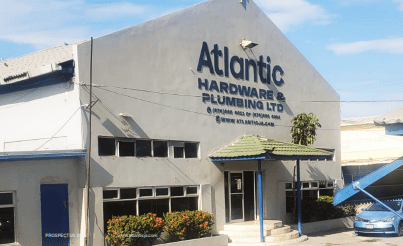
“We’re sorry!” – Atlantic Hardware & Plumbing says future financial statements will be on time after JSE lifts trading suspension
Jamaica Inquirer