Bloodshed without proof
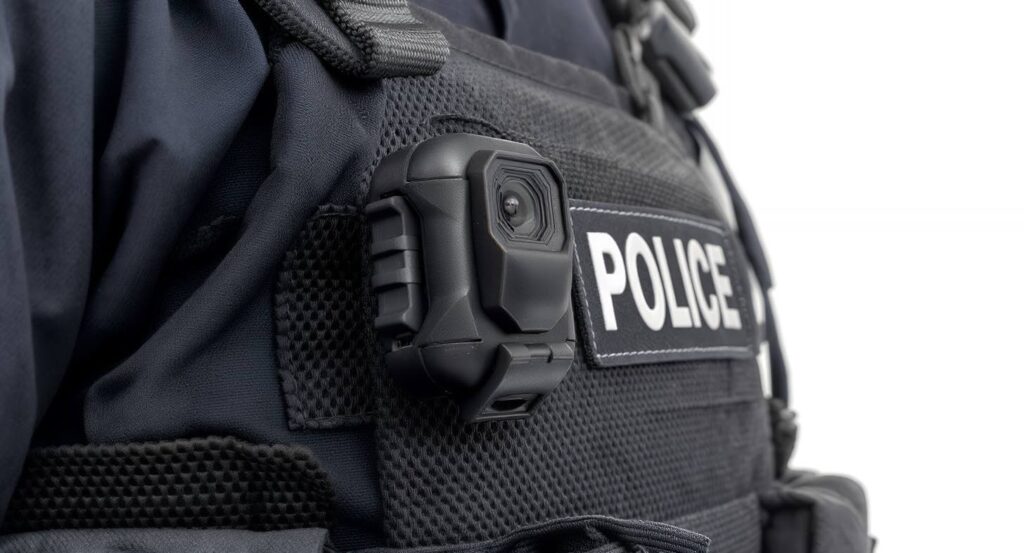
DRIVEN by the belief that body-worn cameras could have made the difference between life and death, a grieving relative of brothers Ramone and Davian Henry, who were fatally shot by police in St Ann recently, is condemning the killings as unjust and demanding that law enforcers be outfitted with the devices.
The relative, who requested anonymity due to safety concerns, said the brothers were upstanding citizens in the community who, at the time of their deaths, posed no threat to police, and residents are outraged by the incident.
According to police reports, a team from the Area Five fugitive apprehension division conducted a targeted operation at a premises in Steerfield, near Golden Grove, on April 20 in search of a suspect believed to be in possession of prohibited weapons and unauthorised ammunition. On arrival at the location lawmen reportedly entered the house and encountered two armed men. Police say both men pointed firearms at the police and opened gunfire. The police returned fire, fatally killing both men.
The Independent Commission of Investigations (INDECOM) has launched a probe into the matter.
The grieving family member rebutted all claims that the men were dangerous and a threat to the security officers. The relative stated that Davian was asleep when police entered the premises around 5 am, and Ramone had his daughter with him, who was allegedly forcibly removed by police officers before they opened fire.
According to the relative, Davian, 29, was looked up to by many youth in the community and was only on the island for four months, following his return from the H-2B nonimmigrant programme which permits employers to temporarily hire nonimmigrants to perform non-agricultural labour or services in the United States. Ramone, 32, was described as a loving father who worked hard and always had his daughter by his side, never wanting to expose her to any negative or unsafe environment.
“Everyone is devastated at this moment. Everybody is scared because everybody feels like the police — the ones who did what they did — are going to come back again. My younger [family members] are saying that every time the breeze blows on the door they are scared because they feel like it’s the police coming to kick off their doors, and some persons don’t want to go outside. People don’t want to even talk,” the relative told the Jamaica Observer.
“How the police dealt with the matter was unfair and unjust, and they could have done better because they [Ramone and Davian] did not deserve how they died. The grieving that we are grieving is very much heavy on everyone, not only the family members but even the people in the community,” the family member added.
Given what the family member described as irregularities in the accounts of the events by police officers, the relative called for law enforcement officers to wear cameras during all operations, noting that “too many shenanigans are going on, and there is always no proof because they are always going to say they were in a heated shoot-out”.
According to recent data from INDECOM, a total of 39 police fatal shootings have been recorded for the month of April this year. A recent release by the commission, which independently investigates actions by security forces and State agents, revealed that five individuals were shot dead on April 27 in four separate incidents. Two incidents, which occurred in August Town and at the May Pen Town Centre, are reported to have involved men with mental health issues.
There have been 115 fatal shootings by State agents up to April 30. Reports of fatal shootings by State agents have led to much public outcry and demand for body-worn cameras during all police operations, from churches and senators to civil society and human rights groups.
According to the relative of the Henry brothers, who joined in the call for the recording devices to be worn, the incident involving the two men would have ended differently if the police had cameras on during the operation.
“They would not have killed them because they would know that we would see exactly what took place. They [the public] would hear the cry of the people, them saying, ‘Don’t do it. Please, wi nuh do nothing!’ ” the relative told the Sunday Observer.
The family member added that “Wearing a camera would not defeat the purpose [of the operation], and a lot of people’s lives would be saved because they [the police officers] would be thinking twice. I think they know that they are wrong. Had they had the camera on they would not have done what they did. They would have gone and searched the premises, handcuffed the persons, and brought them in.”
However, at a post-Cabinet media briefing on April 22, Minister of National Security and Peace Dr Horace Chang dismissed as a “crazy idea” calls by civil society groups for the police to wear cameras on specialised operations that are likely to lead to confrontations with armed criminals.
The minister noted that the police are trained to use cameras, and that cameras are available for members of the Jamaica Constabulary Force (JCF), with 1,000 more on order. However, he insisted that it is Commissioner of Police Dr Kevin Blake who determines how they are deployed.
However, in more recent remarks at the constabulary force’s research methodology awards ceremony on April 30, the minister referenced the historical pinstriped uniforms worn by police officers in earlier periods, reiterating that those uniforms were not designed to accommodate modern policing tools such as body-worn cameras.
He noted that the current navy-blue JCF uniform represents a deliberate and strategic upgrade, designed to meet the operational demands of modern law enforcement. These include reinforced utility belts, attachment points, and adaptable fabric structures that support the secure use of body-worn cameras, communication devices, and other tactical tools.
The relative further questioned the seeming hesitancy in allowing security officials to wear a camera.
“Why would you not want to wear a camera in a hostile situation? It is because you are about to hide something! If you have nothing to hide you should be open to the public,” the relative stressed.
Davian Henry
Ramone Henry
Syndicated from Jamaica Observer · originally published .
Legal context · powered by Jurifi
Get the legal angle on this story. Pick a prompt and Jurifi's AI will explain it using Jamaican law.
AI replies are based on Jamaican law via Jurifi. Not legal advice.