
Constitutional Reform Committee Zeroes In on Design of Jamaica's Future Presidency
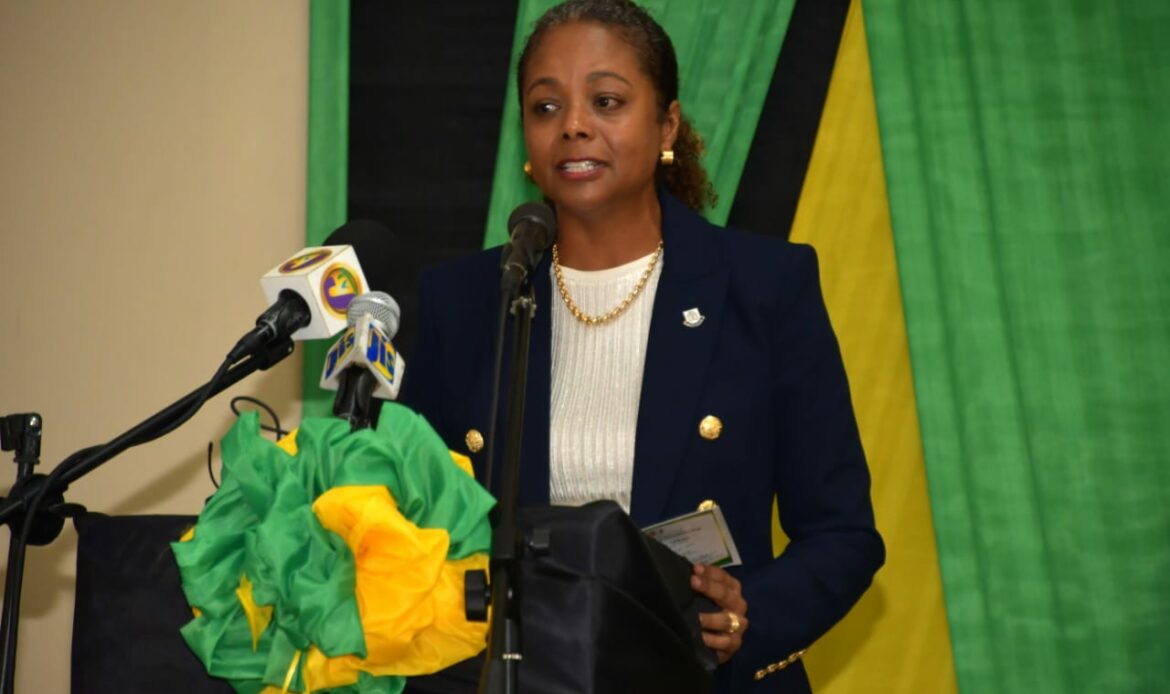
The shape of a future Office of the President for the Republic of Jamaica has emerged as a key focus for the Constitutional Reform Committee (CRC), Minister of Legal and Constitutional Affairs, Hon. Marlene Malahoo Forte, told Parliament on Tuesday, October 3.
In her statement to legislators, the Minister disclosed that committee members have already settled on a method for choosing the country's eventual Head of State.
"There was consensus [among the CRC] that the Head of State should be nominated by the Head of Government in and after consultation with the Leader of the Opposition and confirmed by the Parliament via affirmative resolutions on a two-thirds (2/3) majority vote," she said.
"A super-majority would signal consensus on the selection of the President," she added.
Malahoo Forte explained that the CRC has also been weighing what authority should sit with the President, with members agreeing that those functions must be exercised independently of the Prime Minister's portfolio. The intent, she indicated, is to keep the presidency removed from partisan contestation.
"The Committee affirmed that the Office of the President would be separate from the Office of the Prime Minister, with the latter serving as the political Head of Government of the Republic of Jamaica," she stated.
According to the Minister, this position aligns with proposals that emerged from the 1995 Joint Select Committee on Constitutional and Electoral Reform (JSCCER).
She further announced the establishment of a sub-committee, led by Senator Ransford Braham, tasked with mapping the current relationship between the Government and the Governor-General.
"The State Affairs Sub-Committee is responsible for reviewing the existing powers exercised by the Monarch through the Governor-General, under the Constitution, and any other relevant laws, or by convention, to determine what, if any, additional powers should be vested in the Office of the President for the Republic of Jamaica," she said.
The Minister cautioned, however, that more precision is required on the type of presidency Jamaica ultimately adopts, outlining three possible models.
"The first is the Executive President. It is the Presidential system where the Head of State is politically selected or elected, with executive powers covering substantial areas of government. The second is the Non-Executive President who is the formal Head of State performing merely ceremonial functions. The third is a formal Head of State who does not only perform ceremonial functions, but in whom is vested certain powers which do not involve the daily administration of government," she explained.
Syndicated from MLCA — Road to Republic · originally published .
Legal context · powered by Jurifi
Get the legal angle on this story. Pick a prompt and Jurifi's AI will explain it using Jamaican law.
AI replies are based on Jamaican law via Jurifi. Not legal advice.
Other coverage

Senator Tomlinson cites ‘trust deficit’ as he flags lack of accountability in NaRRA Bill
Jamaica Observer
Opposition Senator Thame accuses gov’t of ‘autocratic tendencies’
Jamaica Observer
924 Modular Homes Arrive on the Island
Jamaica Information Service
GG’s former press secretary demands $31m in unpaid wages
Jamaica Gleaner
NaRRA plea - Jamaicans urged to send message as Senate debates reconstruction legislation
Jamaica Gleaner