

Hantavirus can persist in semen for up to six years

There are growing concerns about Hantavirus, a disease spread by rats and rodents which can be devastating to the human respiratory system.
Attention was brought to hantavirus when last month, there was an outbreak on a cruise ship which killed three people, with ten passengers becoming very sick.
Hantavirus is transmissible through bodily fluids like saliva and semen.
Already, the western world is seeing increased cases of STDs, and now this hantavirus may become another health risk.
Jamaicans have been cautioned not to engage in sexual relations with cruise ship passengers and to remain vigilant.
According to the publication Scientific American, which is part of Springer Nature, “The presence of the virus in semen hints at the possibility that it may be capable of sexual transmission, but it is difficult to say conclusively. Based on previous outbreaks of the Andres type, hantavirus is believed to require extended close contact to be transmitted from one person to another- the kind of closeness that might come from living in close proximity or having sex. But some outbreaks, such as the current cruise ship conflagration, suggest the virus may not require such prolonged close contact to spread in such cases.
“The prevailing scientific theory which has not been definitively proved, is that the Andes hantavirus likely spreads from person to person through aerosolised droplets of saliva and other oral fluids that carry high viral load,” said Scientific American.

Steven Bradfute from the University of New Mexico informed, “There are certain sites in your body, like semen or the eye, called immune-privileged sites. Sometimes there’s not as much clearance of pathogens from those areas, but we don’t know if that means it is infectious or just represents the RNA.”
The World Health Organisation (WHO) is insisting that hantavirus is not like COVID and will not shut down the world, but it must be monitored. It does not pose a pandemic threat.
A study found that the Andes strain remained in a man’s semen nearly six years after he was infected. The man was from Switzerland and was travelling across South America.
The Andes strain found in South America is unusual among hantaviruses because it can be transmissible from person to person.
Hantavirus spreads to humans from rodent exposure.
Syndicated from Our Today · originally published .
Legal context · powered by Jurifi
Get the legal angle on this story. Pick a prompt and Jurifi's AI will explain it using Jamaican law.
AI replies are based on Jamaican law via Jurifi. Not legal advice.
Other coverage

Passengers from virus-stricken cruise ship fly home for monitoring
Jamaica Gleaner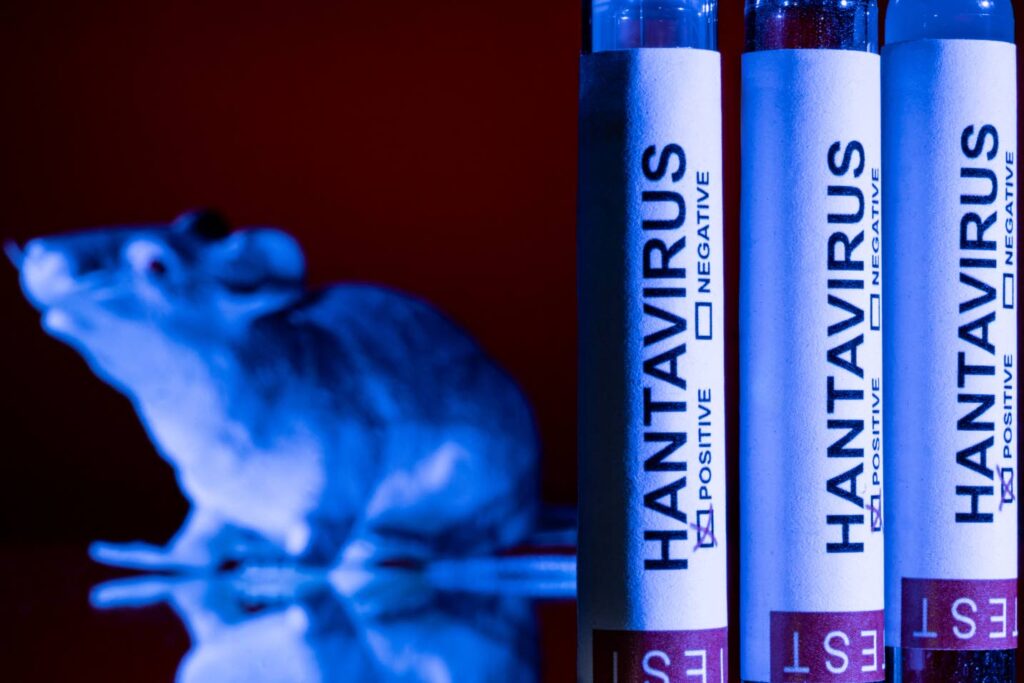
Hantavirus risk to Jamaica very low, say experts
Jamaica Observer
WHO confirms 10 global hantavirus cases, Hondius crew remain symptom-free
Jamaica Inquirer
Hantavirus-hit cruise ship docks in the Netherlands
Jamaica Inquirer
CVM Sunrise Morning Show: May 12, 2026 | CVMTV
CVM TV (Video)Watch