
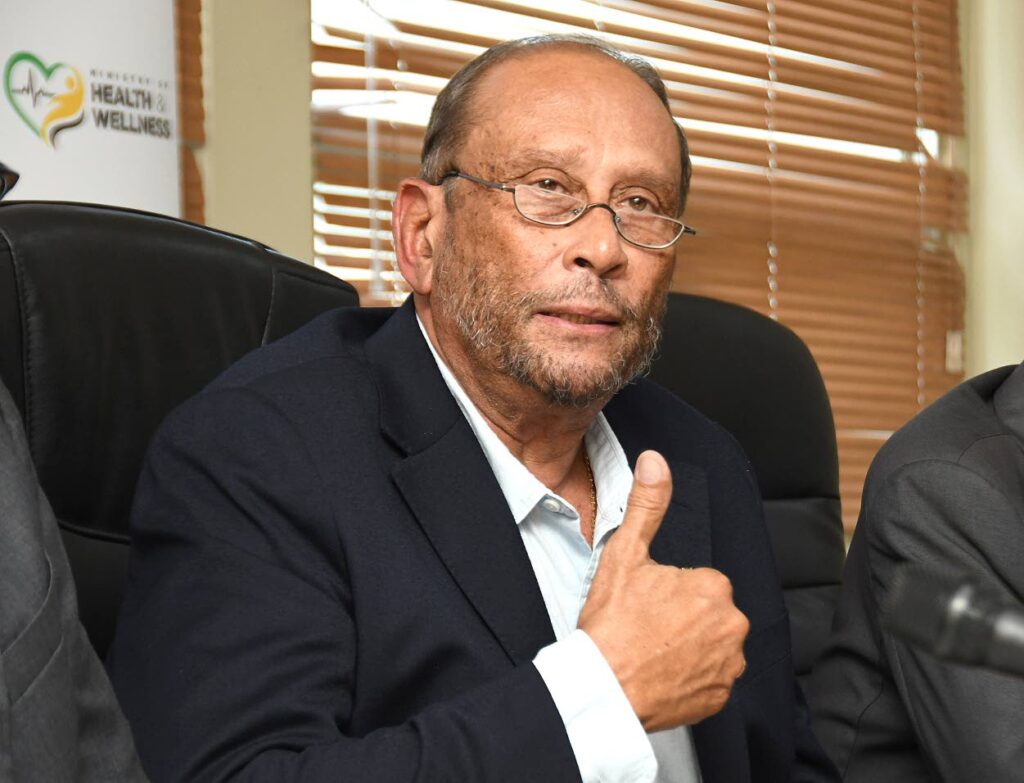
Howard Mitchell met en garde : une crise de contrôle des organismes publics sape la confiance
L'avocat chevronné Howard Mitchell affirme que les organismes publics jamaïcains sont affaiblis par une faible responsabilité et une supervision inefficace, creusant un grave fossé de confiance entre les citoyens et les institutions nationales.
Mitchell, qui préside le comité d'examen institutionnel nommé par le gouvernement chargé d'enquêter sur les défaillances de gouvernance à l'University Hospital of the West Indies (UHWI), a indiqué que les difficultés de l'hôpital ne sont pas un cas isolé. Selon lui, elles reflètent des problèmes ancrés dans l'ensemble du secteur public, notamment des violations persistantes des règles, un contrôle insuffisant et une application faible des lois.
« La plupart d'entre eux sont — je crois qu'il s'agit d'environ 12 sur 156 organismes publics qui, par exemple, sont à jour de leurs déclarations et rapports en vertu du PBMA (Public Bodies Management and Accountability Act) », a déclaré Mitchell, soulignant l'ampleur du non-respect dans les agences de l'État.
Le comité a été constitué à la suite du rapport 2025 de l'Auditeur général sur les marchés publics et la gouvernance à l'UHWI. Mitchell a indiqué que l'exercice a dépassé le cadre d'une seule institution et a mis au jour des faiblesses structurelles dans le système d'administration publique jamaïcain.
Il a indiqué qu'une raison majeure de la persistance de ces défaillances est que les agences chargées du contrôle ne disposent pas de suffisamment de personnel, de formation ni de financement pour assurer une supervision soutenue. « Une partie du problème, et l'une des raisons pour lesquelles cela s'est produit, tient au fait que les agences de contrôle n'ont pas été suffisamment dotées en ressources, en personnel et en formation pour aider ces conseils à fonctionner. Le département de l'Auditeur général lui-même est confronté à des contraintes de ressources qui limitent le suivi du contrôle, de sorte qu'il doit procéder par touches successives. Les unités de conformité au sein du ministère des Finances et de la Fonction publique ont également besoin de davantage de ressources et de motivation pour élargir la portée et soutenir le changement de culture dont non seulement l'hôpital, mais l'ensemble des organismes publics ont besoin », a-t-il ajouté.
Mitchell a également indiqué que l'ampleur du réseau d'organismes publics rend le contrôle plus difficile à exercer. « Si l'on examine la manière dont la structure des organismes publics s'inscrit dans les différents ministères, certains ministères ont 24 organismes publics à surveiller pour garantir une conformité effective. Le premier ministre lui-même a 39 agences qui lui rendent compte », a-t-il déclaré.
Il a révélé qu'au moins un organisme public n'a pas remis les rapports requis depuis un demi-siècle. « Certaines de ces agences, ces organismes publics — l'un en particulier, et je ne le nommerai pas —, l'un en particulier n'a pas soumis de rapport depuis 50 ans, pas depuis sa création ; on ne sait donc pas ce qu'il fait de l'argent public. C'est intenable, surtout lorsque nous avons obtenu un tel succès dans la gestion macroéconomique », a-t-il ajouté.
Selon Mitchell, ces lacunes de gouvernance alimentent une méfiance plus large à l'égard de l'État, surtout lorsque les entités publiques ne produisent pas les résultats pour lesquels elles ont été créées. « Je pense que les acteurs politiques ont peut-être enfin reconnu qu'une partie de la cause profonde de ce déficit de confiance réside dans l'écart entre les promesses et les résultats. Lorsqu'ils échouent dans ce rôle, le retombée touche immédiatement les politiciens. Elle touche immédiatement les institutions politiques, et cela nuit à la société », a déclaré Mitchell.
Il a indiqué que l'UHWI devrait désormais servir de terrain d'essai pour une réforme plus large. Le comité a recommandé que le gouvernement fasse appel à une expertise indépendante à l'étranger pour piloter le changement institutionnel à l'hôpital universitaire, mette en place un programme formel de mise en œuvre et assure la responsabilité quant aux résultats.
« Nous n'avons pas, à mon humble avis personnel, le niveau d'expertise disponible ici en Jamaïque en matière d'hôpitaux universitaires et de gestion des hôpitaux universitaires, ni pour gérer l'entité si particulière que représente l'University Hospital », a-t-il déclaré.
Le ministre de la Santé, le Dr Christopher Tufton, a appuyé cette approche et a indiqué que le gouvernement prévoit de rechercher à l'étranger un soutien adapté. « Je partage également l'avis que je ne suis pas sûr qu'une telle entreprise existe en Jamaïque. Nous irons donc sur le marché international pour identifier où se trouve cette expérience autour des hôpitaux d'enseignement et de prestation de services, afin d'orienter le processus dans la durée », a déclaré Tufton.
Mitchell a maintenu que la réforme ne devrait pas s'arrêter à l'UHWI. « C'est un bon point de départ avec l'hôpital, mais ce ne devrait pas être la fin du parcours. Ce devrait être un exemple qui nous permet d'élever les normes des autres organismes publics », a-t-il déclaré.
Syndiqué depuis Jamaica Observer · publié initialement le .
Contexte juridique · propulsé par Jurifi
Obtenez l'angle juridique de cette histoire. Choisissez une question et l'IA de Jurifi l'expliquera selon le droit jamaïcain.
Les réponses de l'IA sont basées sur le droit jamaïcain via Jurifi. Pas un avis juridique.