
Last man standing
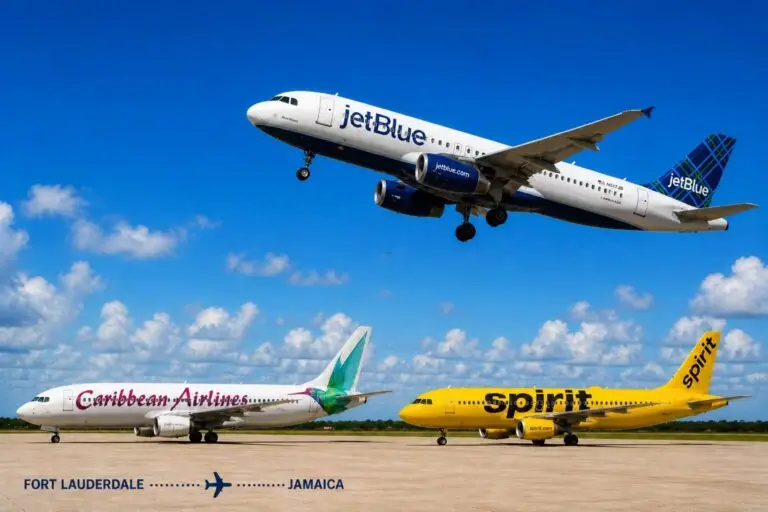
TRAVELLERS going between Fort Lauderdale, Florida and Kingston will now be limited to using JetBlue Airways following the move by Spirit Airlines to shut down operations on Saturday.
“It is with great disappointment that Spirit Airlines has started winding down its global operations, effective immediately. All flights have been cancelled, and customer service is no longer available,” Spirit said in a public message early Saturday morning.
The low-cost carrier is winding up its operations after a US$500-million White House rescue plan fell through at the 11th hour. This move leaves more than 17,000 employees out of work, a situation which impacts Jamaicans who worked at both international airports and support agents in the business process outsourcing (BPO) sector.
Spirit’s parent company, Spirit Aviation Holdings, Inc, had US$8.08 billion in total liabilities and a US$2.09-billion deficit as of December 31. The company had gone through two bankruptcy proceedings in less than two years, but the surge in jet fuel prices became the final nail in the company’s coffin.
The United States Bureau of Transportation Statistics revealed that Spirit Airlines had a 26.6 per cent market share in Fort Lauderdale and processed 3.38 million passengers between February 2025 and January 2026. It also had an 11.48 per cent market share for the Orlando, Florida market where it moved 2.75 million passengers.
The exit of Spirit has created a bigger vacuum for travellers as they are now left with JetBlue as the sole airline to travel between Fort Lauderdale-Hollywood International Airport (FLL) and Norman Manley International Airport (KIN). Whilst Delta Air Lines and Frontier Airlines are seen as booking options at Sangster International Airport (MBJ) online, JetBlue dominates the available flights. Caribbean Airlines Limited (CAL) discontinued its routes from KIN and MBJ to Fort Lauderdale in November, less than one year after the route was reintroduced.
JetBlue, United Airlines, Delta Air Lines, and Southwest Airlines all announced on Saturday that they would be offering capped rescue fares to stranded Spirit customers whose flights were cancelled and who need to reach their final destination. They have also extended travel pass benefits and spare jump seats to Spirit pilots, flight attendants, and other employees to help them reach home. These US carriers will also be offering interview opportunities to the affected staff.
“South Florida is a key market for JetBlue, and we recognise this is a challenging moment for many travellers,” said JetBlue CEO Joanna Geraghty in the press release.
“Our focus is on stepping up in the near term by adding service, maintaining connectivity, and keeping fares competitive so customers can continue to travel with confidence,” she added.
JetBlue will be adding 11 new cities at Fort Lauderdale-Hollywood International Airport to help backfill critical services and allow customers to have a selection of flights to their destinations. Apart from adding more domestic flights on existing routes in the USA, JetBlue also plans to add more flights to Santo Domingo and Santiago de los Caballeros, Dominican Republic, in the coming weeks.
“JetBlue expects to operate nearly 130 daily departures from Fort Lauderdale this summer, marking the largest operation in the airline’s history from the airport — over 75 per cent more daily flights than 2025,” JetBlue added.
According to aviationdb.net (Aviation Database), the FLL to KIN route had 21,754 passengers in December 2025, with Spirit moving 5,022 passengers (23.09 per cent) while JetBlue moved 16,732 passengers. JetBlue sold 81 per cent of available seats for that route while Spirit sold 78 per cent of available seats (seat utilisation rate or load factor). This metric shows that the route was well demanded by users, with Spirit filling a gap in the market.
Although JetBlue will be ramping up service to FLL and other destinations, airlines across the globe are cutting flights and unprofitable routes as they grapple with the near doubling of jet fuel in the last two months. Jet fuel has moved from an average US$2.24 to US$4.32 due to the disruption around the Strait of Hormuz which accounts for one-fifth of the world’s oil supply. This situation stems from the US/Israel war with Iran which began on February 28 and remains unresolved up to today.
“With demand continuing to remain strong, it’s important we take a flexible approach, trimming capacity as we head into the peak summer season. We plan to closely monitor market conditions and expect to reduce additional capacity after the summer peak, assuming fuel prices remain elevated,” said Geraghty on the company’s April 28 earnings call.
The JetBlue CEO pointed to the company pulling on three levers to offset fuel costs — adjusting fares, moderating unproductive capacity, and pursuing additional cost-saving opportunities. She noted that due to the company’s first quarter (January to March) being 90 per cent booked, JetBlue was unable to reprice or recapture the impact of higher fuel prices. The company expects to recover 30 to 40 per cent of higher fuel prices in the second quarter, and 100 per cent by 2027.
JetBlue paid an extra US$62 million in fuel costs during its first quarter as average fuel prices went up 15 per cent. However, the company consumed 2.7 per cent less fuel, or 5 million gallons (18.93 million litres), but still paid a US$573-million fuel bill. The company recently strengthened its liquidity or cash position by securing a US$500-million loan by pledging 22 Airbus jets as collateral.
“Through our recent growth and competitive reductions we’ve been able to take advantage of newly available gate space to build a schedule with four connecting banks beginning this summer, up from two banks previously. This provides our customers in the north-east significantly more opportunities to connect to our growing portfolio of destinations in the Caribbean and Latin America,” Geraghty added.
Impact on Jamaican tourism
Jamaica has been seeing a steady improvement in passenger traffic since Hurricane Melissa struck in October 2025. The country welcomed more than 358,000 passengers in March at Sangster International, which processes more than 70 per cent of Jamaica’s visitors. The Montego Bay airport welcomed 917,400 passengers in the first quarter compared to 1.34 million passengers in 2025.
However, the rising jet fuel prices might begin, in short order, to impact forward bookings and demand for air travel to Jamaica. This comes against the backdrop of Lufthansa cancelling 20,000 short-haul flights through October, and Air Canada suspending flights between Montreal and New York.
“I am hearing that the cutting of flights due to rising jet fuel cost[s] is now beginning to impact the Caribbean, including Jamaica. No big announcements, just quiet elimination of some routes etc,” said Richard Pandohie in a recent tweet. Pandohie is the CEO of Seprod Limited and chairman of Caribbean Producers (Jamaica) Limited, a company that is heavily involved in the hospitality space.
While several hotels have reopened their doors since the hurricane, other properties have adjusted their reopening schedules. Hyatt Hotels Corporation has changed the reopening date for its eight all-inclusive hotels from November 2026 to the first quarter of 2027.
“Throughout this period, our priority has been to support our colleagues while maintaining readiness for these hotels resuming operations. The hotels have focused on retaining our Jamaica colleagues through a combination of continued employment, financial support, benefits coverage, and ongoing training and development opportunities, alongside maintaining a core team on site to support operations. Hyatt said in a release to the Jamaica Observer.
“This approach allows the hotels to extend the utmost care for our Hyatt family and help ensure a strong, seamless return when the resorts resume operations,” Hyatt added.
This is on top of Sandals Resorts International changing the reopening date for three properties from May 2026 to November and December 2026, in what has been described in the international travel trade as “a bold statement about the future of luxury all-inclusive travel” which will see total transformation of the three resorts following Hurricane Melissa.
Four Royalton properties are scheduled to reopen by August to September, while Bahia Principe Grand Jamaica is scheduled to reopen in December 2026 as per the
Visit Jamaica website.
The hospitality space is facing new headwinds due to the surging price of jet fuel, coupled with the general consumption tax (GCT) rate on tourism services set to move from 10 to 15 per cent in April 2027.
A table showing the passengers carried on each route between Fort Lauderdale to Jamaica.
Syndicated from Jamaica Observer · originally published .
Legal context · powered by Jurifi
Get the legal angle on this story. Pick a prompt and Jurifi's AI will explain it using Jamaican law.
AI replies are based on Jamaican law via Jurifi. Not legal advice.