
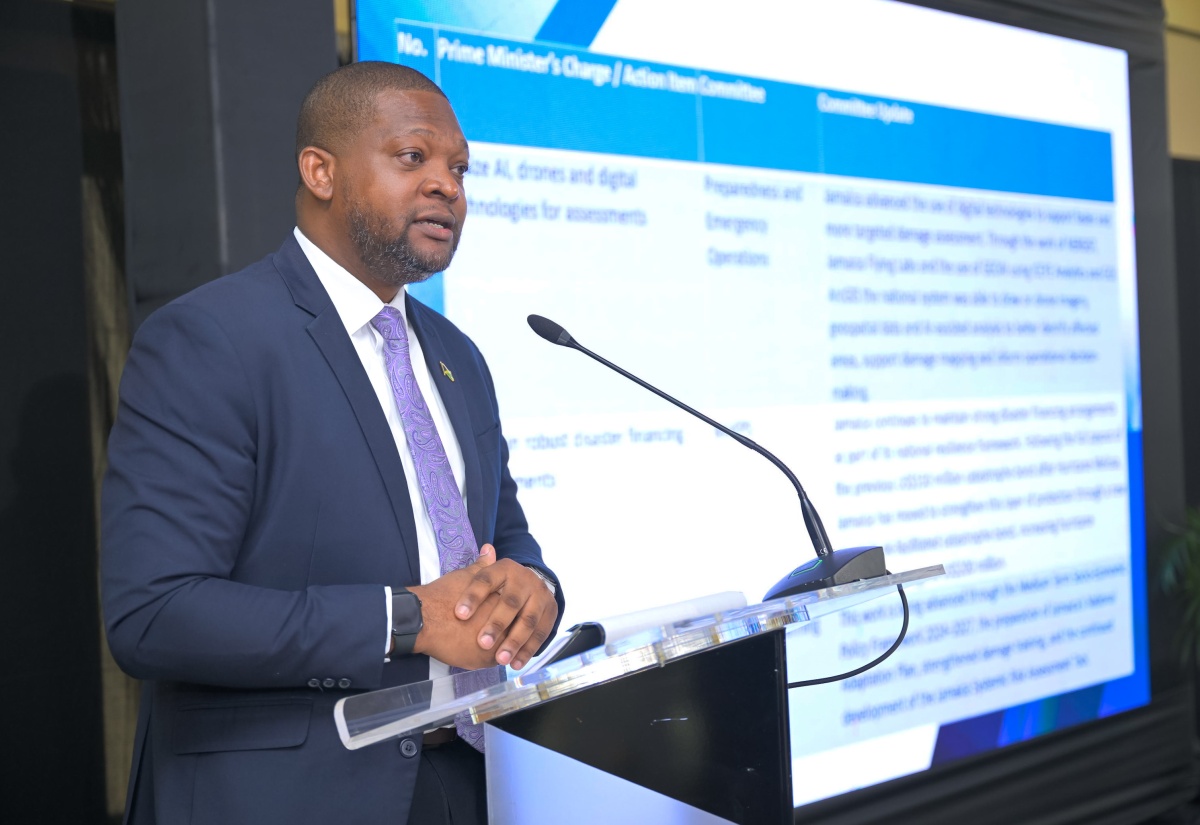
Jamaica’s disaster risk management system remains strong, coordinated and response capable, says Director General, Office of Disaster Preparedness and Emergency Management (ODPEM), Commander Alvin Gayle.
“The country has functioning national coordination arrangements, experienced emergency response agencies, established emergency operations systems, trained personnel, active public information channels and improving restoration capacity across critical sectors. Disaster management and readiness is a whole-of-government and whole-of-community responsibility,” he said.
He was providing a summary on the state of disaster management report, during the National Disaster Risk Management Council meeting at the Office of the Prime Minister in St. Andrew, on May 27.
“At the same time, major events always teach us. Hurricane Beryl reinforced the importance of readiness, public communication, early action and the protection of critical services,” he said.
Commander Gayle said that Hurricane Melissa further added lessons on sustained operations, recovery coordination, shelter transition, infrastructure restoration and keeping national systems working over an extended period. “The point is not that the system is failing. The point is that the system is learning, adapting and strengthening. Our hazard environment requires sustained readiness,” he stated.
He said while the 2026 outlook points to a normal to near-normal hurricane season, Jamaica cannot only prepare for hurricanes.
He reasoned that the country’s readiness posture must, therefore, remain all-hazards in character, covering hurricanes, flooding, drought, earthquakes, and other national emergencies that may disrupt the normal functioning of governance arrangements.
“Our current posture is best described as operational and response-capable, with targeted areas for strengthening. The core arrangements required to prepare, activate, coordinate and respond are in place and functioning,” Commander Gayle said.
“The next phase of our work must focus on sustainment: maintaining operations over an extended time across multiple parishes, while protecting essential services and supporting vulnerable populations. We must be satisfied that agencies can adapt, activate and that the systems which support response can continue to operate,” he said.
During his presentation he highlighted eight areas critical to the country’s disaster management system.
He said national command and coordination remain strong, and that Jamaica’s information, monitoring and early warning arrangements are active and improving, pointing out that continued investment in redundancy, automation and real-time data flow will further strengthen these critical areas.
He noted that operational response capability remains a major strength, adding that critical infrastructure restoration and operational sustainment remain central to Jamaica’s readiness.
“Hurricane Melissa confirmed the close connection required among road access, utility restoration and relief movement. The lesson is not that the system failed but that major events require clear prioritisation, practical sequencing and sustained coordination among emergency responders, local authorities, and utility providers,” Commander Gayle argued.
“A useful direction from the Working Session is the continued focus on resilient infrastructure standards. Secondary power supply, solarisation of water treatment plants and other critical facilities and options such as grid islanding, where possible, can improve continuity of service during major events. This is a practical area for national strengthening and one in which Jamaica has already demonstrated capability, discipline and progress,” he said.
He added that public readiness systems are active and continue to improve and that the country has functioning logistics and relief coordination arrangements.
The Director General pointed out that institutional continuity remains an important supporting element of national readiness, noting that this area is already receiving focused attention nationally.
He further stated that that recovery readiness is now being treated as part of disaster management from the onset.
“Jamaica’s risk management system remains strong, experienced and capable. It has demonstrated coordination, commitment, and resilience under pressure. The work before us is to build further on that foundation, to strengthen the areas that require attention and to ensure that the country is better prepared, better coordinated and better able to recover after each event,” Commander Gayle said.
“With the continued leadership of the National Disaster Risk Management Council, and with the sustained support of MDAs (ministries, departments and agencies), the private sector, civil society, and regional and international partners, I am confident that Jamaica will continue to learn, adapt, and strengthen its national disaster system,” he said.
Syndicated from Jamaica Information Service · originally published .
Legal context · powered by Jurifi
Get the legal angle on this story. Pick a prompt and Jurifi's AI will explain it using Jamaican law.
AI replies are based on Jamaican law via Jurifi. Not legal advice.
Other coverage

JISTV | Launch of the National Risk Disaster Council Meeting
Jamaica Information Service (Video)Watch
Government strengthening disaster risk financing framework ahead of hurricane season
Our Today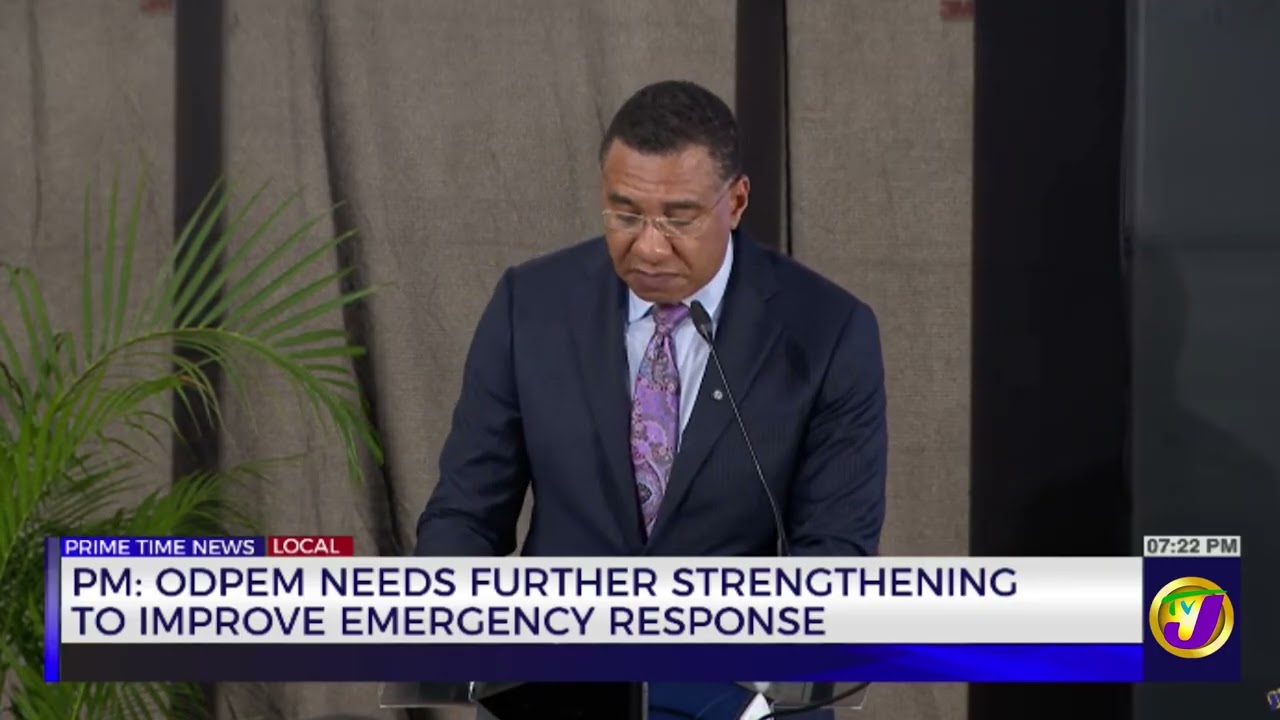
PM: ODPEM Needs Further Strengthening to Improve Emergency Response | TVJ News
Television Jamaica (Video)Watch
Gov’t strengthening disaster risk financing framework ahead of hurricane season
Jamaica Gleaner
Holness appoints Antony Anderson to lead NaRRA
Jamaica Observer