
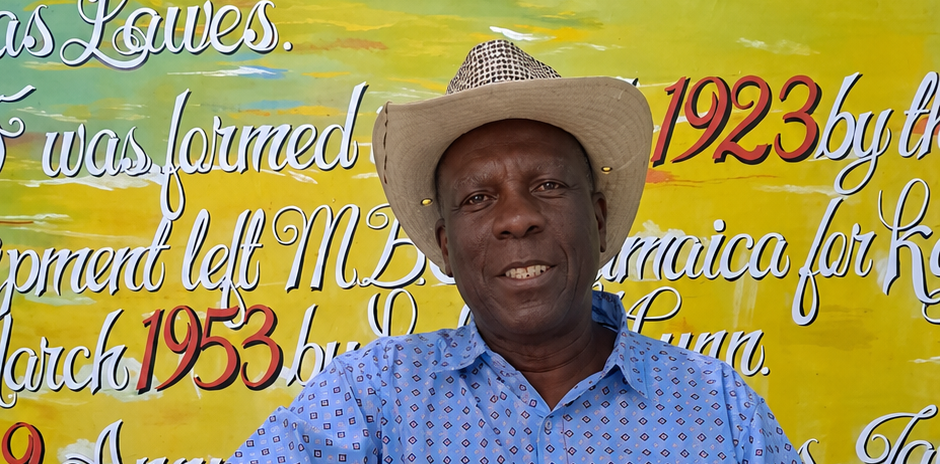
Dr. Norman Grant calls for renewed investment and psychosocial support for traumatised coffee farmers

Reeling from the effects of hurricanes Beryl and Melissa in quick succession, and fallout from the Iran war with resulting rising energy prices, President of the Jamaica Coffee Exporters Association (JCEA), Dr. Norman Grant, has stressed that while the industry has demonstrated resilience, urgent and coordinated action is required to ensure sustainable recovery and reduce losses in production of Jamaica’s world renowned blue Mountain Coffee.
“The JCEA continues to advocate for key recovery initiatives, including the implementation of the Coffee Crop Resuscitation and Establishment Programme (CREP), the rehabilitation of farm roads, and targeted support to restore production capacity,” said Grant in an interview, as he also underscored the need for mental health support for coffee farmers navigating repeated losses of their crops.
Grant noted that over the past four years, Jamaica’s coffee industry has faced severe challenges due to climate-related disruptions, including prolonged periods of extreme rainfall and the devastating impact of hurricanes, including Hurricane Beryl and most recently Hurricane Melissa during the 2025/2026 crop year. The latter resulted in the loss of approximately 100,000 boxes of coffee, representing an estimated J$1 billion in farm-gate losses and the destruction of nearly 40 percent of the mature crop.
Dr. Grant highlighted the significance of Jamaica Blue Mountain Coffee as one of Jamaica’s most prized agricultural assets, globally recognized for its exceptional quality, authenticity, and heritage, noting further that the industry reflects the dedication and resilience of over 5,000 Jamaican coffee farmers and workers who sustain its legacy.

Hurricane crop losses in 2024/2025–2025/2026 crop years – J$1.5 billion
Giving an overview of the losses, Dr. Grant explained that coffee production over the past two years had declined from 288,000 boxes of Jamaica Blue Mountain Coffee in the 2023/2024 crop year, to an estimated 235,000 boxes in 2024/2025 and further to approximately 150,000 boxes in the current 2025/2026 crop year, which is projected to end in July 2026. This represents a total decline of about 138,000 boxes compared to the 2023/2024 crop year, with an estimated farm-gate value loss of approximately J$1.5 billion to the 5000 coffee farmers. This is projected to represent approximately US$15 Million or approximately J$2.5 Billion decline in export revenues.
He noted that this significant decline is largely due to adverse weather events. In 2024, output was already constrained by excessive rainfall and disease pressures, and the situation worsened in 2025 following the passage of severe weather systems, which disrupted harvesting cycles and caused extensive damage to coffee farms and infrastructure.
As a result of reduced local production, Jamaica has seen a corresponding increase in coffee imports over the same period to help meet market demand. This was particularly evident following the impact of Hurricanes Beryl and Melissa, which created supply gaps for both domestic consumption and export commitments.
Cumulatively, the industry has experienced losses estimated at J$2.5 billion over the past four years, placing significant financial, emotional, and psychological strain on farming communities. Despite these setbacks, the sector continues to contribute meaningfully to the national economy, maintaining its presence in global markets and exporting premium coffee valued in the millions of US dollars annually.
Despite these setbacks the JCEA President welcomed on-going support efforts, including: Ja. $120 million committed by the Ministry of Agriculture and the Jamaica Agricultural Commodities Regulatory Authority (JACRA), with J$35 million already allocated for input supplies; the launch of the CREP Programme; and contributions from private and international partners, including 8,000 coffee seedlings valued at J$1.5 million from 7-Eleven, and US$3,000 from the Association of Japanese Importers of Jamaica Coffee (AJIJC).
“Jamaica Blue Mountain Coffee is more than a product – it is a national treasure, a vital source of rural employment, and a symbol of Jamaica’s excellence on the global stage,” Dr. Grant stated. As he added that the declines from the hurricanes and other weather events were followed by significantly increased costs as a result of the war in the Middle East. “The rise in fuel prices has led to higher production costs for Jamaica Blue Mountain Coffee. There has also been an increase in freight costs and unpredictability in shipping to customers due to disruptions in global supply chains,” Dr. Grant stated.
Syndicated from Our Today · originally published .
Legal context · powered by Jurifi
Get the legal angle on this story. Pick a prompt and Jurifi's AI will explain it using Jamaican law.
AI replies are based on Jamaican law via Jurifi. Not legal advice.
Other coverage

The Business Report—June 3, 2026
PBC Jamaica (Video)Watch
Flow Jamaica revenue slips to US$103m as Hurricane Melissa weighs on subscribers
Jamaica Gleaner
Editorial | Conservation of bees
Jamaica Gleaner
Speaking Notes: Review of Economic Performance, October–December 2025
Planning Institute of JamaicaSpeaking Notes: Review of Economic Performance, January–March 2026
Planning Institute of Jamaica