

JSE: GENAC | General Insurance
General Accident has just turned in the best year in its history, and it did so in the same twelve months that handed the company its worst catastrophe quarter on record. Both things are true, and holding them together is the only honest way to read this stock. The Jamaican insurer is growing into genuine regional scale, but it remains, at its core, a Caribbean catastrophe writer, and 2025 was a reminder of what that means when a storm of Melissa’s size comes ashore.
Group after-tax profit climbed 61 per cent to J$399.6 million for the year ended December 2025, or J$0.38 a share, from J$248.3 million the year before. Insurance revenue rose 13.5 per cent to J$12.97 billion, extending the steady top-line growth that has carried the Jamaican book and the younger Trinidad and Barbados operations alike. The full-year insurance service result came in at J$259.8 million, a touch ahead of the J$248.9 million booked in 2024. Worth noting for anyone reconciling figures: audited twelve-month numbers later circulated by analysts put net profit closer to J$451.5 million and total assets at J$23.4 billion, reflecting consolidation and post-audit adjustments. The figures here follow the group’s reported results.
None of that growth came from a single windfall. The motor and property books widened, the regional subsidiaries kept moving toward sustained profitability, and investment income improved as better cash collection freed up funds to put to work. That is a healthier profile than the company carried two years ago, when it was far more dependent on the Jamaican motor line and a thinner investment base.
The Melissa quarter
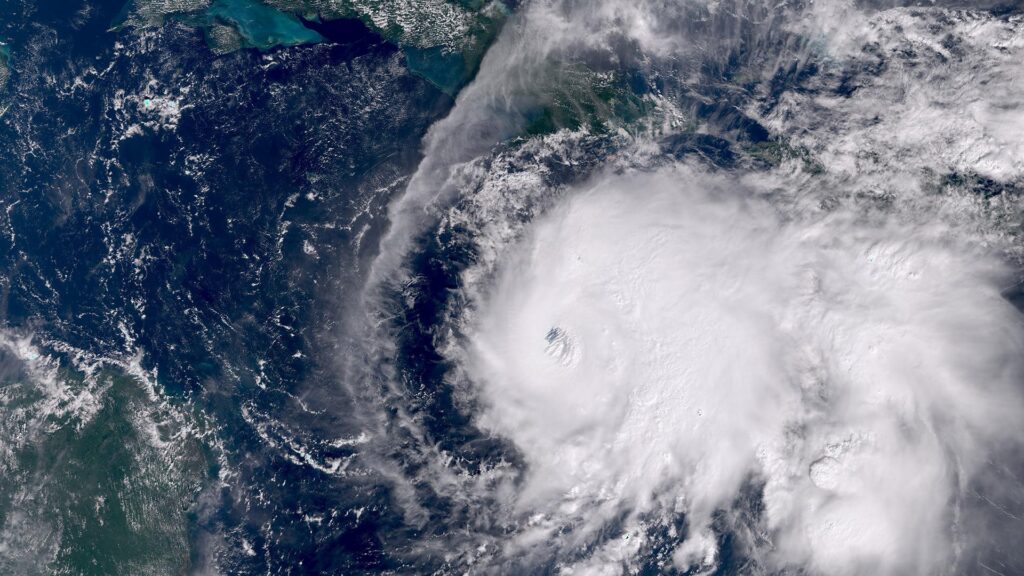
The record was set despite the fourth quarter, not because of it. Hurricane Melissa pushed the December period into an underwriting loss, the first time catastrophe claims have been heavy enough to swamp the company’s net insurance result in a single quarter. The insurance service result swung to a loss of J$63.3 million for the three months, against a J$33.7 million gain a year earlier.
Sharon Donaldson, the group chief executive, was direct about how it happened. Once Melissa’s claims crossed General Accident’s retention threshold, the reinsurers took on the excess, but only after the company had paid a sizeable deductible from its own account. That deductible, she said, was large enough to wipe out the profit earned through September. A catastrophe year also strips out the profit commissions the company would normally collect from reinsurers, because there is no underwriting profit for those commissions to attach to. Independent modellers put Jamaica’s total insured losses from Melissa somewhere between US$2.2 billion and US$5 billion, which tells you how exposed the whole local market is to one bad storm.
Reading the balance sheet
Total assets nearly doubled, to J$21.7 billion from J$12.2 billion, and reinsurance contract assets jumped to J$9.27 billion from J$3.05 billion. On the surface that looks like enormous balance-sheet growth. In economic terms it is not. Those reinsurance recoverables are sums owed by reinsurers against Melissa claims. They are not the company’s money, any investment income on them belongs to the reinsurer, and they will run off as the claims are paid. Donaldson has made the reasonable argument that these pass-through balances should not attract Jamaica’s asset tax, which feeds into a longer-running and overdue debate about how that tax distorts financial-sector balance sheets.
The numbers that actually speak to strength are liquidity and cash. Operating cash flow reached J$2.65 billion for the year, and cash and equivalents ended at J$3.95 billion, up from J$2.15 billion. Coming out of a catastrophe year with more cash on hand than you went in with is the clearest evidence that the reinsurance programme and the capital position did their job.

A strong start to 2026
The first quarter showed the underlying business never lost its footing. Net profit for the three months to March rose 60.7 per cent to J$231.3 million, from J$143.9 million in the same quarter of 2025, with earnings per share up to J$0.22 from J$0.14. Following straight on from a catastrophe-hit close to the year, a quarter of that strength confirms that the December loss was an event rather than a turn in the trend, and that the core motor and property franchise reset quickly to its usual run rate.
First-quarter figures are unaudited.

Beacon and the case for scale
The development that matters most sits off the income statement. In October 2025, parent company Musson (Jamaica) Limited bought 100 per cent of Trinidad-based Beacon Insurance Company Limited, which is set to fold into General Accident as a subsidiary once regulators sign off. Integration has been working through the first half of 2026, with General Accident’s Trinidad operation eventually to merge with Beacon. Both brands will stay in Trinidad and Tobago and Barbados, and Beacon’s chief executive will run the combined Trinidad business.
The point of all this is scale. The deal opens up Dominica, Grenada, St Kitts, St Lucia and St Vincent, and lifts projected group premiums above J$32 billion a year, something like two and a half times the current base. Size is not vanity in this business. It is leverage in reinsurance negotiations, and reinsurance is exactly where a Caribbean catastrophe writer most needs a strong hand. Handled well, Beacon turns General Accident from a Jamaican insurer with a few regional outposts into a real pan-Caribbean platform. The risk is execution, and shareholders should keep an eye on integration costs and the regulatory calendar, but the strategic direction is sound.

Valuation
Near a recent J$6.35, the stock trades at roughly 14.8 times trailing earnings on the 2025 numbers, against book value of about J$4.16 a share. That is not expensive for a company growing revenue at a double-digit clip and standing at the edge of a transformational acquisition. The offset is what the company actually does. It underwrites catastrophe risk in one of the most hurricane-prone corners of the world, and Melissa was a live demonstration that one storm can swallow three quarters of a year’s profit. Earnings will be lumpy, and any sensible model should treat a bad catastrophe year as a feature of the business rather than a remote tail.
On balance the last four quarters make the case for General Accident stronger, not weaker. The company posted a record annual profit while absorbing its worst catastrophe quarter, carried that into a powerful start to 2026, and lined up a deal that could reshape both its scale and its reinsurance economics. The risks are well understood and, more to the point, well reinsured. For an investor who can live with the volatility that comes with Caribbean catastrophe exposure, this is one of the more interesting growth stories on the local exchange, and it is not priced as though the market has fully caught up to where the company is heading.
This commentary is provided for information purposes only and does not constitute investment advice or a recommendation to buy or sell any security. Readers should conduct their own analysis and consult a licensed financial advisor before making investment decisions.
Syndicated from Our Today · originally published .
Legal context · powered by Jurifi
Get the legal angle on this story. Pick a prompt and Jurifi's AI will explain it using Jamaican law.
AI replies are based on Jamaican law via Jurifi. Not legal advice.
Other coverage

Flow Jamaica revenue slips to US$103m as Hurricane Melissa weighs on subscribers
Jamaica Gleaner
LASCO Manufacturing reports increased profits for 2025-2026 financial year
Radio Jamaica News Online
Kingston Wharves looking to double business in two years
Jamaica Gleaner
First Rock plans APO to fund property acquisitions
Jamaica Gleaner
First Rock targets US$28 million in deals as company returns to profit
Jamaica Gleaner