
Poisonous invasion: What is the ‘devil’s trumpet’ harming crops in Iraq?
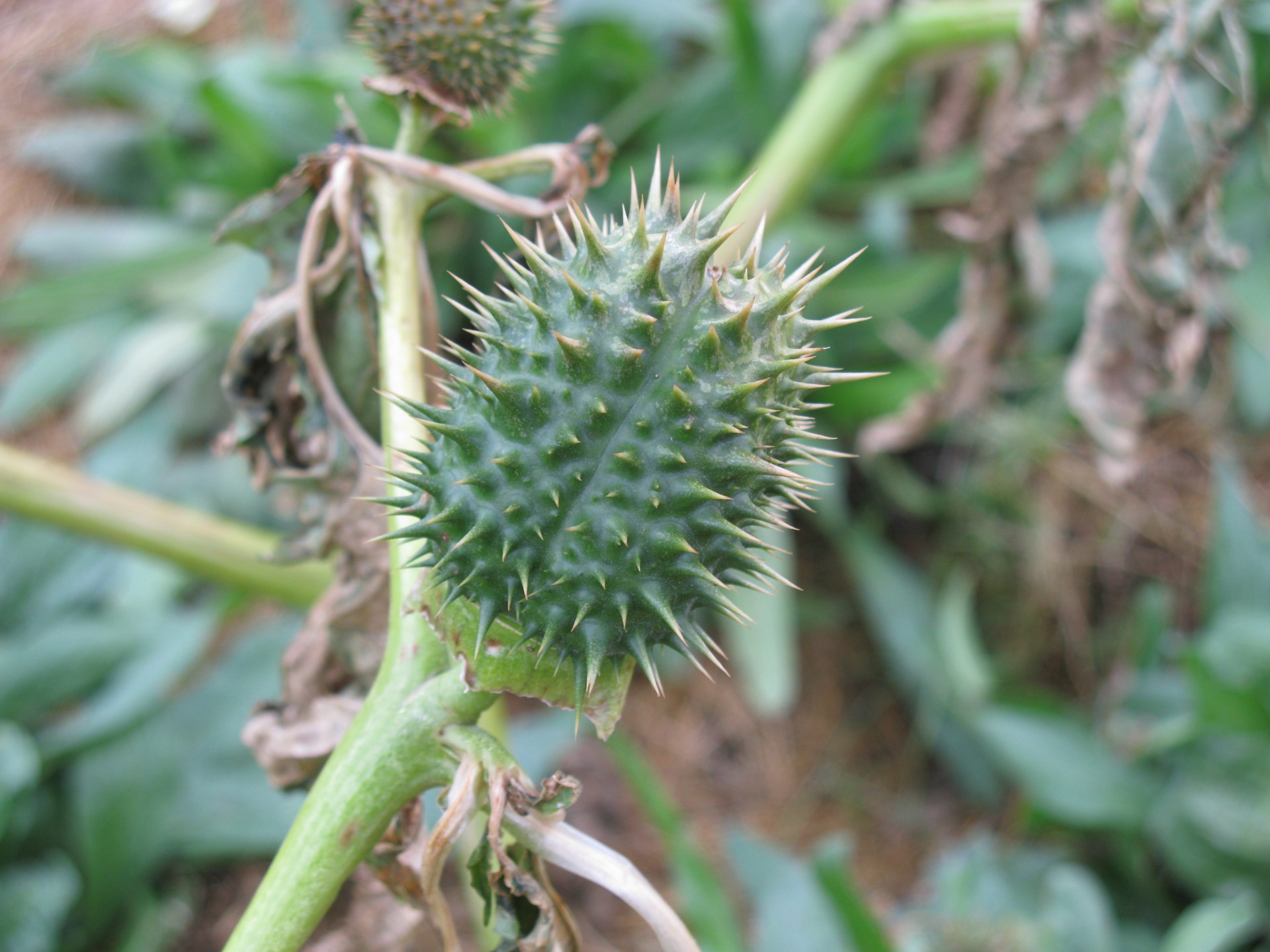
Iraq’s Ministry of the Interior has warned farmers and residents to be on the alert for an invasion of datura plants – commonly known as jimsonweed, thorn apple or devil’s trumpet.
Plants like datura usually grow sparsely in desert regions but can be cultivated for their medicinal and pharmaceutical properties, and the growth of this one appears to have spun out of control, authorities say.
list of 4 items- list 1 of 4Iraq’s parliament approves new Ali al-Zaidi government
- list 2 of 4Heavy sandstorm hits Iraq as hospitals battle respiratory issues
- list 3 of 4Iraq launches desert sweep after reports of secret Israeli bases
- list 4 of 4The pollution that outlives war
end of list
In an official statement, the ministry stated that the plant poses a significant risk to agricultural crops because it contains highly toxic chemical compounds which affect the nervous systems of humans, animals and plants.
This plant is known for its white or purple trumpet-shaped flowers, green prickly fruit and large leaves which give off a pungent odour. Despite its classification as a poisonous plant, it contains important pharmaceutical compounds when used medically in very precise doses.
These are tropane alkaloids such as atropine, hyoscyamine and scopolamine, which are used to dilate pupils, treat motion sickness and for some anticonvulsant medications. The plant has been used medicinally for 500 years, Khalid Mohammed Omer, a professor of chemistry at the College of Science, University of Sulaimani, told Al Jazeera.
The plant originates from Central America where it was used by Indigenous people before the arrival of European colonisers in traditional medicine, mainly for anaesthesia and pain relief. When Europeans arrived in the Americas in the late 15th century, the plant caught their attention due to its potent effects on the nervous system. It was brought back to Europe, from where it reached the rest of the world’s continents, and is now invading Iraqi agriculture, Omer said.
![Datura plant is commonly known as jimsonweed, thornsapple or devil's trumpet. This particular variant is known as Datura stramonium. [File: Sara DeAngelis Wikimedia Commons]](https://www.aljazeera.com/wp-content/uploads/2026/05/Datura_stramonium_95845260-1779971028.jpg?w=770&resize=770%2C1027&quality=80)
Astonishing leaps
Because of the huge difference in climate between the datura’s original habitat and many of the countries it can now be found in, scientists are baffled about how it has managed to thrive.
Advertisement
Usually, scientists say, invasive plants are limited to areas that closely resemble their native habitats.
To understand this, a scientific team from the University of Seville in Spain studied databases which had recorded more than 124,000 sightings of the plant worldwide. Ultimately, they found approximately 7,444 documented locations of the species.
Notably, they found, 57 percent of these locations are cold environments, in stark contrast with its original habitat. It also successfully exploited environments compatible with its warm and humid native habitat, leaving only 1 percent of suitable areas worldwide uninvaded.
In Iraq, the nitrogen-rich soil on riverbanks and the hot, semi-arid climate have proved to be the “ideal environment” for this plant to complete its expansion plan and exploit the remaining 1 percent globally available to it, Mohamed Elhagarey, a professor at the Egyptian Desert Research Center, told Al Jazeera.
![The Datura plant is known for its white or purple trumpet-shaped flowers, green prickly fruits, and large leaves with a pungent odor.[File: Flobbadob Wikimedia Commons]](https://www.aljazeera.com/wp-content/uploads/2026/05/Datura_innoxia_Mill._flower_buds_and_foliage-1779970258-rotated.jpg?w=770&resize=770%2C1027&quality=80)
‘Immediate adaptation’
The surprise, scientists say, is that Datura does not need hundreds of years to adapt to the geography of a new location. The plant is armed with a “latent capacity for immediate adaptation” the moment its seeds touch the soil.
Sadly, its rapid adaptation in Iraq has been helped along by the decline in agricultural activity during periods of war and conflict, Elhagarey explained.
He said that “with the neglect of agricultural lands due to these disturbances and the availability of abandoned fertile soil, this plant has found a suitable environment to establish its roots”.
While the Iraqi authorities are leading a comprehensive campaign to combat the plant, through biological control, pesticide spraying and public awareness, Elhagarey said, the plant still possesses the potential to expand further geographically and is unlikely to stop at its current limits, especially in warm zones it has not yet reached.
Syndicated from Jamaica Inquirer · originally published .
Legal context · powered by Jurifi
Get the legal angle on this story. Pick a prompt and Jurifi's AI will explain it using Jamaican law.
AI replies are based on Jamaican law via Jurifi. Not legal advice.
Other coverage
Guyana advances plans to develop industrial hemp sector, identifies Regions Six and Ten for cultivation
Cnweekly
Congo curtails funeral wakes in Ebola outbreak - WHO upgrades risk assessment
Jamaica Gleaner
Ambraee Houslin | The Bank in Your Pocket: AI, Fintech, and the Unbundling of Caribbean Banking
Our Today
HARSH REALITY - Jamaican medical students in Cuba plead for help amid deepening crisis
Jamaica Gleaner