
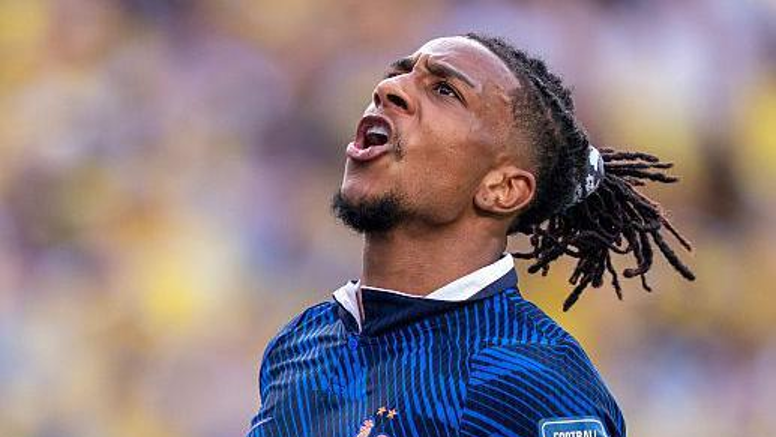
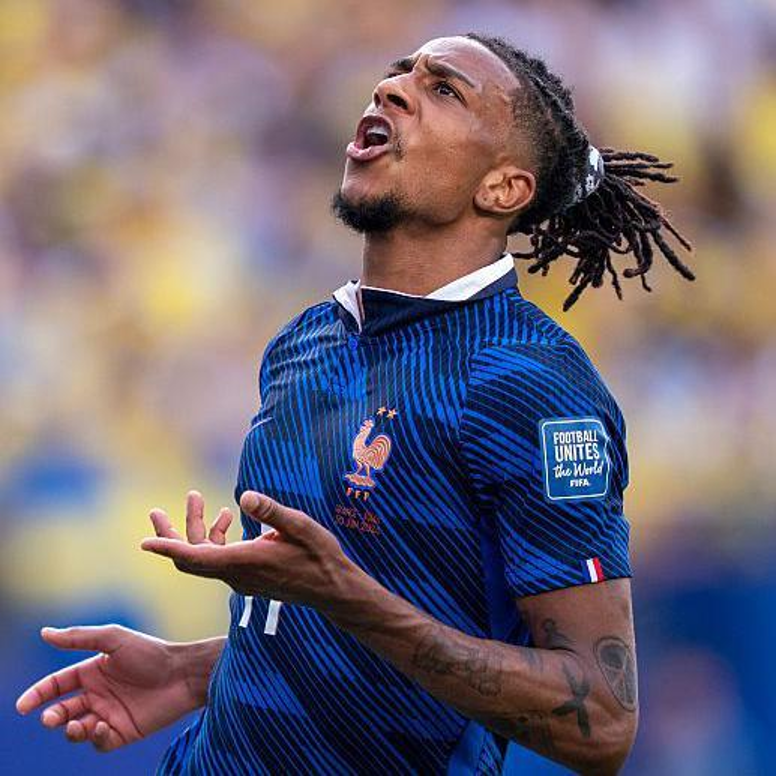
Michael Olise is the kind of player England produces, admires and then, in this case, watches play for somebody else. Over the last two years, he has rocketed to international stardom with his nonchalant demeanour and opposingly incisive playing style that has cut through the World Cup and only emboldened his image.
Olise was born in London, developed through English football and shaped by the academy pathways that England likes to present as evidence of its modern talent machine. Yet he is now one of France’s defining players at this tournament. As it stands, he has more assists than any other player at the World Cup and has been praised by analysts, pundits and critics alike. As the Guardian put it, he is perhaps “the best player England has developed”
That sentence alone explains the discomfort.
This failure to secure Olise has only hit home harder due to the puzzle surrounding England’s wingers. Throughout the tournament, we have seen four different players start in the position with constant changes around substitutions to replace them. England has failed to secure a footballer who has become central to France’s attack at the point of a World Cup semi-final run … and, worse still, plays his club football alongside England’s anchor, Harry Kane, who is having the best season of his life
Olise’s background is layered: born in England to a British-Nigerian father and a Franco-Algerian mother, he was immediately eligible for multiple national teams, England, France, Nigeria and Algeria. Being raised in a family and football culture that made identity more complicated than a birthplace line on a passport, it seems like it would be a tough decision at first sight.
The Guardian’s profile traced Olise’s development from Hayes, through academy setbacks at Chelsea and Manchester City, to Reading, Crystal Palace, Bayern Munich and now France. It also reported that England did not properly identify him early enough, while former coaches and scouts saw a player of unusual intelligence, movement and technical grace. Yet, France reached first. Brendan Flanagan, the Reading academy scout who helped recruit Olise, told The Guardian that France “were the first ones who selected him” for their under-18s. England did eventually come in for him at the under-20 level, but by then, Flanagan said, Olise “was happy where he was.”
A dual-national player rarely chooses in a vacuum. He chooses through family, emotion, opportunity and the feeling that one country has seen him before the others have properly looked. Olise’s own explanation in various press conferences since is fairly straightforward. His mother is from France, and when he was little, he went there and “had this connection with France.” Perhaps comically, his English is quite a bit better than his French, and he tends to take interviews in English. There may be no argument that defeats that.
Still, England will look at him and wonder because his profile is exactly what elite tournament football demands. He can play wide or inside. He does not need constant touches to shape a match. He can receive under pressure, delay, disguise and release. He does not play with the noise of some young stars and has garnered fame for his extreme “nonchalance”, but his influence has become unmistakable. So far, Olise leads the tournament in assists and The Times, writing on France’s growing admiration for him, described him as a London-born outsider in Les Bleus’ system, but also quoted Kylian Mbappé calling him “the player of right now and of tomorrow.”
That is the system Olise chose, or perhaps the system that chose him early enough.
In England, the country’s footballing structure is clearly doing something right; in recent years, multiple breakout stars, such as Bellingham, Foden, Saka, Palmer, to Olise, have all claimed their spots on the international level. Yet, development does not guarantee international loyalty as a player shaped in England can still feel French, Nigerian, Algerian, Jamaican or something else entirely. This is the lesson England must take from this: if a country wants a player with more than one possible shirt, it cannot assume birthplace will do the work. Many international stars are currently eligible to play for multiple teams, but those teams must arrive early enough for the player to believe he is wanted.
Syndicated from Our Today · originally published .
Legal context · powered by Jurifi
Get the legal angle on this story. Pick a prompt and Jurifi's AI will explain it using Jamaican law.
AI replies are based on Jamaican law via Jurifi. Not legal advice.
Other coverage

8-y-o footballer dreams of playing in the World Cup
Jamaica Star (Video)Watch
World Cup semis: Four previous champions, Mbappé vs Yamal and Messi vs Kane
Jamaica Star
Norway vs England: World Cup quarterfinal
Jamaica Inquirer
‘HAALING’ NORWAY
Jamaica Observer
‘No secret’ that Kane v Haaland the key to England clash, says Norway coach Solbakken
Jamaica Observer