
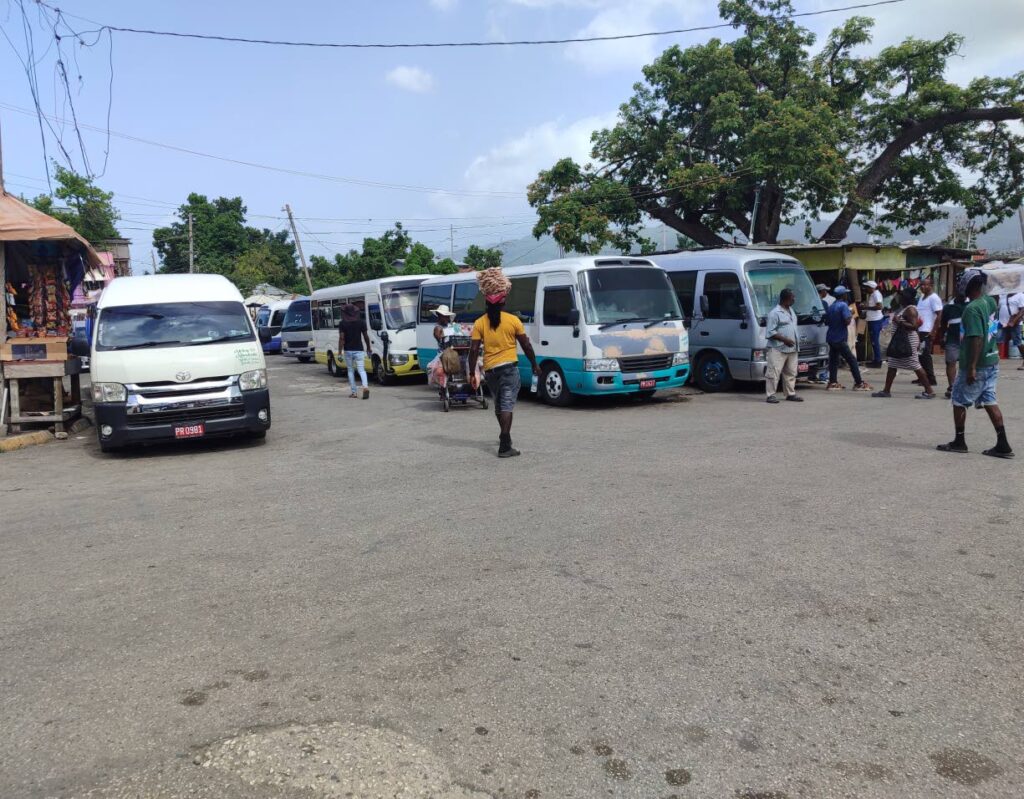
MONTEGO BAY, St James — A 15-member group of taxi associations that largely serve the western end of the country has decided to delay the approved 16 per cent hike in fares until the minimum wage goes up in July.
“We waited three years, so another 29 days [is] neither here nor there,” director for National Council of Taxi Associations (NCOTA) and president of the St James Taxi Association Dion Chance told the Jamaica Observer Wednesday.
On Tuesday, Transport Minister Daryl Vaz announced that fares had been hiked by eight per cent, effective that day, and there would be a similar increase July 1. The staggered increase, the minister said, would minimise the inflationary impact on the economy. The 16 per cent hike was the balance of a 35 per cent increase approved in October 2023. At the time, cabbies accepted a partial increase of 19 per cent as the Government steadied the economy in wake of the COVID-19 pandemic and 2024’s Hurricane Beryl. But with punishing gas prices as a result of tensions in the Middle East, transport operators have recently been agitating for the balance of the increase to take effect.
On Wednesday, Chance explained the rationale behind the decision to hold strain a bit longer.
“What we are looking at is that commuters will face two increases [under the transport ministry’s staggered approach], one in a period where their income has not changed. We [are] just being good corporate citizens. While we are feeling it, we know that they are feeling it too and you can’t kill the goose that lay the golden egg,” he told the Jamaica Observer.
“In order to survive we have to give the commuters some breathing space too,” he explained.
Effective July 1, 2026, Jamaica’s national minimum wage will move to $17,000 per 40-hour work week, up from $16,000.
Chance said the proposal for a delay until then had been greenlighted by NCOTA members asked for input.
“We’ve already gone to the members via WhatsApp groups and put it to them and they’ve instructed us to go that route, so the official position of the national council is that our members and our member associations will hold, because we can do that,” he said.
“The minimum wage earners in the country are the ones that travel by taxi; so bearing that in mind, while we need to stay in business, we also have to take them into consideration,” he explained.
The association is now exploring ways to cushion the impact of fuel prices so members can find some relief as they wait for July 1. For example, he is hoping businesses that they patronise will offer discounts.
“We wish some corporate persons would offer discounts on tires and such. We buy the most gas, we use the most tyres, we use the most spare parts. Therefore, if an entity comes and say they’ll give x amount of discounts, volume speaks with 24,000 taxis in Jamaica,” Chance pointed out.
He also wants it to be easier for cabbies to access lower-cost financing to fund vehicle purchase.
“Unless you are a part of a credit union, you can’t get it, commercial banks don’t do that. It’s been a long-standing policy of the banks and I think they need to start reviewing that policy because we have members going to the loan sharks where they get the high-interest-rate loans where they end up paying $40,000 plus per week,” he lamented.
Access to loans from commercial banks, he said, will open the door for cabbies to purchase vehicles directly from overseas, which is a cheaper option.
“Taxi operators can now apply for an import licence in their name to purchase a vehicle and bring it in. They only have to provide themselves or have a broker to clear it,” Chance explained.
Syndicated from Jamaica Observer · originally published .
Legal context · powered by Jurifi
Get the legal angle on this story. Pick a prompt and Jurifi's AI will explain it using Jamaican law.
AI replies are based on Jamaican law via Jurifi. Not legal advice.
Other coverage

JISTV | Post Cabinet Press Briefing - June 3, 2026
Jamaica Information Service (Video)Watch
Post Cabinet Press Briefing - June 3, 2026
Andrew Holness (Video)Watch
FARE CHAOS - PPV drivers plan to implement own rates amid lack of clarity on charges; some want higher bump
Jamaica Gleaner
Transport Operators Bemoans High Gas Prices, Rubbish Fare Increase | TVJ News
Television Jamaica (Video)Watch
Hunt for illegal cabbies
Ministry of Tourism