
St. Andrew Technical High School सितंबर में नवीकरणीय ऊर्जा प्रयोगशाला खोलेगा
St. Andrew Technical High School (STATHS) में एक नई नवीकरणीय ऊर्जा प्रयोगशाला की खरीद का काम अब शुरू हो चुका है; ग्रीष्मकालीन अवकाश के दौरान निर्माण होगा और सुविधा सितंबर में चालू होने की उम्मीद है।
यह घोषणा शिक्षा, कौशल, युवा और सूचना मंत्री, सीनेटर डॉ. द ऑन. डाना मॉरिस डिक्सन ने की, जिन्होंने नए स्थान पर छात्रों को मिलने वाले व्यावहारिक प्रशिक्षण का विवरण दिया।
"छात्र सौर प्रौद्योगिकी के बारे में सीखेंगे। वे सौर स्थापना के बारे में सीखेंगे। वे बैटरियों के बारे में सीखेंगे। वे पवन ऊर्जा के बारे में भी सीखेंगे। उस प्रयोगशाला का उपयोग करते हुए वे यह सीखेंगे कि सौर प्रणालियों को कैसे इंस्टॉल किया जाता है, उनकी निगरानी कैसे की जाती है, उन्हें कैसे ठीक किया जाता है और अन्य प्रणालियों पर भी विचार किया जा सकता है, क्योंकि वह पवन-आधारित या नवीकरणीय ऊर्जा समाधान के अन्य प्रकार भी हो सकते हैं," डॉ. मॉरिस डिक्सन ने कहा।
वह मंगलवार, 14 अप्रैल को स्कूल की 65वीं वर्षगांठ के अवसर पर आयोजित पूर्व छात्र संलग्नता दौरे के दौरान बोल रही थीं, जिसका विषय "प्रेरणादायक परिवर्तन: पुनः आकार, पुनः संरेखण, पुनः केंद्रित" था। मंत्री परिसर में रहते हुए स्कूल की टेक्निकल एंड वोकेशनल एजुकेशन एंड ट्रेनिंग (TVET) सुविधाओं का भी दौरा किया।
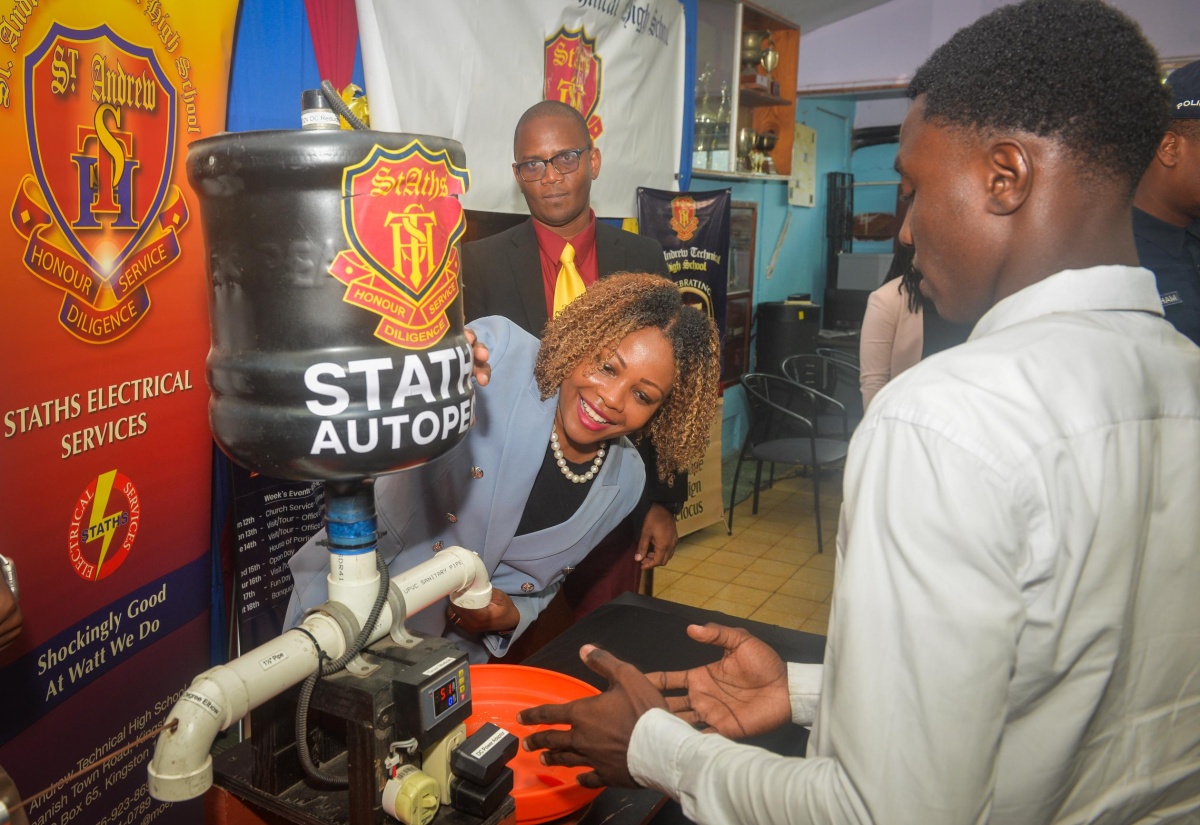
दिन के कार्यक्रम के हिस्से के रूप में, ग्रेड-11 के छात्र नथानियल हर्ज और कैमरन पिनॉक ने STATHS Autopeck प्रस्तुत किया, जो एक स्वचालित मुर्गी चारा देने वाला यंत्र है और इसे उन्होंने दो सहपाठियों के साथ मिलकर बनाया।
"शिक्षक रात भर चूजों को चारा देने की प्रक्रिया की निगरानी करने या उसे परेशानी मानने में सक्षम नहीं होते। इसलिए हमने इस समस्या से निपटने के लिए एक डिज़ाइन, एक स्वचालित मुर्गी चारा देने वाला यंत्र तैयार किया," नथानियल ने कहा।
उन्होंने इकाई का वर्णन दो रिडक्शन मोटर से चालित होने के रूप में किया, जिसमें चारे को बेसिनों में नीचे की ओर निर्देशित करने के लिए घड़ी की दिशा, घड़ी की विपरीत दिशा और बीच में तीन 3D-प्रिंटेड सर्पिल स्क्रू लगे हैं।
"इस उपकरण में एक टाइमर मॉड्यूल भी है, जिसे आप यह सेट करने के लिए उपयोग कर सकते हैं कि चारा कितनी देर तक देना है और मशीन किन समय अंतराल पर चले," 16 वर्षीय ने समझाया।
अधिक चारा देने से बचाव के लिए फीडर में एक वेटेड सेंसर भी लगाया गया है। नथानियल के अनुसार, यदि चूजे धीरे खा रहे हैं और चारा जमा होने लगता है, तो मशीन बेसिन में वजन पढ़ लेती है और स्वयं स्वचालित रूप से बंद हो जाती है।
"यह उपकरण अपनी तरह का पहला नहीं है। यह सिर्फ हमारा विशिष्ट डिज़ाइन है, और भविष्य के नवाचारों के लिए हम इस उपकरण में एक ऐप प्रोग्राम करने की योजना बना रहे हैं ताकि आप इसे कहीं से भी मॉनिटर कर सकें," उन्होंने जोड़ा।
कैमरन ने नोट किया कि इस निर्माण में विद्युत अभियांत्रिकी, भवन निर्माण, प्लंबिंग और विज़ुअल आर्ट सहित कई औद्योगिक क्षेत्रों के कौशल शामिल थे। उन्होंने कहा कि टीम ने रिडक्शन मोटर, एक DC आउटलेट, पाँच गैलन की बोतल, पाइप और एक स्विच जैसे पुर्जों का उपयोग करते हुए दो सप्ताह में फीडर तैयार किया।
"यह एक चुनौती थी लेकिन हम पार कर गए… । हमारी अगली योजना इसमें एक सौर प्रणाली जोड़ने की है ताकि इसे हर समय विद्युत ऊर्जा का उपयोग न करना पड़े," कैमरन ने कहा।
सिंडिकेट स्रोत Ministry of Education and Youth · मूल रूप से प्रकाशित .
कानूनी संदर्भ · Jurifi द्वारा
इस कहानी का कानूनी पक्ष देखें। एक प्रश्न चुनें और Jurifi का AI जमैकाई कानून के अनुसार समझाएगा।
AI उत्तर Jurifi के माध्यम से जमैकाई कानून पर आधारित हैं। यह कानूनी सलाह नहीं है।
अन्य कवरेज

SCHOOLYARD BRAWLS
Jamaica Observer
Education Minister Cautions Against Over-Reliance on Tech In The Home
Jamaica Information Service
Push to eliminate period poverty among schoolgirls
Jamaica Gleaner
Education Minister Extends Special Commendation to Teachers
Jamaica Information Service
Parents Urged to Foster Good Reading Habits At Home
Jamaica Information Service