
House adopts conch export levy overhaul for flexible payments and Fisheries Fund board reform
The House of Representatives on Tuesday, 12 May, adopted the Conch Export Levy (Amendment) Act, 2026, handing the portfolio minister for agriculture, fisheries and mining more latitude to reshape how the conch export charge is collected and applied. Minister Floyd Green guided the measure through the Chamber, characterising it as a practical reply to the squeeze on conch exporters.
The law no longer insists that the levy be cleared before consignments leave port; other payment routes can be put in place instead.
“As it is now, the requirement by law is that before you ship, which literally means before you collect, you are called upon to pay. As you can understand, especially with what we have been seeing with the industry over the last few years and with the weather-related events, that has posed some challenges,” Green said.
The 2026 package lets the minister, through an order that requires an affirmative resolution of the House of Representatives, spell out the timeframe for paying the conch levy and say whether the sum must be discharged in one payment or by instalments.
The minister may also waive, lower or forgive the levy in defined circumstances, and may change the make-up of the board of management for the Fisheries Management and Development Fund.
“Among the amendments reflected in the bill is the fact that the minister will have the discretion to make an order, again subject to affirmative resolution of this House, to extend the specified period for the payment of the levy on conch payable by the exporter up to a maximum period of 12 months following the granting of an export health certificate and export licence for consignment of conch,” Green explained.
He said the amendment is designed so relief remains available when the conch harvest calendar is disrupted, whether by stiff weather or by conditions in overseas trade.
Any waiver, reduction or remission will be granted only if it is considered warranted, on the strength of recommendations from the National Fisheries Authority (NFA) and the board of the Fisheries Management and Development Fund after they weigh trading conditions, economic viability and the sustainability of the fisheries sector.
Alongside the financial tools, the bill adjusts how the Fisheries Management and Development Fund is run. The management board will be enlarged to nine members—six ex officio appointees and three industry representatives.
Green underlined that the new board composition aims to “eliminate any possible or perceived conflict of interest”, and to keep management of the fund at a high standard of integrity.
Syndicated from Jamaica Gleaner · originally published .
Legal context · powered by Jurifi
Get the legal angle on this story. Pick a prompt and Jurifi's AI will explain it using Jamaican law.
AI replies are based on Jamaican law via Jurifi. Not legal advice.
Other coverage

JIS News-14.05.2026
Jamaica Information Service (Video)Watch
Jamaica Magazine-14.05.2026
Jamaica Information Service (Video)Watch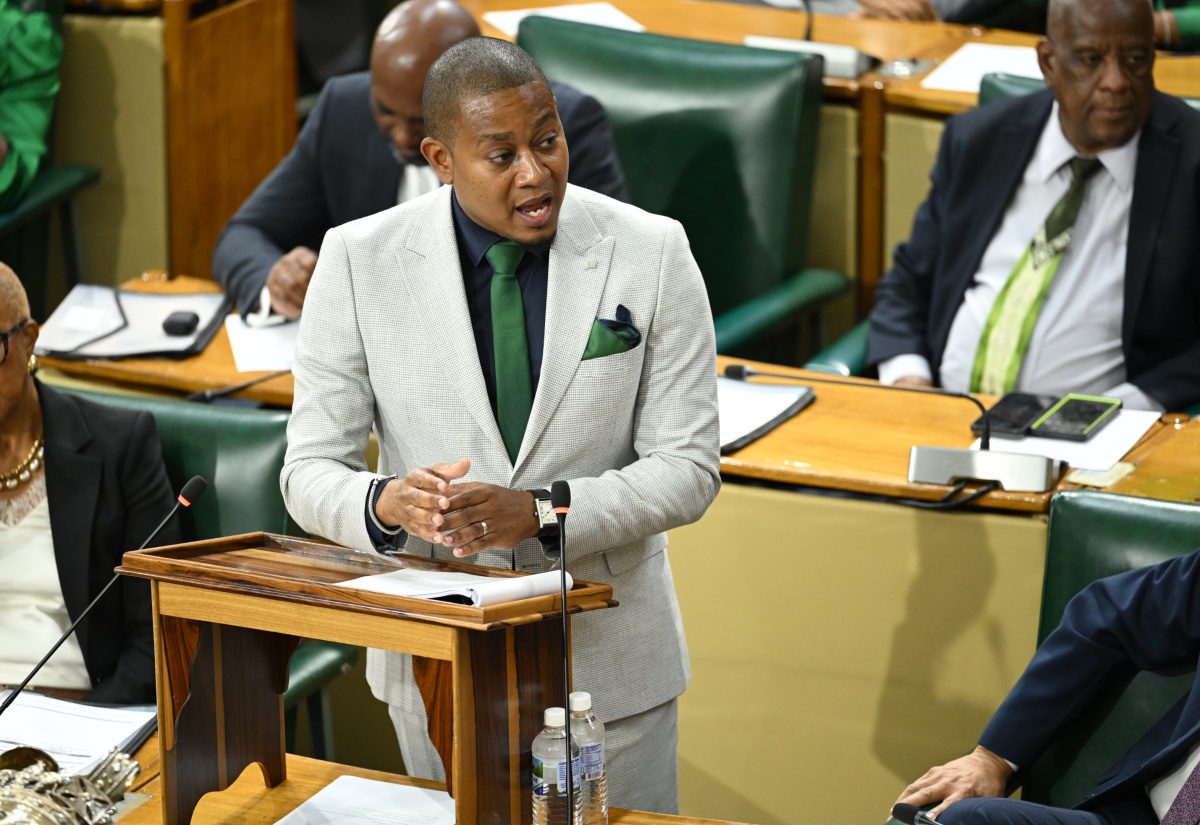
MOU to Boost Fisheries Enforcement Through Ticketing System
Jamaica Information Service
Nine-Member NIRA Authority Appointed
National Identification Authority
Minister Green Outlines Drought Mitigation Strategies for Agriculture
Jamaica Information Service