
IFC says Jamaica outperformed post-Melissa forecasts but fiscal risks are rising
Jamaica’s economy has come through the aftermath of Hurricane Melissa in better shape than earlier forecasts indicated, but the country now faces larger fiscal and economic dangers that require swift policy action, the Independent Fiscal Commission has cautioned.
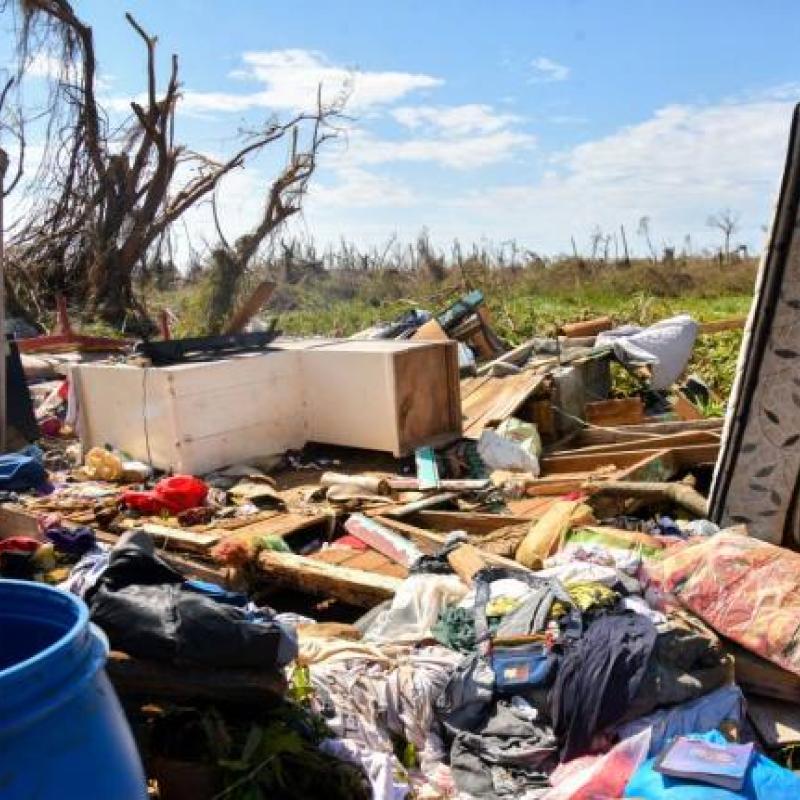
The IFC, Jamaica’s fiscal watchdog, said Wednesday that the country’s main macroeconomic foundations remain firm despite what it described as the “monumental economic shock” caused by the October hurricane. The storm produced estimated damage and losses of $2 trillion, equal to 56.7 per cent of 2024 gross domestic product, and also led to the suspension of Jamaica’s fiscal rules.
The commission issued the statement after its Statement on Fiscal Performance for fiscal year 2025-2026 was tabled Tuesday in the House of Representatives. That fiscal year ended on March 31.
According to the IFC, headline inflation was 4.3 per cent at the end of March 2026. That was far below the post-Melissa estimates of 10 per cent made in January and 5.7 per cent made in February, and it remained inside the Bank of Jamaica’s target range of 4.0 to 6.0 per cent.
Headline inflation tracks price movements across a basket of goods and services bought by households, including food and energy.
The commission also reported that real GDP declined by 1.7 per cent for the fiscal year, a milder contraction than the 4.5 per cent forecast in January and the 3.1 per cent forecast in February. Real GDP strips out the effect of inflation to show whether the economy’s actual output rose or fell.
Public debt was also kept below the worst projections. The debt-to-GDP ratio ended at 65.6 per cent, up from 62.5 per cent a year earlier, but still under the 68.9 per cent level forecast after the hurricane. The debt-to-GDP ratio compares total government debt with the value of the economy’s annual production.
The Specified Public Sector, made up of the Central Government and public bodies but excluding the Bank of Jamaica and the Jamaica Mortgage Bank, posted a $34.4 billion deficit. The IFC said that result was weaker than the surplus originally budgeted, but much better than the revised estimate of a $129.2 billion shortfall.
Fiscal Commissioner Courtney Williams said the numbers showed real resilience, while stressing that Jamaica still had major work to do in strengthening how its public finances are managed.
“Securing world-class governance requires fixing persistent capacity blocks in capital projects and aligning wage negotiations with the legislative budget cycle,” Williams said.
The IFC was sharply critical of the state’s continued difficulty in carrying out capital projects. It said actual capital expenditure across the Specified Public Sector totalled $104.7 billion, which was $57.6 billion, or 35.5 per cent, below the original $162.4 billion budget.
“This is not a fiscal saving, but a chronic under-execution, which hinders economic recovery and structural growth,” the IFC stated.
The commission said the National Reconstruction and Resilience Authority has received a $30 billion allocation in the 2026/27 budget, but warned that the impact of any NaRRA-driven fiscal stimulus would depend less on the sum approved and more on “the pace, scale, and quality of execution rather than budget allocation.”
For the period ahead, the IFC pointed to growing external threats, including worsening geopolitical tensions. It singled out possible shipping disruptions through the Strait of Hormuz linked to the US-Israeli war against Iran, saying those developments are already lifting global energy and transport costs.
The watchdog also identified the possible start of a Super El Niño event as another inflation risk, noting that such a development could hurt agricultural production and push food prices upward.
“The IFC emphasizes that elevated macrofiscal risks, primarily from escalating geopolitical tensions, warrants the Government of Jamaica recasting the budget projections and developing alternative macroeconomic scenarios – baseline, upside and downside – to enhance policy preparedness and fiscal planning,” the watchdog said.
On reforms, the IFC pressed the Government on two matters. It again called for a formal public sector wage negotiation timetable that lines up with the budget process, as required by the Financial Administration and Audit Act. The commission warned that the present mismatch creates expensive uncertainty and leaves the Government relying on supplementary estimates to respond after the fact.
It also urged faster legislative action to raise the Environmental Levy rate to 0.85 per cent. The IFC said the delay is costing the state an estimated $335 million in revenue each month.
Finance Minister Fayval Williams announced the levy increase in April, with implementation planned for May 1. However, Tax Administration Jamaica said last month that the measure had been postponed because the Government had not yet completed the legislative steps needed to make it effective.
Syndicated from Jamaica Gleaner · originally published .
Legal context · powered by Jurifi
Get the legal angle on this story. Pick a prompt and Jurifi's AI will explain it using Jamaican law.
AI replies are based on Jamaican law via Jurifi. Not legal advice.
Other coverage

BOJ projects gradual recovery of economy
Our Today
CVM News At Noon: June 2, 2026 | @CVMTVNews
CVM TV News (Video)Watch
FITCH RATINGS AFFIRMS JAMAICA’S RATING AT ‘BB-’ WITH THE OUTLOOK REMAINING “STABLE”
Ministry of Finance
LESSONS LEARNT!
Jamaica Observer
ITA reporting 49 fewer road deaths this year
Jamaica Observer