
Iran foreign minister back in Islamabad as Pakistan pushes US ceasefire diplomacy
(AP) — Iran’s foreign minister was back in Islamabad on Sunday while Pakistan’s civilian and military leaders worked to restart ceasefire diplomacy between Tehran and Washington.
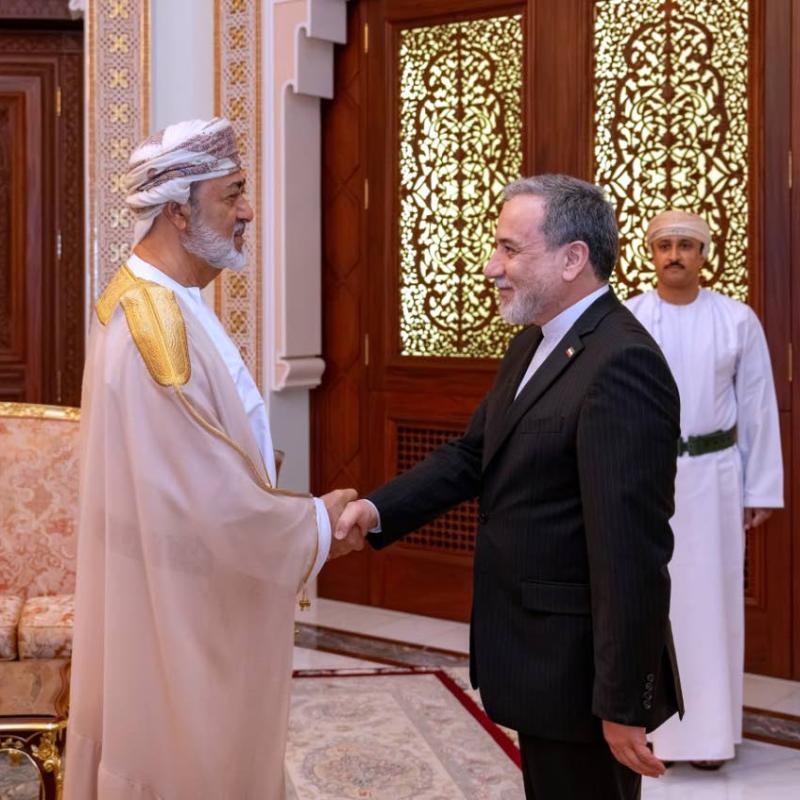
Iranian state media reported that Abbas Araghchi returned to the Pakistani capital after leaving late Saturday, a move that had caused uncertainty about whether a second phase of discussions would go ahead. He was expected to travel onward to Moscow. Before arriving in Pakistan, Araghchi had been in Oman, a country across the Strait of Hormuz that has previously helped mediate the contacts.
Two Pakistani officials, who requested anonymity because they were discussing sensitive diplomatic efforts, gave no timeline for when US representatives might come back to the region after direct talks earlier this month. The White House said Friday that Steve Witkoff and Jared Kushner would be sent to Islamabad.
That plan was thrown into doubt after Araghchi’s exit was reported and US President Donald Trump said he had cancelled the trip because he saw too little movement from Iran. “If they want, we can talk but we’re not sending people,” Trump told Fox News on Sunday.
Trump last week prolonged without an end date the ceasefire agreed by the US and Iran on April 7. That truce has mostly stopped the fighting triggered by joint US-Israeli attacks on February 28, but a final agreement has still not been reached in a conflict that has killed thousands and rattled the world economy.
The Strait of Hormuz remains a major flashpoint. Iran has been limiting passage through the channel, while the US has kept up a blockade of Iranian ports. A regional official, who was not authorised to speak publicly and asked not to be named, said Iran is seeking Omani support for a system to charge vessels that use the strait, which carries about one-fifth of global oil shipments in normal times.
The same official, who is connected to the mediation process, said Tehran is demanding an end to the US blockade before another negotiating session. Pakistan’s mediators, the official said, are trying to narrow deep differences between the two governments.
Araghchi also held telephone talks Sunday with his counterparts in Qatar and Saudi Arabia. Before the uncertainty on Saturday, Iran’s foreign ministry had said any negotiations would take place indirectly, with Pakistani officials carrying messages. That position reflects Tehran’s mistrust after earlier indirect rounds last year and this year were followed by US and Israeli attacks on Iran.
The economic damage from the war is increasing after two months, with the Strait of Hormuz nearly shut and shipments of oil, liquefied natural gas, fertiliser and other goods affected. Military warnings have continued from both sides.
Iran’s joint military command said Saturday that “if the US continues its aggressive military actions, including naval blockades, banditry, and piracy” it would meet a “strong response.” Trump last week instructed the military to “shoot and kill” small boats that might be laying mines.
Speaking to reporters Saturday before a security incident at the White House Correspondents’ Dinner, Trump said Iran had sent a “much better” proposal within 10 minutes of his decision to stop Witkoff and Kushner from going to Islamabad. He gave no details, but said one requirement was that Iran “will not have a nuclear weapon.”
Iran’s enriched uranium stockpile has long driven tensions. The United Nations nuclear watchdog says Tehran has 440 kilograms, or 972 pounds, of uranium enriched to 60% purity, which is a short technical step away from weapons-grade material.
Syed Mohammad Ali, an independent political analyst in Pakistan, said the delay should not be treated as a failure and that the indirect process was still moving. He said Washington and Tehran would need time and patience to reduce their hostility.
“But the good thing is that the ceasefire is holding, and both sides have a desire to end the conflict in a way that does not backfire at home,” Ali said.
Casualties have continued to rise even as uneasy truces remain in place. Since the conflict started, at least 3,375 people have died in Iran and at least 2,509 in Lebanon, where fighting between Israel and Hezbollah resumed two days after the Iran war began. Israel has recorded 23 deaths, while more than a dozen people have been killed in Gulf Arab states.
The dead also include 15 Israeli soldiers in Lebanon, 13 US service members in the region and six United Nations peacekeepers in southern Lebanon. A separate ceasefire between Israel and Hezbollah, the Iran-backed Lebanese militant group, has been extended for three weeks. Hezbollah has not taken part in the US-brokered diplomatic process.
Syndicated from Jamaica Gleaner · originally published .
Legal context · powered by Jurifi
Get the legal angle on this story. Pick a prompt and Jurifi's AI will explain it using Jamaican law.
AI replies are based on Jamaican law via Jurifi. Not legal advice.