
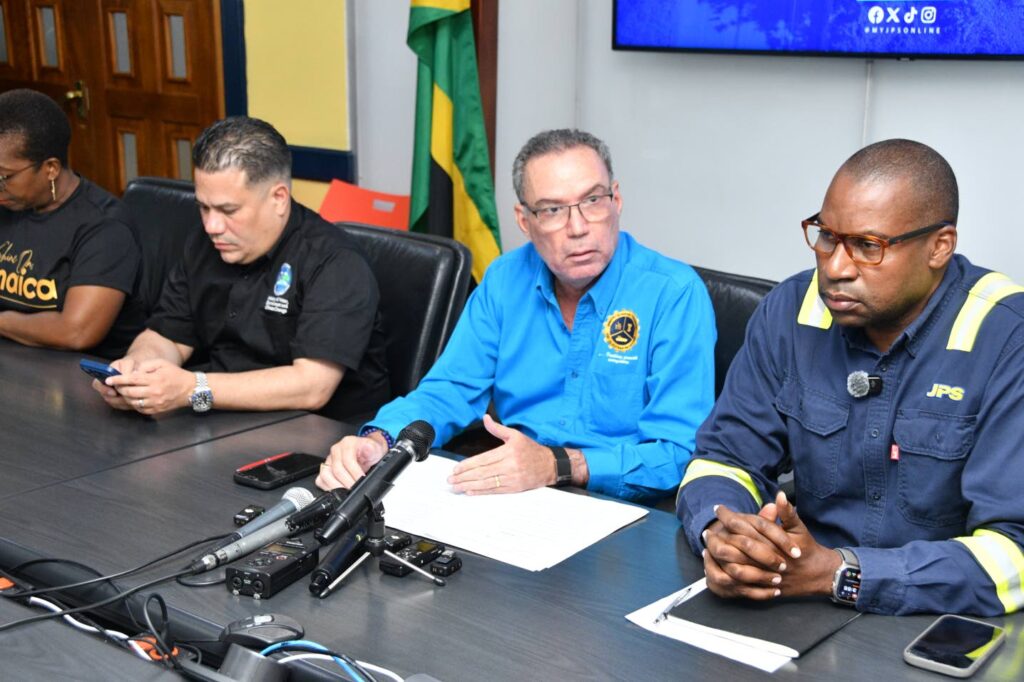
JPS Preliminary Report Points to Repeated Grid Protection Failures in Islandwide Blackout
A first assessment sent by the Jamaica Public Service Company to the Office of Utilities Regulation says last Friday’s nationwide power failure appears to have started from problems similar to those linked to previous collapses of Jamaica’s electricity grid. The preliminary document, reviewed by the Jamaica Observer, reached the OUR on Tuesday. Up to the time referenced in the report, the regulator had not made a public comment on the matter.
Energy Minister Daryl Vaz, however, said he was angry that Jamaicans were again left without electricity after earlier directions had been issued to JPS to stop another system-wide breakdown.
“I can confirm that I received the preliminary report from the JPS as it relates to Friday’s all-island outage and, even though it is preliminary, it indicates a system failure — nothing different from all the other all-island outages. The first one we had was in 2006 and now it is 2026 and we still having the same system failure of different sorts,” Vaz said.
“This is totally unacceptable, especially in the light that 20 years have passed and we are now in age of technology. It should not happen, and I can indicate that we will be pursuing an independent consultant to review the final report — which is due after 30 days — to ensure that this matter is addressed once and for all,” he added.
Vaz told the Observer that OUR recommendations intended to prevent faults on the JPS network from developing into an islandwide blackout are already documented and will be examined again.
“Because we are still having the same issues and the Jamaican people are sick and tired of it, and so am I,” Vaz said.
The minister referred to the August 2012 blackout across the island, which followed a lightning strike on a pole along the Duhaney to Naggo Head 69 kilovolt transmission line while Tropical Storm Ernesto was passing close to Jamaica.
In its findings on that event, the OUR described the shutdown as “typical of those which precipitated the three earlier system shutdowns, including the first major incident in 2006”.
The regulator also stated then that “Human error and maintenance shortcomings have played a part, as well as manifested deficiencies in the islandwide grid and generation infrastructure.”
For the 2012 incident, the OUR said the absence of a protection relay was “primarily blamed for precipitating the subsequent islandwide system collapse”.
JPS’s account of last Friday’s outage points to a comparable chain of events. The company said its early review shows the disturbance began with several faults on important 69kV equipment in the Corporate Area. Those included two faults connected to the Rockfort Substation and the Hunts Bay to Rockfort 69kV transmission line, which are thought to have been caused by lightning, followed by a single phase-to-ground fault on the Hunts Bay to Port Authority 69kV transmission line.
The utility said checks on the ground found “a damaged insulator at location 41 on the Hunts Bay–Rockfort 69kV line; a flashover event at the Rockfort 69kV substation disconnect switch; and a broken conductor on the Hunts Bay–Port Authority 69kV line”.
According to JPS, protection relays identified the disturbance as they should have and caused equipment to trip at several substations, among them Greenwich Road, Duhaney, Rockfort, Hunt’s Bay and Port Authority.
“However, the sequence of trips and system behaviour strongly suggests a failure or delayed operation of the primary protection scheme at Hunt’s Bay on the Rockfort line, resulting in extended fault duration; escalation of the disturbance; and wider propagation of system instability through remote tripping actions,” the company said.
JPS also reported that its sequence of events data shows the Jamaica Private Power Company Unit 1 generator tripped before further generating units were lost in sequence at Hunts Bay, West Kingston Power Plant and other generating stations across the grid.
“The resulting rapid loss of generation created a severe generation-load imbalance, triggering all five automatic under-frequency load shedding (UFLS) stages… Despite the operation of these schemes, the magnitude and speed of generation loss exceeded the system’s ability to stabilise,” the report said.
The utility said more generating units then went offline at its own plants and at facilities operated by independent power suppliers. That resulted, it said, in “a complete shutdown of the interconnected system, resulting in an all-island outage”.
JPS told the OUR that once the grid shut down, it activated its incident command arrangement and began restoring power through a controlled black-start and gradual system rebuild, while first separating the affected Corporate Area assets.
“Restoration proceeded through the establishment of separate electrical islands,” JPS stated.
The company said it has started steps aimed at steadying the grid and lowering the chance of a repeat. Those steps include continued detailed review of relay performance and sequence of events information at all affected substations, along with a full review and validation of line protection systems, especially along the Hunt’s Bay to Rockfort corridor.
Syndicated from Jamaica Observer · originally published .
Legal context · powered by Jurifi
Get the legal angle on this story. Pick a prompt and Jurifi's AI will explain it using Jamaican law.
AI replies are based on Jamaican law via Jurifi. Not legal advice.
Other coverage

OUR establishes special team for JPS blackout investigation
Jamaica Gleaner
OUR Launches Investigation into Islandwide Blackout | TVJ News
Television Jamaica (Video)Watch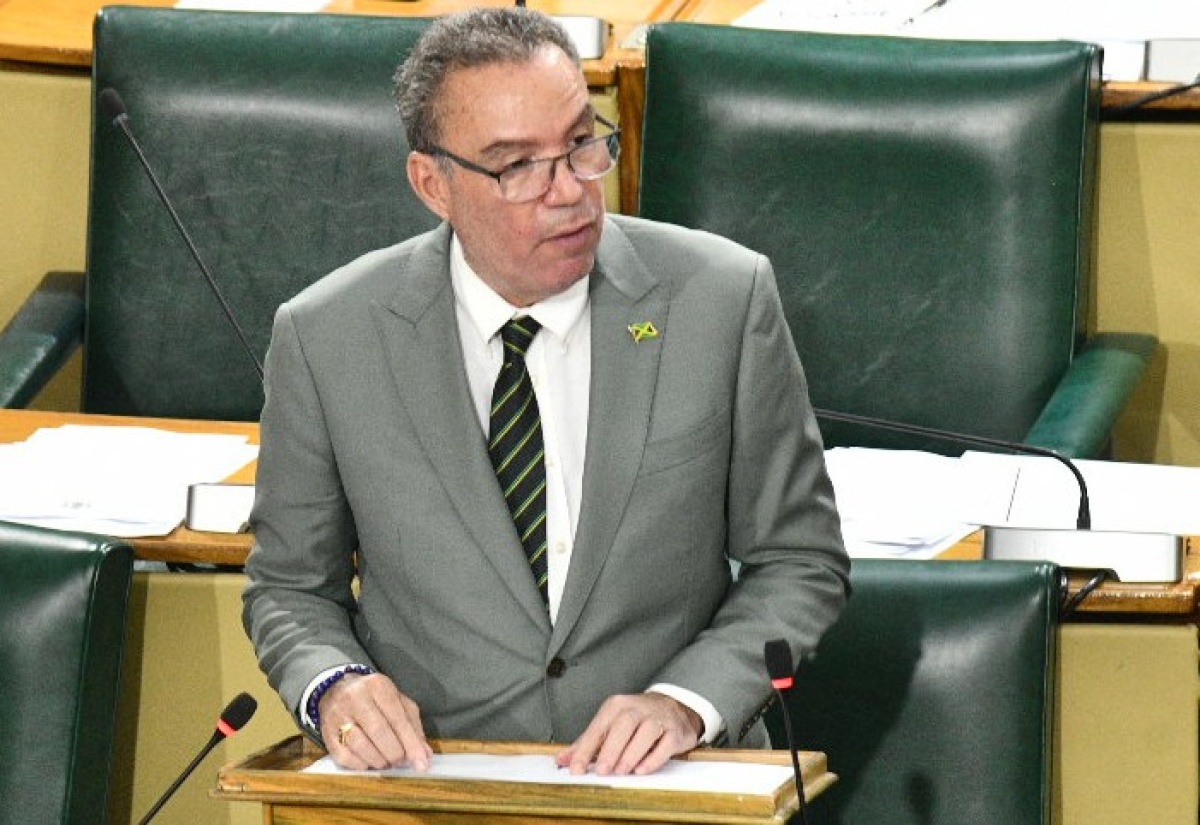
Energy Expert to Assess Findings and Reports Submitted By JPS
Jamaica Information Service
JPS to submit report to the OUR today on Friday’s islandwide blackout
Jamaica Inquirer
OUR Demands Preliminary Report from JPS After Islandwide Blackout
McKoy's News