
Carnival is brand strategy in motion
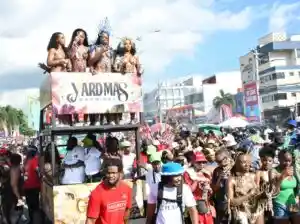
Every year Carnival in Jamaica delivers what it promises — energy, colour, music, and a road experience that feels almost otherworldly. But, beyond the feathers, the battle of the goodie bags from the bands, the trucks, DJs and the curated moments for social media, there is a deeper layer that often goes unexamined.
I’ve always loved Carnival. When I was a teenager living in St Ann, in the days of Chukka Cove Carnival, I remember begging my parents to go see Iwer George and Machel Montano. Over the years my own experience as a Carnival costume designer (through Broadtail Designs) and then becoming a co-owner of Yard Mas Carnival, the lessons I have learned as publicist is that Carnival is a living, unfiltered case study in culture, consumer behaviour, and brand execution.
And, for those paying attention, it teaches a few hard truths.
1) Budget doesn’t create impact… experience does
There is a persistent belief that the brands with the largest budgets will dominate Carnival. On paper, that should be true. In reality, it rarely is.
The most memorable moments on the road are not defined by how much was spent, but by how intentionally that spend was translated into experience. The difference is subtle but critical.
Anyone can fund a bar, a truck, or a giveaway. Far fewer understand how to create a moment that feels immersive, seamless, and worth remembering. For me, that was Carnival 2023; the first year of Yard Mas Carnival. The odds seem to be against the newest band — who launched late in the eyes of many, but with eyes that were even more than tired and legs that felt like mush. Every step I made on the ground, every smile on the masqueraders’ faces, and every rhythm the DJ played felt like a “high” that only passion, authenticity, and love for a truly Caribbean experience could bring.
That year I learned very quickly that, at Carnival, scale without strategy will be quickly exposed. Patrons move instinctively toward what feels good, what flows, what connects, and what enhances the experience, rather than just big spend on abstract plans.
A truly authentic experience cannot be bought. It has to be designed.
2) Feeling is the real KPI
In traditional marketing, success is often measured in impressions, reach, and conversions. Carnival challenges those metrics. On the road, the true measure of success is far less tangible: It is feeling. How did the interaction make people feel? Was it effortless? Was it elevated? Did it belong in the moment?
People may forget the specifics of what they were given — the drink, the merchandise, the activation — but they will remember how seamlessly it fit into their experience. They will remember whether it added to the joy of the day or felt like an insertion. Like an air-conditioned breakfast, lunch, and dinner spot after a full day in the sun and foot massages because the road route is not for the faint of heart.
Brands that understand this will shift their focus from visibility to emotional resonance. They design for memory, not just for presence.
3) Culture is not a backdrop; it is the blueprint
One of the most common missteps at Carnival is treating culture as aesthetic rather than foundation. Carnival is deeply rooted in Caribbean identity, expression, and community. It is not simply a “festival environment” to be branded. It is a living, evolving, cultural space with its own codes, rhythms, and expectations.
When brands engage with Carnival superficially like borrowing the visuals without understanding the context; it shows. And, more importantly, it is felt. The audience may not articulate it, but they respond to it — engagement drops, energy shifts, the experience feels disconnected.
On the other hand, when a brand aligns authentically with the culture; when it understands the pace of the road, the language of the people, the nuances of the moment, it integrates seamlessly. It becomes part of the experience rather than a disruption to it. This is why each island’s Carnival will have distinct features; like the jab jab culture of Grenada, the importance of the “pan” competition culture in Trinidad, and dancehall being integrated in all aspects of the sound of the road in Jamaica.
At Carnival, culture is not an accessory; it is the operating system.
4) Showing up is easy; owning the road is strategy
Participation has never been easier. Every year, more brands enter the Carnival space eager to be part of the visibility and excitement it offers. But presence alone is no longer enough. Owning the road requires a level of clarity and intentionality that goes beyond logistics. It requires understanding where your brand fits within the experience emotionally and culturally.
It requires alignment across every touchpoint:
• the product offering
• the service delivery
• the tone of engagement
• the visual identity
• the timing of the interaction
When these elements are in sync the brand does not have to fight for attention; it earns it. And, in an environment as saturated and high-energy as Carnival, that distinction is everything.
Beyond the road
Every year in Jamaica on the Sunday after Easter, Carnival comes and it goes. But its lessons do not. For brands, it offers one of the clearest reflections of what works and what does not in real time. There are no filters, no controlled environments, no second takes. Just people, culture, and response.
The brands that will win in 2027 are the ones that show up before, during, and after the trucks have rolled out and the last song is played. The opportunity ahead is to show up differently and move beyond mere visibility and into value. Earlier investment in the local ecosystems and a willingness to trade control for authenticity while building narratives that culminate at carnival; not start there.
For those willing to look beyond the spectacle, Carnival becomes more than a moving festival; it becomes insight. Because, at its core, Carnival is about understanding people and the power of meeting them, where they are.
Dania Beckford is a publicist and brand strategist known for shaping culture-driven campaigns across entertainment, lifestyle, and premium beverage sectors. She serves as PR director for Yard Mas Carnival and works with leading brands and institutions to craft narratives that connect authentically with audiences. As the founder of Broadtail Designs, she also advocates for confidence, inclusivity, and representation for women of all sizes especially in Carnival. Send comments to the Jamaica Observer or [email protected].
Dania Beckford
Syndicated from Jamaica Observer · originally published .
Legal context · powered by Jurifi
Get the legal angle on this story. Pick a prompt and Jurifi's AI will explain it using Jamaican law.
AI replies are based on Jamaican law via Jurifi. Not legal advice.
