

Sunday Sips with HG Helps | Will the Government learn from Cross Roads protest?, Stephen Francis was the best; peaceful Jamaica! where is that?, lessons from Cabo Verde

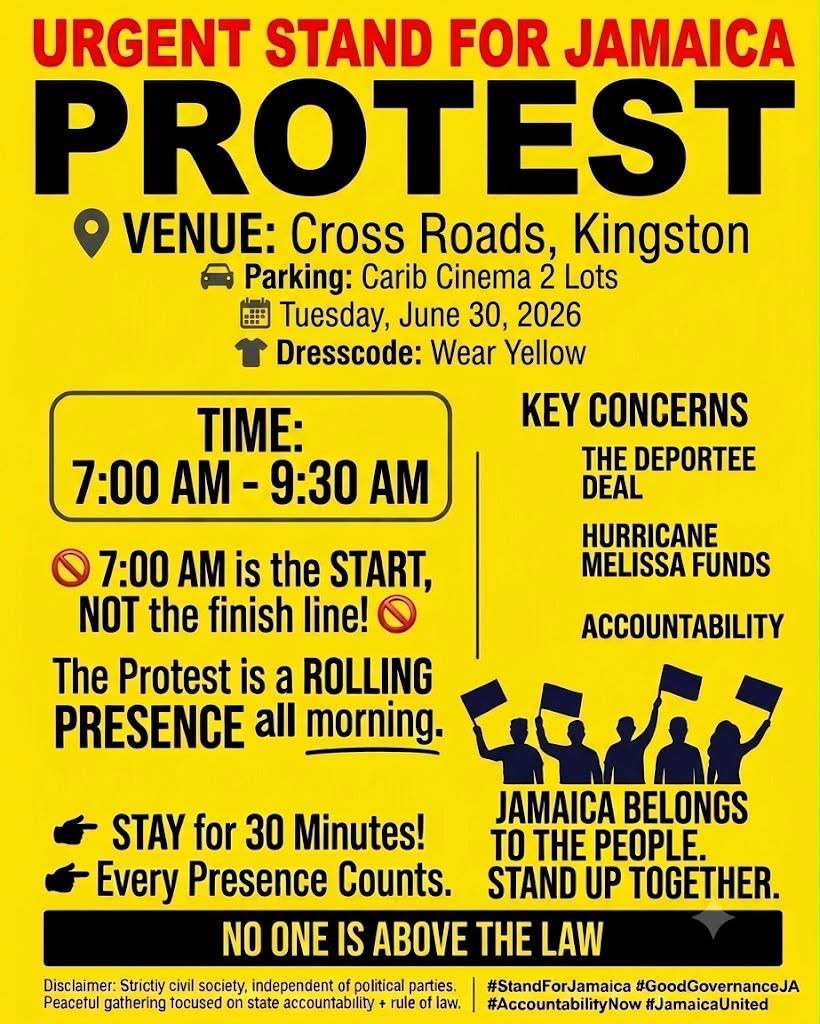
Will the Cross Roads protest change anything?
From all accounts, the protest staged by well-thinking Jamaicans to register their disgust with how the Government has been operating was largely what organisers expected, in terms of physical and verbal support.
Too many irregular things have been happening, especially of late, and it is as if the Government does not care.
The whole business of accommodating third country nationals remains the main item on most agendas, and there seems to be no way that the Government can stare the United States in the eye and say ‘look, we simply cannot go through with this.’
As the days go by, and more information unfolds, the conclusion must be drawn that there is far more danger in the agreement than meets the eye or ear.
The business, also, of Dr Andrew Wheatley being fingered by the Integrity Commission, and still refusing to budge, as far as taking the only decision that is possible … to step aside from his official Government role and defend some of the allegations thrown at him, was also one that the group felt badly about.
The Integrity Commission found, among other things, that Wheatley possessed assets that were disproportionate to his lawful earnings, valued in the region of $164 million, and could not satisfy the commission when asked to explain it.
The political administration of the day just does not care, though, and it is quite worrying.
Then, there is also a level of arrogance that follows the Administration like a shadow. There are some, maybe all, members of the Government who believe that people should always keep their mouths shut, as there is nothing to criticise the Administration about. Even Prime Minister Holness operates like that.
As a country, Jamaica just cannot continue like this. The corruption cup has overflowed.
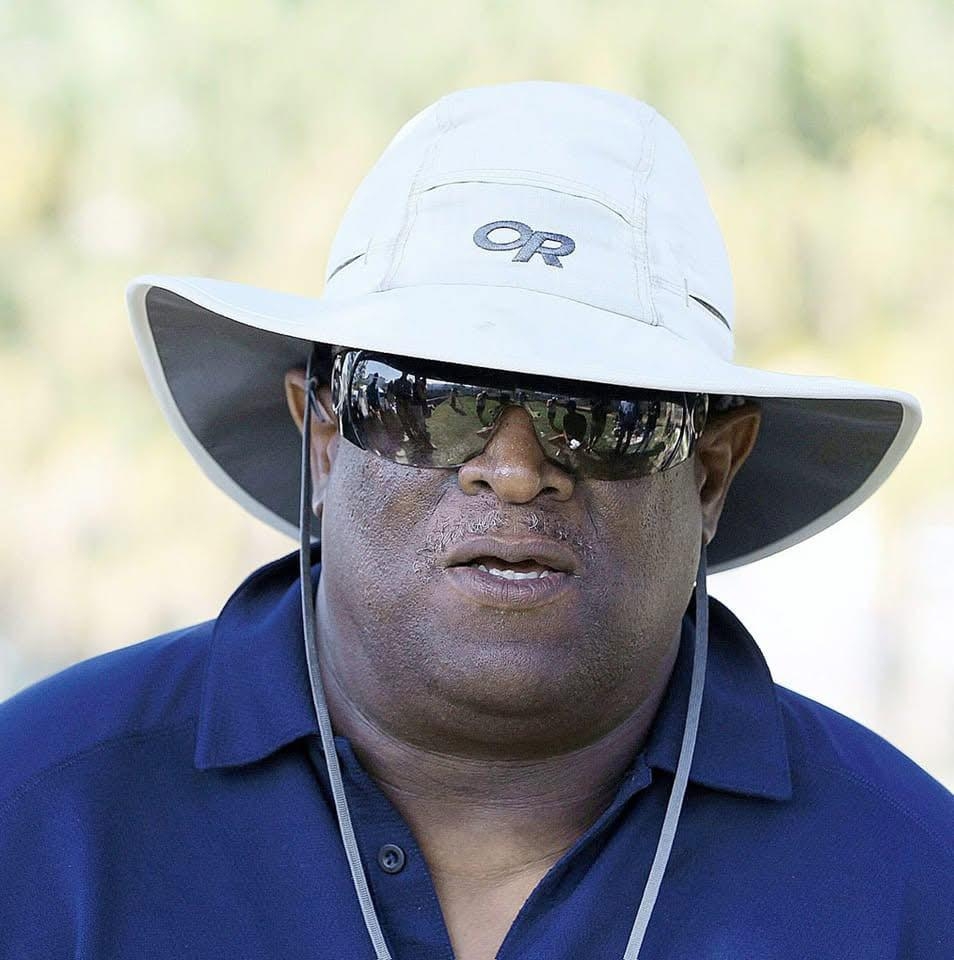
Stephen Francis was the best
Sadly, the island of Jamaica awoke to news on the morning of Sunday, July 5, that esteemed track and field athletics coach Stephen Francis had died. It was a smashing blow for many, some of whom were unaware of the nature of his illness.
Last week, the club that he served as technical director for many years, MVP, confirmed that Francis was receiving medical treatment in a Jamaican hospital, but declined to go into detail about his illness.
What a man! Francis coached so many World and Olympic champion athletes for him to be best described as the global undisputed king of coaching, per capita.
Lest we forget, it was he who contributed heavily to achieving global prominence for talents such as Elaine Thompson, Shelly Fraser Pryce, Sherika Jackson, Melaine Walker, Tina Clayton, Tia Clayton, Asafa Powell, Tajay Gayle, Germaine Mason, Michael Frater, and many others.
Francis, a brilliant Wolmerian, was the ultimate scientist. He knew what he was about and could have come across at times as arrogant, if you did not understand him. But deep down, he was genuine, and preferred the tell-it-like-it-is approach … which is what a real man should do.
At times, he was intimidating to be interviewed, as I found out, and you just had to have your notes in order, for one ‘fool fool’ question would be met with a strange silence, a turn of the head, and then a slick way of saying, wheel and come again.
A huge vacuum has been created in Jamaican athletics coaching upon his departure to the unknown.
Jamaica’s shocking ‘peaceful’ ranking
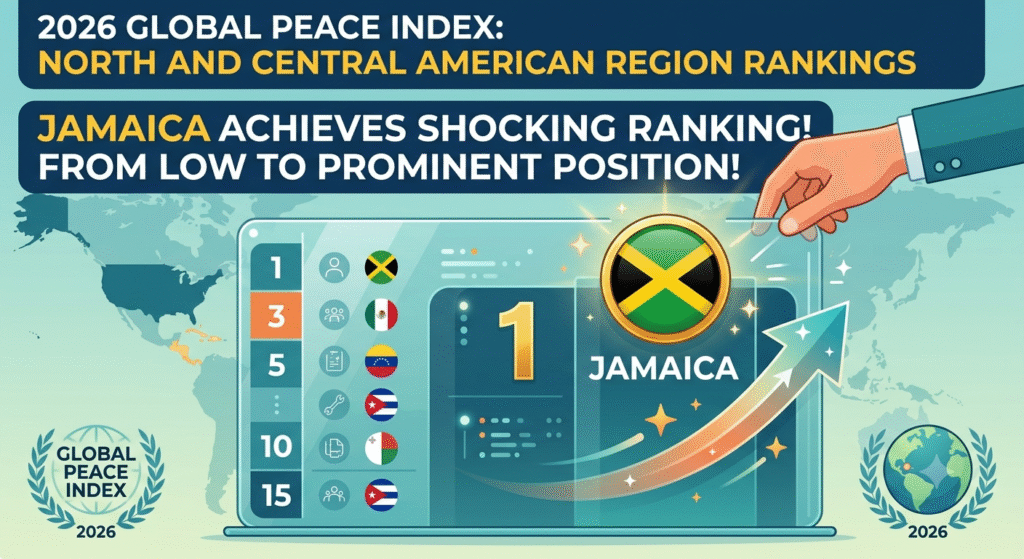
It has been determined by the 2026 Global Peace Index that Jamaica enjoys a prominent position within the North and Central American region.
The unlikely findings shocked so many last week that I felt compelled to find out more about the organisation.
Interestingly, the top three countries ranked Most Peaceful, globally, were Iceland, New Zealand, and Switzerland, in that order.
The top 10 also has Slovenia in fourth, followed by Ireland, Austria, Portugal, Singapore, Finland, and Japan. The only problem here is the eighth position of Singapore, as I believe that it has to be in the top five.
But back to Jamaica. If it is to be accepted as the most peaceful in the Caribbean, then the region has to take stock. Jamaica is anything but peaceful, even if the view irritates tourism interests.
The reality is that among the estimated 2.8 million inhabitants are some of the most aggressive people that you will find. Also, how the security forces treat civilians, regarded in some cases as criminals, must have impacted the findings.
I would urge officials of the Global Peace Index, which, according to Wikipedia, was launched in 2007 by Steve Killelea, an Australian described as a technology entrepreneur and philanthropist, and the Institute for Economic and Peace, which does the annual production, to revisit how it arrives at its conclusions.
Only Canada and Costa Rica, in that order, were said to be ahead of Jamaica, in the most peaceful country in the region ratings, which led me to confess that I had no idea that the North and Central American region was so terrible.
The index, it is said, is based on 23 indicators that measure security, levels of continuous conflict, safety, and frequency and level of military action.
Shocking, it was, to find out that Jamaica was ranked ahead of Cuba, which to my mind, is the safest country in the entire region, except for threats from certain international bullies, who often tell lies about the country, with a view to destabilising it.
I have examined each criterion deeply, and I am still left dumbstruck over how Jamaica could rank so highly, even over Trinidad & Tobago and Panama.
I have little challenge with countries like Haiti, Guatemala, the Dominican Republic, Honduras, El Salvador, the United States, Nicaragua, and Mexico being ranked below Jamaica. In fact, I experienced real fear in two of them in particular when I visited – Haiti, and El Salvador – in incidents that I felt like crying out for my mother.
Outside of the South Korean capital city of Seoul, which I still hold as the safest, the parts of Cuba that I visited, like Havana, the capital, Matanzas, Pinar del Rio, Holguin, Santiago de Cuba and others, left me wondering if any crime had ever been recorded in those places. Walking the streets alone way past 3:00 am in some areas was a regular thing for me.
Latterly, I was informed that some of the smaller Caribbean states were excluded from consideration in trying to determine the rankings. Does that even make sense then?
Cabo Verde’s message to the world
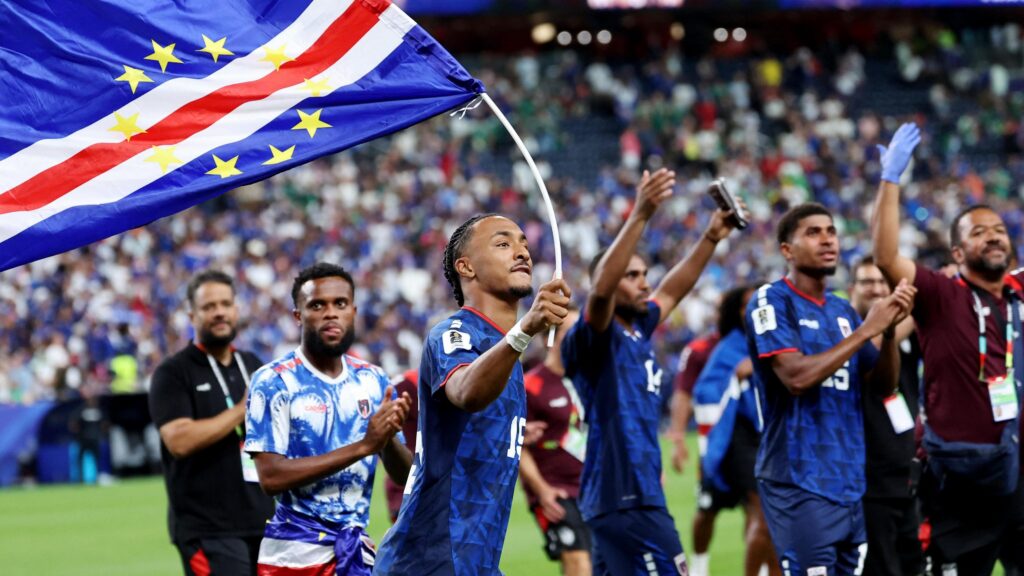
It must be clear in anybody’s or everybody’s mind that the team that won the hearts of millions around the world, at least up to the early knockout stage of the World Cup, was Cabo Verde, or Cape Verde as the country is better known.
Goalkeeper Josimar Jose Evora Dias, known popularly as Vozinha was beyond doubt the star of the show, and for a man who has just gone past age 40, it says a lot for veterans whom so many people have written off as trash or softies.
The scoreless draw against Spain in their opening match of the tournament was the first official announcement that the country, made up of over 10 islands off the West coast of Africa, meant business.
By the time the giant killers had made it to the knockout round of 32 teams to face the big and mighty country that does not want to recognise that the slave trade was atrocious, and the ‘gravest crime against humanity’, that’s Argentina, of course, the world knew that anything could happen, and the islanders would not be pushovers.
The fact that Argentina won 3-2 meant little.
It was certainly the finest show of courage that I have seen from a tiny nation of around 550,000 inhabitants. Some will say that population and size do not matter in terms of producing talent. But they do, for having to choose from a pool of 1.48 billion people, like India can do in cricket, and a country like Antigua & Barbuda having to find talent from its 72,000, is a big deal.
There is much more to hear from Cabo Verde.
Syndicated from Our Today · originally published .
Legal context · powered by Jurifi
Get the legal angle on this story. Pick a prompt and Jurifi's AI will explain it using Jamaican law.
AI replies are based on Jamaican law via Jurifi. Not legal advice.
Other coverage

The News—July 6, 2026
PBC Jamaica (Video)Watch
JAMAICA NOW: PSOJ, Church want Wheatley gone |TCN deal outrage “ridiculous”-PM | PEP results improve
Jamaica Gleaner (Video)Watch
The News July 07 2026 SM
PBC Jamaica (Video)Watch
CVM Lead Story: July 6, 2026 | @CVMTVNews
CVM TV News (Video)Watch
CVM News At 7PM: July 8, 2026 | @CVMTVNews
CVM TV News (Video)Watch