

Jamaica calls for new global approach to productivity as AI and climate change reshape economies

For decades, economic success has largely been measured by how many jobs a country creates. Today, however, governments around the world are confronting a more complex reality. Artificial intelligence is transforming industries, climate-related disasters are disrupting economic activity with increasing frequency, and labour markets are evolving faster than traditional measures of productivity can capture.
Against this backdrop, Jamaica is calling for a more modern and responsive approach to measuring productivity, resilience and economic competitiveness, particularly for Small Island Developing States (SIDS) navigating the combined pressures of climate change, technological disruption and labour market transformation.
The call was made by Minister of Labour and Social Security, Pearnel Charles Jr., MP, during high-level discussions with the United Nations Conference on Trade and Development (UNCTAD) on the margins of the 114th Session of the International Labour Conference in Geneva.
The discussions focused on advancing collaboration between Jamaica and UNCTAD related to the Productive Capacities Index (PCI), an increasingly important tool designed to help countries strengthen institutions, improve competitiveness and support evidence-based policymaking.
With the Jamaica Productivity Centre as the implementing institution, the project has successfully entered the second phase of an ongoing three-year project to develop a PCI that accounts for the realities of Jamaica.
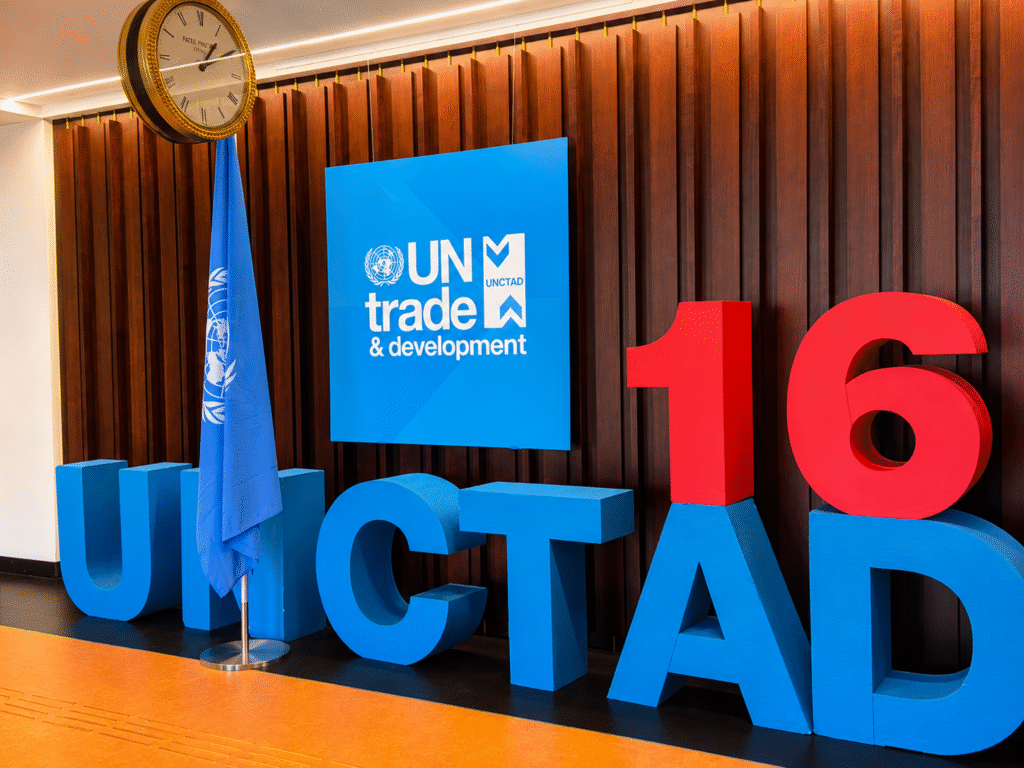
The opportunity was also used to follow up on productive discussions held during a series of UNCTAD engagements hosted in Jamaica earlier this year. During these activities, over 30 policy researchers across various sectors were trained and sensitised on the development and use of the productive capacities index. The knowledge flow continued as UNCTAD engaged with over 50 policy analyst and industry professionals in Jamaica to gather critical information and to pinpoint economic opportunities to prepare Jamaica’s gap ssessment for productive capacities to be completed and disseminated later this year.
Minister Charles noted that while Jamaica has achieved historic labour market successes, including record-low unemployment rates, the country’s next major challenge is ensuring that productivity growth keeps pace with labour market gains. “Jamaica has demonstrated that it can create jobs. The next phase of our national development must focus on creating conditions that allow productivity, innovation, and competitiveness to flourish.
Low unemployment is an important achievement, but sustainable prosperity requires us to continuously strengthen the productive capacity of our people, institutions, and economy,” the Minister stated.
The Minister argued that traditional measurements of resilience and productivity must evolve to reflect the realities confronting vulnerable economies.
He pointed to the experience of countries such as Jamaica that must simultaneously respond to natural disasters, technological transformation and changing global economic conditions while maintaining growth and social stability.
“We must beginasking whether the indicators used to evaluate economic success are still fit for purpose. For countries like Jamaica, resilience is no longer simply about recovering from shocks. It is about anticipating change, adapting quickly and building the capacity to remain competitive in an increasingly uncertain world,” Minister Charles said.
A significant focus of the discussions centred on the implications of artificial intelligence and automation for labour markets, particularly within sectors like Business Process
Outsourcing, that have traditionally absorbed large numbers of young workers entering the workforce.
The Minister highlighted concerns that technological advancements could significantly alter employment patterns over the next decade, particularly within industries that rely heavily on routine and repetitive tasks. He stressed the importance of forecasting future labour market disruptions before they occur and ensuring that workers are equipped with the skills needed to succeed in emerging sectors.
The discussions also explored the importance of strengthening productivity development at every stage of national life, including within the education system, while ensuring that vulnerable and often overlooked populations are reflected in national assessments and policy responses. Jamaica further advocated for stronger evidence-based policymaking and enhanced regional collaboration to improve productivity outcomes across CARICOM.
Minister Charles welcomed UNCTAD’s ongoing work to strengthen the use of data, research and productivity analysis to support national development and expressed interest in expanding similar initiatives across the wider Caribbean. The Minister also highlighted Jamaica’s growing role as a leader in services, culture and the creative economy and emphasized the importance of developing new opportunities that create pathways to economic participation for women, youth, small communities and vulnerable groups.
Looking ahead, Jamaica and UNCTAD agreed on the importance of strengthening cooperation to better understand emerging labour market trends, improve productivity forecasting and support the development of policies capable of preparing countries for challenges that are already beginning to emerge. “The future belongs to countries that can anticipate change before it arrives. Jamaica is committed to building the institutions, policies and productive capacities necessary to ensure that our workers, businesses and communities are prepared not only to withstand disruption, but to thrive because of the opportunities it creates,” Minister Charles said.
The engagement forms part of Jamaica’s broader efforts at the International Labour Conference to advance discussions on resilience, productivity, labour market transformation and the future of work, while ensuring that the perspectives and realities of Small Island Developing States remain central to international policy conversations.
Syndicated from Our Today · originally published .
Legal context · powered by Jurifi
Get the legal angle on this story. Pick a prompt and Jurifi's AI will explain it using Jamaican law.
AI replies are based on Jamaican law via Jurifi. Not legal advice.