
Jamaica youth behaviour concerns prompt call for national intervention
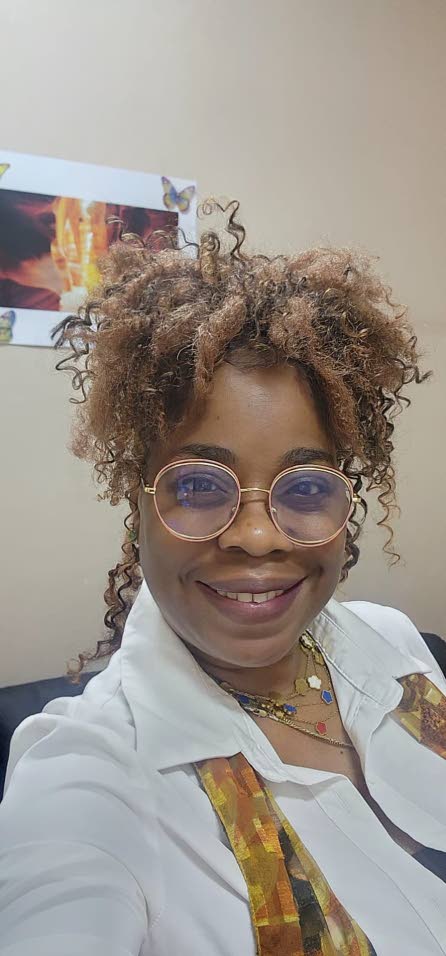
International consultant clinical behavioural specialist psychologist Dr Coretta Brown Johnson says recent reports on behavioural problems among Jamaican children are troubling and show that the country needs structured national training and intervention, delivered in a focused and sustained way.
She said Jamaica already has several policies, but more attention must be paid to how those measures are being carried out in schools, households and communities. In her view, existing approaches should be reviewed, tested for impact and strengthened where they are falling short.
Figures from the National Children's Registry show that Jamaica is still seeing high numbers of youth behaviour reports, including children running away, skipping school, using substances and being described as beyond parental control. The registry recorded 506 such incidents in January, 550 in February and 677 by March 26, bringing the total so far this year to 1,733.
Over the last five years, the numbers have stayed elevated. Reports moved from 5,284 in 2020 to a high of 6,800 in 2023, then eased slightly before climbing again to 6,649 in 2025.
Bullying has also remained a concern. Up to March 26, 2026, there were 49 reported cases, with January accounting for 22, February for 11 and March for 16. Longer-term figures show the number of bullying reports increasing from 130 in 2022 to 167 in 2025.
Public anxiety has been sharpened by violent episodes involving students. Those cases include the fatal stabbing of a Seaforth High School student in Morant Bay after a dispute, and the charging of a 17-year-old Ocho Rios High School student for the murder of 16-year-old schoolmate Devonie Shearer, who was reportedly attacked at the school on March 4. In another widely circulated video, Jamaica College students were shown brutally assaulting another student whom they accused of theft.
Brown Johnson said the behaviour cannot be separated from wider failures in the systems that shape children, including family life, education and culture. "It's all linked. A child is impacted by all elements within his or her environment," she told the Jamaica Observer.
She said the family remains one of the main places where children learn how to function, but social pressure is present at every stage of a child's life. "The family is a primary agent of socialisation...Social issues are prevalent at all levels, and the child interfaces with the local to broader levels daily. If mom or dad does not have the means to send a child to school or sustain and provide for him or her, the prevailing effects are usually a lack of focus, a lack of confidence/esteem issues, behavioural challenges, loss of educational opportunities, and criminal engagement. Hence, the link is there and intertwined into the prevailing results over time," she explained.
According to Brown Johnson, painful or harmful early experiences can disrupt children's mental, emotional and social growth, and those effects can later show up as problem behaviour. "If a child does not feel safe, they will eventually take matters into their own hands; if they are not intrinsically valued pre and postnatally, many issues can arise," she said.
She also urged adults to set firm limits from early, warning that behaviour later labelled as beyond control often builds over time when discipline is uneven. "Adults are supposed to be the 'boundary creators' and 'boundary holders' to assist a child in properly regulating, knowing how far to go until consequences are leveraged. Absconding from school is like missing work for days on end with no real need or reason; what is practised as a child cements in adulthood, hence, consequences should be applied swiftly and consistently at the level required to impact the behavioural outcomes required," she explained.
Brown Johnson stressed that children need to understand what repeated conduct can lead to, whether the action is good or bad.
She said schools, because of their central role in children's development, must help spot and respond to behavioural issues. "Each school, at its level, will and should have measures in place to mitigate. We may need a process whereby, much like data is tracked academically, we do so behaviourally and suggest interventions accordingly before the issues become chronic. That, too, will increase the need for effective programmes and systematic communication towards effective resolutions," she told the Sunday Observer.
Education Minister Dr Dana Morris Dixon has also said the recent violence among students is worrying and unsettling. Addressing the incidents, she said the problems seen in schools are tied to wider realities in homes and communities, and that schools cannot fix the matter by themselves. She said discipline needs firmer backing from families and society at large.
Morris Dixon made the comments during last Thursday's meeting of the joint select committee reviewing the Child Diversion Act. She said serious school behaviour requires stronger intervention, but every incident should not automatically be routed through the criminal justice system.
Her remarks came as the committee considered whether the Child Diversion Programme could be used in cases involving school fights, bullying and minor theft, issues now being discussed more often alongside concerns about student violence.
The minister also noted that welfare-centred responses are already being used under the Child Care and Protection Act, especially through the Child Protection and Family Services Agency, which works directly with schools and families.
Syndicated from Jamaica Observer · originally published .
Legal context · powered by Jurifi
Get the legal angle on this story. Pick a prompt and Jurifi's AI will explain it using Jamaican law.
AI replies are based on Jamaican law via Jurifi. Not legal advice.