

Rights Advocates Press Government on Safeguards in US-Jamaica Third-Country Transfer Deal
Advocacy organisation Jamaicans for Justice (JFJ) has challenged the wisdom of Jamaica’s arrangement with the United States to receive third-country nationals for short-term lodging, arguing the country could face serious human rights and legal exposure unless tighter protections are put in place.
The group acknowledged that officials have offered certain guarantees — among them that transfers would exclude people with criminal convictions, that stays would not be open-ended, and that Kingston retains authority to turn away arrivals. Even so, JFJ maintains those commitments fall short unless backed by what it called “robust, transparent, and independently verifiable safeguards.”
Without rigorous screening to block refoulement and chain refoulement, JFJ said, Jamaica may still violate duties under the 1951 Refugee Convention and the Convention Against Torture. In international refugee law, refoulement means sending a person back to a territory where they face a real threat of persecution, torture, or comparable harm.
The organisation also flagged the danger that people could remain stuck in extended uncertainty if they cannot be sent on to their countries of origin, drawing on overseas cases where transit schemes produced long detention and unclear legal standing.
“Once individuals land on Jamaican soil, the country assumes primary legal custody and responsibility under international law and principles of sovereignty,” said JFJ Executive Director Mickel Jackson.
“The US largely relinquishes control at that point. If onward removal fails… people could be trapped in Jamaica indefinitely,” Jackson added.
JFJ further argued that major constitutional issues surround how third-country nationals would be classified, held, and treated while here, pointing out that the Charter of Fundamental Rights and Freedoms extends to “every person” within the island’s jurisdiction.
It also asked whether the state is equipped to carry out full asylum or protection reviews for anyone who claims a fear of return, including whether they would receive interpreters, legal representation, and sufficient time to build their case.
Among its proposals, JFJ wants the full memorandum of understanding and operating rules released, independent vetting procedures established, clear caps on how long anyone may be detained, and ongoing monitoring by civil society. It also called for a built-in exit mechanism if human rights or practical problems emerge.
“Jamaica can cooperate on migration, but we must do it responsibly and lawfully,” Jackson said. “We must not allow ourselves to become a backdoor route that helps any state bypass core international refugee protections.”
The intervention follows confirmation from National Security Minister Dr Horace Chang on the terms of the pact. He said third-country nationals sent here would not be confined and could seek asylum if they wished to stay.
Chang stressed that Jamaica is not taking convicted criminals and that every person would be screened before admission. Addressing the House of Representatives on Wednesday evening, he said the memorandum of understanding would not be laid before Parliament, though he described it as non-secret and pledged public access alongside publication of operational procedures.
At a post-Cabinet media briefing, Chang said those involved would be people “coming literally from being apprehended at the border,” with Washington paying travel costs and most expected to return to their home countries. He added that Jamaica would suspend the programme if intake volumes began to strain domestic systems.
Syndicated from Jamaica Gleaner · originally published .
Legal context · powered by Jurifi
Get the legal angle on this story. Pick a prompt and Jurifi's AI will explain it using Jamaican law.
AI replies are based on Jamaican law via Jurifi. Not legal advice.
Other coverage
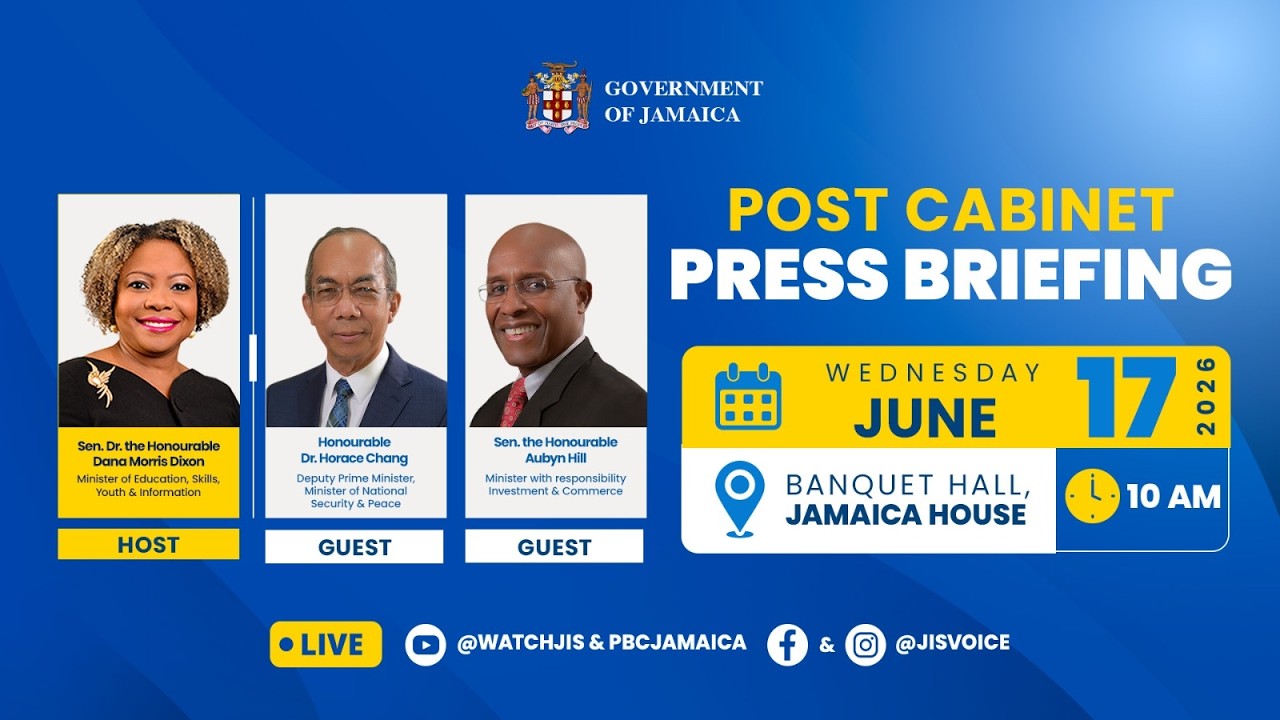
Post Cabinet Press Briefing - June 16, 2026
Andrew Holness (Video)Watch
Seiveright urges Diaspora to invest now as global demand for Jamaica surges
Our Today
Holness warns of criminals in the diaspora
Jamaica Observer
CVM News At 7PM | @CVMTVNews
CVM TV News (Video)Watch
CVM News At Noon: June 17, 2026 | @CVMTVNews
CVM TV News (Video)Watch