Justice Ministry to tour island promoting Alternate Dispute Resolution policy
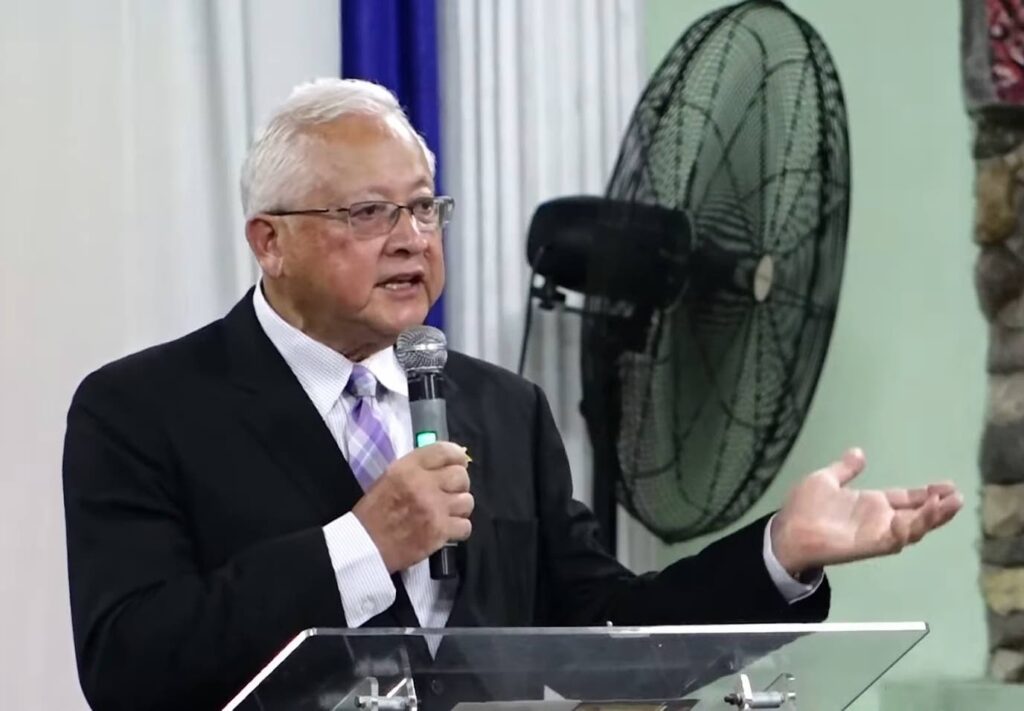
The Ministry of Justice is preparing to take its Alternate Dispute Resolution (ADR) Policy on a nationwide tour later this month, part of a broader push to encourage Jamaicans to resolve their disagreements peacefully and contribute to a continued drop in serious crime.
"The country is doing well, but we can do much better. We have to get murders going down and crime going down. And this is why this ADR policy is meant to assist the police and the country to settle the disputes, solve disagreements, so that they do not have to use abuse, threats, and violence to solve them. We are really planning to go out across the island to promote ADR," said Justice Minister Delroy Chuck.
Chuck made the remarks Wednesday at the launch of the ADR Policy Development and Estate Planning Public Education Campaign, held at the ministry's headquarters. He pointed out that many violent offences trace back to ordinary quarrels that were never properly addressed, and that giving citizens trustworthy tools for early intervention could prevent escalation.
"ADR offers a different path. It provides timely, accessible, and people-oriented and people-centred solutions, mediation, arbitration, restorative justice, negotiation, adjudication, conciliation, among others, that allows individuals, families, businesses and communities to resolve disputes earlier, faster, and more amicably, without the cost and complexity of formal court proceedings," he said.
According to the minister, ADR encourages a shift in culture, moving Jamaicans away from reflexively turning conflicts into confrontations and toward habits of dialogue and mutual understanding.
"We're on the right path in terms of getting crime and violence down. [In] 2023, murder — which is a good measure of what is happening in terms of crime and violence in Jamaica — went down by nine per cent. In 2024, 19 per cent. Last year, we went down by 42 per cent. I don't know what the percentage will be this year, but we're really hoping it will be high, close to 50 per cent," Chuck stated, adding that he believes ADR can help push the figure further.
The ADR concept paper received Cabinet approval in December 2025 and was tabled in the House as a Green Paper in February. Chuck emphasised that the planned consultations are central to shaping the framework and urged Jamaicans to take part.
"This engagement process is not a formality, it is the foundation. We're seeking your insights, expertise, and lived experiences to help shape a comprehensive, inclusive, and effective ADR policy framework, one that reflects the realities of our people and meets the needs of all sectors. Let me say this: It is so very important for us to buy into this programme," he charged.
Sandy-Lue Cole Jarrett, Acting Director and Senior Policy Analyst at the Public Law, Restorative and Preventative Justice Unit, told the Jamaica Observer that the roadshow will begin in the western end of the island, taking in Hanover, St James, and Trelawny. She said the team has earmarked May 20 to May 22 for those initial sittings, although a Kingston consultation may take place first.
Cole Jarrett noted that ADR gives the public a real alternative to litigation and that the policy is designed to widen awareness of the various methods on offer.
"Law enforcement and punitive measures can fall short in addressing the root causes leading to recurring cycles of crime and violence. The court process can be adversarial. ADR places strong emphasis on building better relationships. Adversarial processes are not necessarily good for long-standing amicable relationships. What ADR tries to do here is to make sure that once parties leave an ADR resolution session, they are both leaving happy, for want of a better word," she said, while cautioning that ADR is best suited to civil matters and will not fit every situation.
"I want to emphasise that we want society to get to a stage where there is no contemplation of going to court. Because you would have been au fait with these ADR methods, you would have been exposed to solving disputes and conflicts by ADR. We anticipate that disputes will not escalate to a point where court intervention is required," Cole Jarrett added.
Once Parliament finalises the policy, she said, implementation is expected to unfold across a five-year window running from 2027 to 2031, following further refinement of the Green Paper based on stakeholder feedback before it returns to the Houses of Parliament for tabling and national rollout.
Syndicated from Jamaica Observer · originally published .