
OT Equity Analysis | Qualcomm Tries to Prove It Is More Than a Smartphone Chip Company
Qualcomm’s latest investor-day targets have put the stock back in focus as the company tries to convince the market that data-centre chips and custom silicon can become a serious second engine.
Qualcomm Incorporated is today’s first Stock of the Day because the company has given investors a fresh reason to reassess the business beyond its traditional smartphone-chip franchise. The San Diego-based semiconductor group told investors that it expects its data-centre business to reach US$15 billion in annual sales by 2029, while non-handset chip revenue could rise to US$40 billion over the same period. That is a meaningful change in narrative for a company long associated with mobile phones, wireless connectivity and Snapdragon processors.
The market reaction shows why the stock matters today. Qualcomm shares moved sharply higher after the company’s investor presentation, as investors weighed whether the business can reduce its dependence on the smartphone cycle and enter higher-growth computing markets with credible customers already attached. For years, Qualcomm has been judged heavily on Android handset demand, licensing revenue and the risk that large device makers could bring more chip design in-house. The new message is that Qualcomm wants to be valued not only as a mobile-chip supplier, but as a broader computing platform company.
Qualcomm’s core business remains highly important. The company designs chips and wireless technologies used in smartphones, connected devices, cars, networking equipment and other electronics. Its licensing arm also earns fees from patented wireless technologies used across the mobile industry. This combination of chip design and intellectual property has made Qualcomm one of the most profitable companies in global semiconductors. But it has also left the company exposed to handset replacement cycles, China-related demand swings and customer concentration.
The current catalyst is the company’s attempt to widen that base. Management said the data-centre business could generate US$5 billion in revenue by fiscal 2027, including US$1 billion from new custom-chip customers. It also identified major technology customers for new computing products, including Meta Platforms and Microsoft, while pointing to additional unnamed large-scale clients. The company’s pitch is that its experience in low-power, high-efficiency chip design can transfer from mobile devices into large-scale computing environments where energy use, cost and performance are increasingly important.
That argument is credible, but it is not risk-free. Qualcomm has tried before to enter the server and data-centre market, only to struggle against stronger incumbents and shifting customer needs. The current opportunity is larger, but the competitive field is also much tougher. Nvidia dominates high-performance accelerated computing. Broadcom and Marvell are major players in custom chips. Amazon, Google and other cloud operators are designing more of their own silicon. Qualcomm is entering a market with high rewards, but also high switching costs, long product cycles and demanding customers.
The financial picture is therefore a mix of strong cash generation and strategic transition. Qualcomm’s legacy mobile and licensing businesses provide scale, profitability and the balance-sheet capacity to invest. The company has the advantage of engineering depth, strong relationships with device manufacturers and a long history of designing chips for power efficiency. At the same time, the market is likely to scrutinise whether the new revenue targets are backed by purchase commitments, clear production timelines and margin discipline.
Valuation is the heart of the debate. Qualcomm has often traded at a lower multiple than faster-growing semiconductor peers because investors saw it as tied to a mature smartphone market. If the company can demonstrate that non-handset revenue is becoming a larger and more durable share of the business, the stock could attract a different investor base. But if the data-centre push is seen as aspirational, or if early shipments fail to scale, the market may treat the latest rally as premature.
The strategic angle is broader than one company. Qualcomm reflects a major shift in global technology spending: customers want more specialised chips, more efficient computing and more alternatives to single-vendor dependence. That creates an opening for companies with strong chip-design capabilities. It also raises the level of execution required. Winning a design slot is not the same as building a recurring, profitable revenue stream.
For general readers, Qualcomm matters because it sits inside the technology infrastructure that powers phones, cars, connected devices and increasingly cloud-based services. Its success or failure in data-centre chips could influence competition, device pricing, computing costs and the direction of U.S. semiconductor leadership.
There are several risks. First, the company is entering a crowded market where existing leaders have deep customer relationships and mature software ecosystems. Second, smartphone weakness could continue to pressure the core business while the new segments are still scaling. Third, customer commitments may take longer to convert into revenue than investors expect. Fourth, acquisitions and expansion projects can dilute returns if management overpays or fails to integrate the technology effectively.
Qualcomm deserves attention today because it is asking the market to reconsider what kind of company it is. The investor-day message was ambitious, and the share-price reaction suggests investors are at least willing to listen. The next test will be whether the company can convert long-term targets into signed demand, shipped products and sustainable earnings growth.
This article is for informational purposes only and does not constitute investment advice.
Syndicated from Our Today · originally published .
Legal context · powered by Jurifi
Get the legal angle on this story. Pick a prompt and Jurifi's AI will explain it using Jamaican law.
AI replies are based on Jamaican law via Jurifi. Not legal advice.
Other coverage

Tropical Battery makes progress expanding its US presence
Radio Jamaica News Online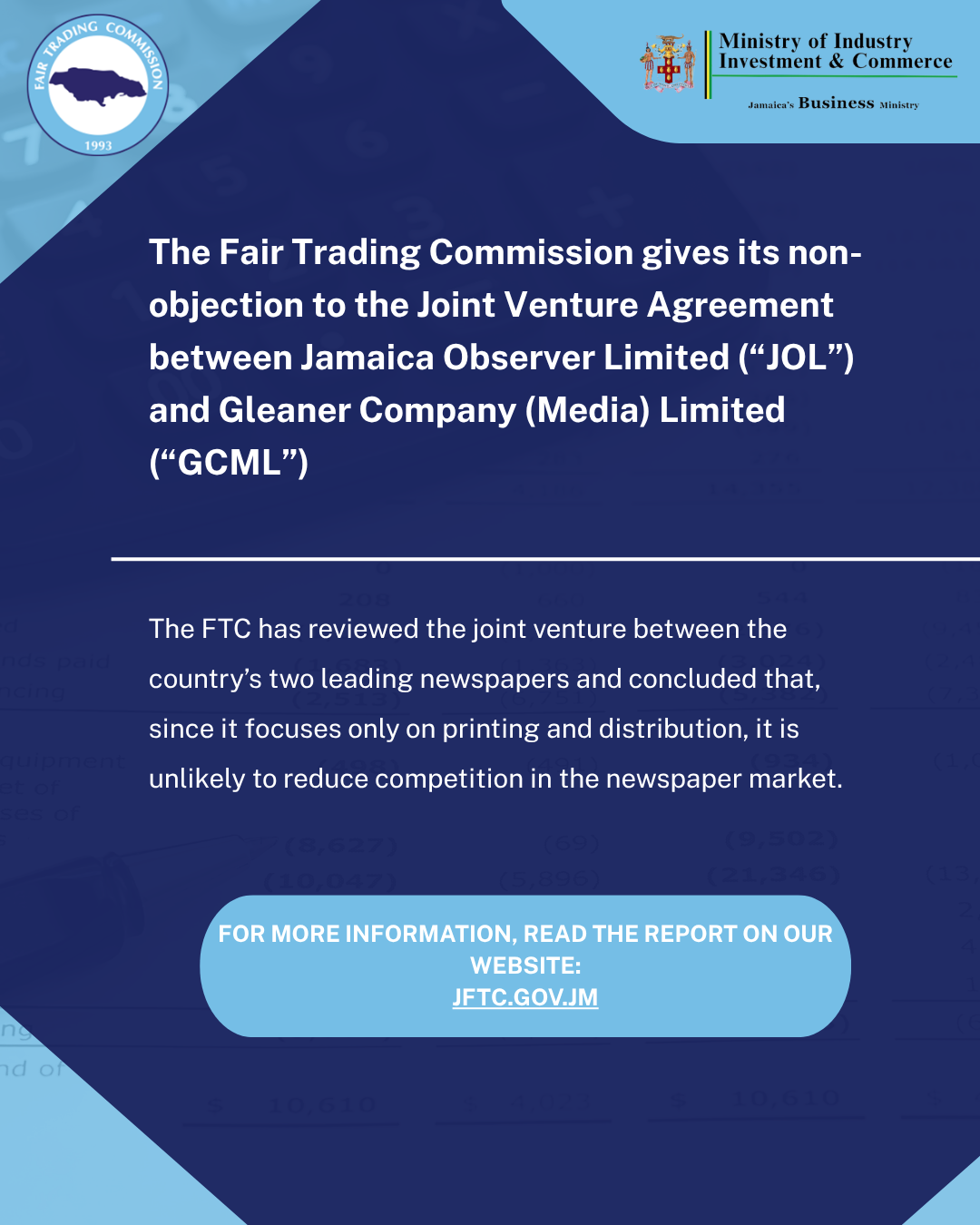
FTC gives non-objection to Jamaica Observer and Gleaner Company Joint Venture
Jftc
Funded and Focused Episode 83
PBC Jamaica (Video)Watch
Creators backing humanlike robots
Jamaica Star
Funded and Focused Episode 81
PBC Jamaica (Video)Watch