NWC boosts generators, drones and emergency communications for hurricane season
The National Water Commission is stepping up its readiness work for the 2026 Atlantic hurricane season, using the experience of Hurricane Melissa in 2025 to sharpen how the utility withstands storms and restores service afterward.
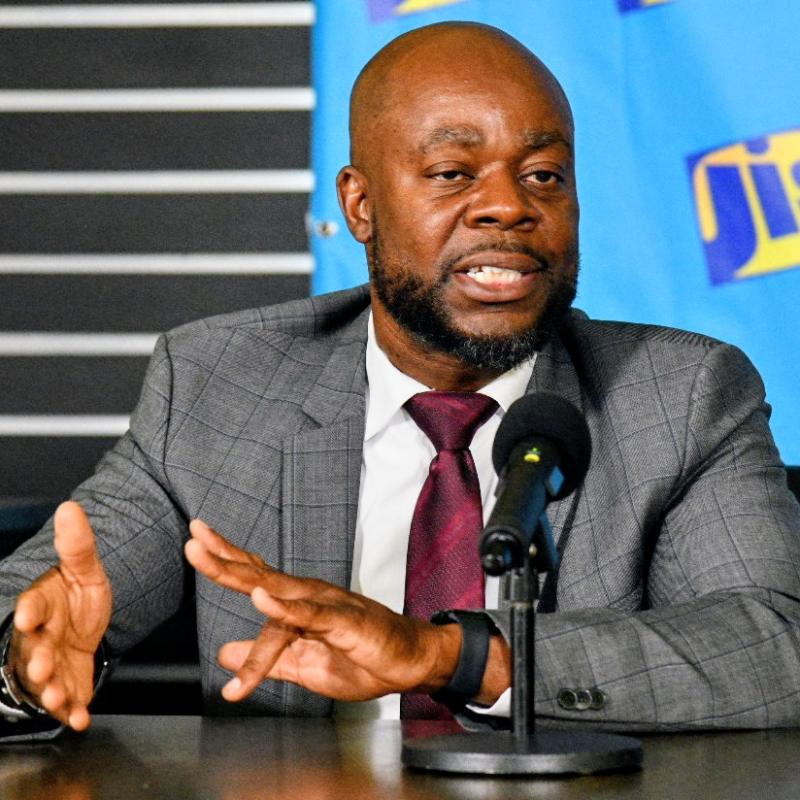
Herman Fagan, the NWC's Acting Vice President of Operations, told a recent JIS Think Tank that the commission has been applying lessons from Melissa, especially in relation to standby electricity for its water-supply network. He said the agency has moved to place generators at many of the facilities that supply large numbers of customers.
"A number of our facilities were out. What we have done going forward, and in preparation for the new upcoming hurricane season, is to ensure that most of our facilities that serve a wide section of our customers have generators," Fagan noted.
Fagan said generator equipment already in place is also being improved and fitted out properly so the agency can bring water service back more effectively after an emergency. "So, in the event of a disaster, we are able to restore services in a more efficient and a more serious manner," he said.
The NWC is also leaning more heavily on technology as part of its disaster planning. Fagan pointed to drones as an important tool for quick checks of damaged infrastructure after a storm or other emergency.
"It has enabled us to do our assessment in a much faster time. We have already had several formal drone trainings for our line staff, and we'll be expanding on the usage of drones in the different regions," he said.
According to Fagan, drones are especially useful where teams need to inspect assets in rough or elevated terrain, including hilly areas that workers cannot easily reach on foot. "In the event that we have any disaster… we are able to do our assessment very quickly," he stated.
Glaister Cunningham, the NWC's Vice President of Enterprise Development & Performance Monitoring, said preparation must also be backed by planning and reliable lines of communication. He said the commission has a business continuity plan as well as a hurricane plan.
Cunningham identified communication as one of the strongest lessons from Hurricane Melissa. "No plan works without the ability to communicate… because if you can't get through to the people who are to effect the plans, it slows everything down to a halt," he emphasised.
He thanked Jamaica's telecommunications companies and their partners, noting that satellite support helped restore communication fairly quickly after Hurricane Melissa. Radios obtained by the NWC through the Office of Disaster Preparedness and Emergency Management will provide another way to keep contact during future emergencies.
Together, the upgrades are intended to help the NWC reduce the time needed to restore service and build greater resilience before the 2026 Atlantic hurricane season, which starts on June 1.
Syndicated from Jamaica Gleaner · originally published .
Legal context · powered by Jurifi
Get the legal angle on this story. Pick a prompt and Jurifi's AI will explain it using Jamaican law.
AI replies are based on Jamaican law via Jurifi. Not legal advice.