
Parliament's internal and external affairs committee debates proactive versus reactive meetings
Whether Parliament's Internal and External Affairs Committee should operate on a proactive or reactive basis dominated Tuesday's sitting at Gordon House, as members weighed how best to oversee foreign policy, national security, and the administration of justice.
Committee chair Juliet Cuthbert Flynn, Member of Parliament for St. Andrew West Rural, told colleagues that both approaches are possible and that meetings should be held regularly, with matters handled in one accord.
Fitz Jackson, opposition spokesperson on national security and MP for St. Catherine South, urged the panel to address issues of national importance in a fair, nonpartisan manner. He said that in earlier years the committee had functioned in a largely homogeneous way, leaving observers uncertain which political side members favoured.
"I would like that to be preserved," Jackson said. "I must say I have seen a bit of deterioration in recent years and it caused the committee to be as effective as it ought to be — one of collaboration, as against one of an adversarial nature."
Deputy Speaker Herobert Clarke, MP for St. James Central, sought clarity on what would prompt meetings to be scheduled and conducted. He asked whether the committee should wait for matters referred from Parliament or take up issues as members identify them, while setting a framework for when sittings would occur.
"If we don't have a matter of importance to discuss then it don't necessarily means that we have to," Clarke said. "Hence the reason I ask: are we reactive or proactive?"
Dr. Kenneth Russell, shadow minister for rural and community development and MP for St. Andrew South East, argued that a proactive approach may be preferable. Citing standing orders covering foreign policy, treaties and international agreements, national security, and the administration of justice, he said there is always material the committee should examine.
"If we are a proactive committee, we should set an agenda that would require us to be holding these things constantly under our review," Russell said.
Flynn maintained that the committee can adopt both models, since developments continually arise and members may identify matters of national importance in security or foreign affairs requiring country-wide recommendations.
"It can be both," she said, "because things are always happening or we may feel that as a committee there's something that we need to look at that is of national importance — whether it's national security or foreign affairs — that we need to look at as a committee, as a country, to make recommendations."
Syndicated from CVM TV News (Video) · originally published .
Legal context · powered by Jurifi
Get the legal angle on this story. Pick a prompt and Jurifi's AI will explain it using Jamaican law.
AI replies are based on Jamaican law via Jurifi. Not legal advice.
Other coverage
Internal and External Affairs Committee || July 7, 2026
PBC Jamaica (Video)Watch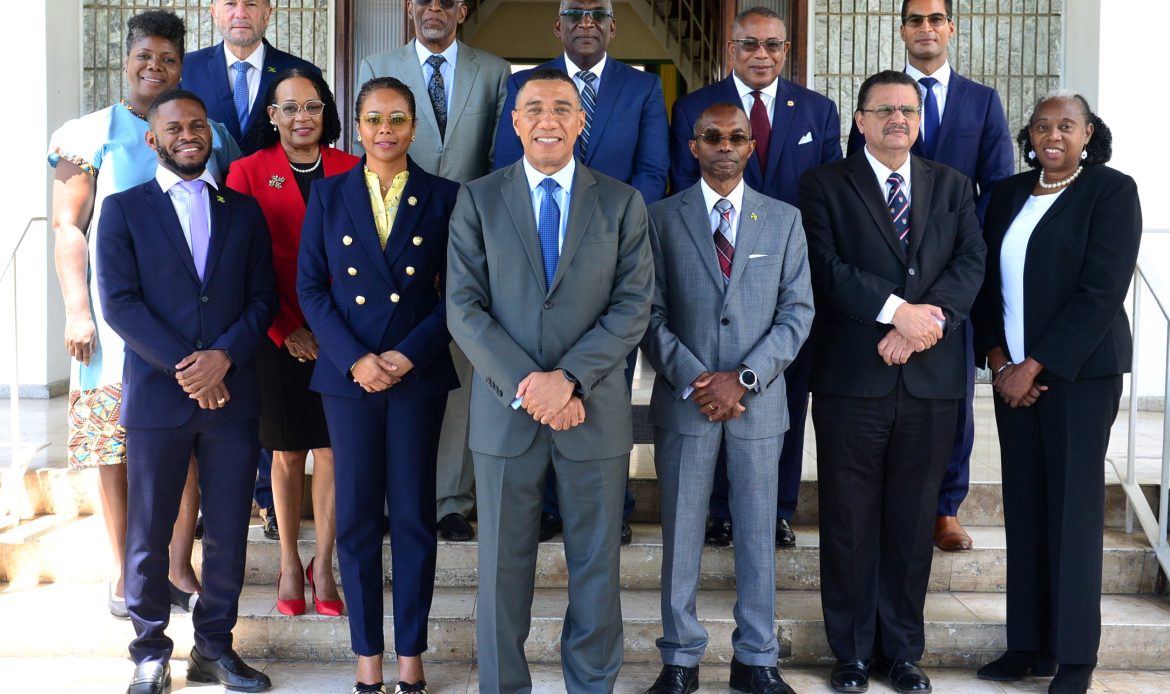
PM Announces Members of Constitutional Reform Committee
MLCA — Road to Republic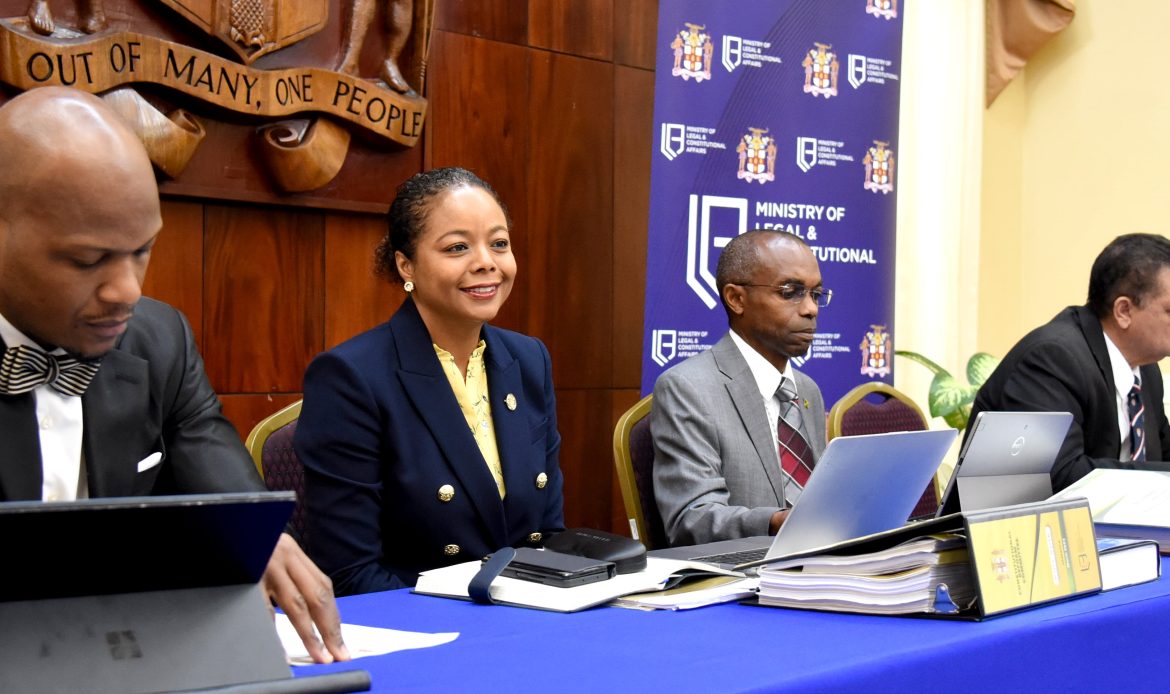
Secretariat Established to Support Constitutional Reform Committee
MLCA — Road to Republic
CALL FOR IC SHIFT - Samuda proposes FID takes over review of MPs’ financial filings
Jamaica Gleaner
Joint Select Committee on the Child Diversion Act || July 8, 2026
PBC Jamaica (Video)Watch